#Industry News
Fatal in Just 1 Minute! 18 Common Industrial Toxic Gases Safety Red Lines - Evacuate Immediately If Exceeded!
Invisible Killers: Essential Toxic Gas Safety Thresholds Every Industrial Worker Must Know
Fatal in Just 1 Minute! 18 Common Industrial Toxic Gases Safety Red Lines - Evacuate Immediately If Exceeded!
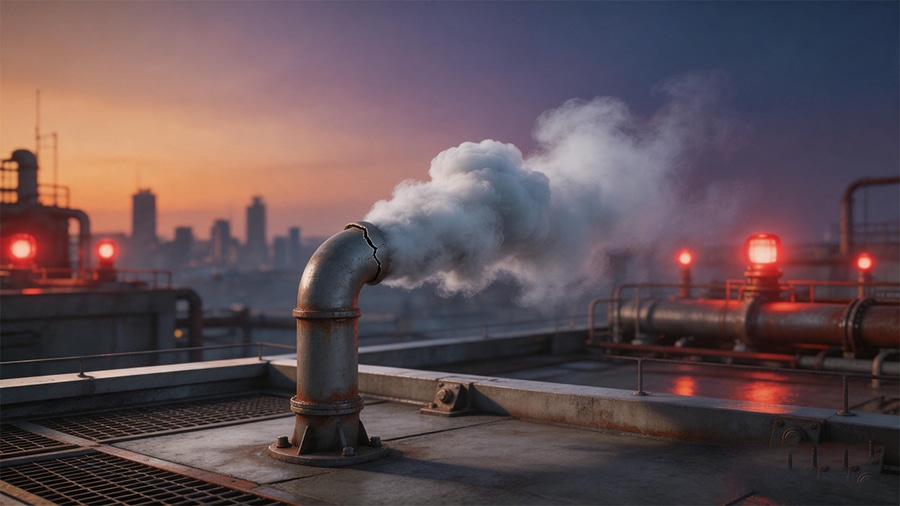
In industrial settings we are all familiar with - factories, chemical parks, wastewater treatment plants - there lurks a group of "invisible killers". They are colorless and odorless, or they can rob you of your sense of smell the moment you catch a faint whiff; they can render you unconscious in seconds and cause death in minutes, yet many people still rely on their noses as "detectors".
According to statistics from the Ministry of Emergency Management, industrial poisoning and suffocation accidents account for more than 30% of all accidents in the chemical industry in recent years, and 80% of these tragedies are caused by insufficient understanding of toxic gas hazards and lack of timely monitoring. Today, based on China National Occupational Health Standard GBZ 2.1-2019 "Occupational Exposure Limits for Hazardous Agents in the Workplace — Part 1: Chemical Hazardous Agents", we have compiled the hazards and safety concentration thresholds for the 18 most common industrial toxic and harmful gases. Each number represents a safety line forged with lives.
Safety Concentration Limits Table for 18 Common Industrial Toxic and Harmful Gases
The following limits refer to the maximum permissible concentrations under a normal 8-hour workday that will not cause health damage to the vast majority of people. They are lifelines that all industrial workers must remember.
————————————————————
Gas Name (English) CAS Number Chinese Name PC-TWA (mg/m³)【Permissible Concentration-Time Weighted Average (8 hours)】 PC-STEL (mg/m³)【Permissible Concentration-Short Term Exposure Limit (15 minutes)】 Main Health Hazards
Carbon Monoxide 630-08-0 一氧化碳 20 30 Binds to hemoglobin approximately 250 times more strongly than oxygen, causing tissue hypoxia. Mild poisoning: headache, dizziness; moderate: confusion; severe: coma, brain damage, death. Immediate hyperbaric oxygen therapy required.
Carbon Dioxide 124-38-9 二氧化碳 5000 15000 Acts primarily as an asphyxiant at high concentrations by displacing oxygen. Concentrations >5% stimulate the respiratory center and cause dyspnea; >10% can cause loss of consciousness, convulsions, and death within minutes.
Hydrogen Sulfide 7783-06-4 硫化氢 10 — Inhibits cytochrome oxidase, blocking intracellular respiration. Low concentrations: rotten egg odor, eye irritation; high concentrations (>300 ppm): coma and respiratory arrest after 1-2 breaths ("lightning death").
Ammonia 7664-41-7 氨气 20 30 Highly soluble in water, forming a strong alkaline solution that corrodes mucous membranes. Low concentrations: burning sensation in eyes, nose, throat, tearing; high concentrations: laryngeal edema, pulmonary edema, bronchopneumonia, and even suffocation.
Chlorine 7782-50-5 氯气 1 — Reacts with water to form HCl and hypochlorous acid, directly damaging the respiratory tract. Mild: cough, substernal pain; moderate: dyspnea, cyanosis; severe: acute pulmonary edema, reflex respiratory arrest.
Sulfur Dioxide 7446-09-5 二氧化硫 5 10 Irritates the mucous membranes of the eyes, nose, and throat, inducing bronchoconstriction. Acute exposure: tearing, cough, wheezing; high concentrations can cause laryngospasm, glottic edema, and suffocation.
Nitrogen Dioxide 10102-44-0 二氧化氮 5 — Primarily penetrates the lower respiratory tract and damages alveoli. Acute poisoning is often delayed: initial mild cough only, followed by sudden severe pulmonary edema and respiratory distress after a 6-24 hour latency period.
Nitric Oxide 10102-43-9 一氧化氮 — — Rapidly oxidizes in air to the more toxic nitrogen dioxide; itself can form nitrosylhemoglobin, causing hypoxia. Also carries a risk of delayed pulmonary edema.
Phosphine 7803-51-2 磷化氢 0.3 1 Potently inhibits cellular respiratory enzymes. Poisoning characteristics: mild (headache, fatigue, nausea); moderate to severe (dyspnea, pulmonary edema, myocardial damage, ataxia, coma).
Hydrogen Cyanide 74-90-8 氰化氢 1 [MAC]* — Rapidly binds to cytochrome oxidase, preventing cells from utilizing oxygen ("internal asphyxiation"). Extremely high concentrations cause death within minutes. Poisoning: bitter taste in mouth, dizziness, convulsions, respiratory arrest.
Hydrogen Chloride 7647-01-0 氯化氢 7.5 15 Acidic gas with strong irritant properties but extremely high solubility, primarily damaging the upper respiratory tract. Acute exposure: choking cough, sore throat, hoarseness; severe cases: laryngospasm, pulmonary edema.
Hydrogen Fluoride 7664-39-3 氟化氢 2 [MAC]* — Causes excruciatingly painful corrosion and can penetrate deep into skin tissues. Inhalation: severe inflammation of the larynx and bronchi, pulmonary edema, hemorrhage. Even low concentrations are highly irritating.
Ozone 10028-15-6 臭氧 0.3 — Strong oxidizing agent that primarily damages alveoli and bronchioles. Acute poisoning: dry throat, cough, chest tightness, decreased lung function. High concentrations can cause pulmonary edema and hemoptysis.
Arsine 7784-42-1 砷化氢 0.03 — Potent hemolytic poison. Symptoms appear several hours after acute exposure: headache, nausea, abdominal pain, followed by hemoglobinuria, severe hemolytic anemia, and acute renal failure.
Phosgene 75-44-5 光气 0.5 — The "delayed poison king". Early symptoms are only mild eye and throat irritation, followed by sudden severe pulmonary edema after a 2-24 hour latency period, with high mortality.
Ethylene Oxide 75-21-8 环氧乙烷 5 [MAC]* — Direct mutagen that alkylates DNA. Acute: central nervous system depression, nausea, vomiting, pulmonary edema; long-term exposure is a known carcinogen (associated with leukemia).
Benzene 71-43-2 苯 6 10 Bone marrow toxicity; long-term exposure causes aplastic anemia and acute leukemia. Acute: drunken state, coma, respiratory paralysis (LC50 approximately 10,000 ppm).
Toluene 108-88-3 甲苯 50 100 Central nervous system depressant. Acute exposure: headache, dizziness, ataxia; high concentrations can cause coma and arrhythmias (sensitizes the heart).
Xylene 1330-20-7 二甲苯 50 100 Anesthetic effects similar to toluene, with mild irritation to skin and eyes. Acute massive inhalation can cause balance disorders, memory impairment, and coma.
Formaldehyde 50-00-0 甲醛 0.5 — Strong irritant and sensitizer. Irritates eyes and respiratory tract; highly sensitive for asthmatics. Classified as a Group 1 carcinogen (nasopharyngeal cancer) by the International Agency for Research on Cancer (IARC).
Notes:
1."—" in the table indicates that no specific value is provided in the standard document
2.[MAC]*: MAC (Maximum Allowable Concentration) refers to the concentration of toxic chemicals that should not be exceeded at any time during a working day at the workplace
Fatal Misconceptions Known by Only 10% of People
Misconception 1: Hazards are additive when multiple gases are present
In actual workplaces, there is almost never only a single harmful gas. When multiple gases are mixed, their toxicities produce synergistic effects that are much more dangerous than any single gas alone. For example, when carbon monoxide and hydrogen sulfide are present together, the speed of poisoning accelerates exponentially.
Misconception 2: You can detect toxic gases with your nose
This is the deadliest mistake!
•Completely odorless killers: Carbon monoxide and phosgene - you will never smell their presence
•Killers that "deceive" your sense of smell: Hydrogen sulfide has a rotten egg odor at low concentrations, but high concentrations instantly paralyze the olfactory nerves, making you think the danger has passed
•Not everyone can smell them: Approximately 40% of the population is genetically unable to detect the bitter almond odor of hydrogen cyanide
Never gamble with your life using your nose. Professional gas detectors are the only reliable line of defense.
Industrial Gas Safety Solution
For complex industrial environments and the risks of mixed gas exposures, we recommend the MST410 Multi-Gas Detector. It features hot-swappable intelligent sensor technology that allows quick replacement of different gas modules, supporting free switching between more than 18 types of toxic and harmful gases, truly achieving one device for multiple uses. Whether for daily inspections or emergency response, it can quickly and accurately monitor gas concentrations, protecting your safety.
Safety Reminder
Safety is no trivial matter, and life is above all else. Behind every safety concentration limit lies the lessons of countless accidents. Please share this article with every industrial worker around you, so that more people can learn about these invisible dangers and hold the last line of defense for life.
Interactive Topic
Have you ever experienced any dangerous moments involving gas leaks at work? What do you think are the most overlooked gas safety hazards in industrial sites? Feel free to share your experiences in the comments section to remind more people to stay safe!