#Industry News
Global Warming Spawns Green Refrigeration Revolution: Kigali Amendment Fully Implemented, Mandatory Upgrade Wave for Refrigerant Leak Detection
4.From Environmental Compliance to Production Safety: New Flammable Refrigerants Force Upgrade of Gas Detection Equipment
Introduction
In 2026, extreme high temperature weather has become the new normal worldwide. Data from the World Meteorological Organization (WMO) shows that the past 8 years have been the hottest on record. In 2025, the global average temperature was 1.52°C higher than the pre-industrial level, breaking the critical warning line set by the Paris Agreement for the first time. The sustained high temperature in summer has not only led to a surge in global demand for air conditioning and refrigeration equipment, but also raised the urgency of addressing climate change to an unprecedented level.
Against the backdrop of global warming, the Kigali Amendment to the Montreal Protocol on Substances that Deplete the Ozone Layer, which aims to reduce potent greenhouse gases, came into being and accelerated its implementation worldwide. This global green refrigeration revolution has promoted the comprehensive replacement of traditional high-GWP hydrofluorocarbons (HFCs) with low global warming potential (GWP) refrigerants such as R290, R32 and R454B. However, these environmentally friendly refrigerants are generally flammable, explosive and prone to decompose into toxic gases at high temperatures, bringing new challenges to industrial production and public safety.
Traditional gas detection systems can no longer meet the detection requirements of new refrigerants, and a global upgrade wave of refrigerant leak detection equipment has officially begun. According to Yole's Status of the MEMS Industry 2025 report, the global new refrigerant gas sensor market is expected to grow at a compound annual growth rate (CAGR) of up to 19% from 2024 to 2030, becoming one of the fastest growing MEMS sensor tracks.
I. Global Warming Forces Regulatory Upgrade: Kigali Amendment Fully Implemented
To address the greenhouse effect caused by HFCs, the Kigali Amendment to the Montreal Protocol on Substances that Deplete the Ozone Layer was formally adopted in October 2016, which included HFCs in the scope of control. The goal is to reduce global HFC production and consumption by 85% by 2045, which is expected to avoid a 0.5°C global temperature rise by the end of this century. After the amendment came into effect in January 2019, major economies around the world including China, the United States and the European Union have successively introduced supporting regulations, clarifying the mandatory timetable for refrigerant replacement:
• China: Officially accepted the amendment in September 2021. The national plan clearly stipulates that high-GWP refrigerants such as R410A will be completely banned in 2029, and all newly built refrigeration and air conditioning equipment must adopt low-GWP alternatives.
• United States: Launched the American Innovation and Manufacturing (AIM) Act in October 2023. Starting from January 2025, HFC refrigerants with a GWP above 700 will be completely banned from use in most air conditioners, heat pumps and chillers, and imported products are also applicable. Violating enterprises will face a maximum fine of $150,000 per day.
• European Union: Released the new version of the F-gas Regulation in April 2024, which will officially take effect in January 2025. It requires a 70% reduction in HFC usage by 2030 and "zero emissions" of HFC compounds by 2050. Products not equipped with compliant leak detection equipment are not allowed to enter the EU single market.
The unified global regulatory standards have spawned a highly deterministic stock replacement market. From household air conditioners to industrial refrigeration, from cold chain logistics to automotive air conditioners, all equipment using refrigerants must be upgraded within the specified time limit, and the supporting refrigerant leak detection equipment has also become a mandatory standard configuration.
II. Safety Risks of New Refrigerants Highlighted: Traditional Detection Systems Are Completely Obsolete
New low-GWP refrigerants such as R290 (propane), R32 (difluoromethane) and R454B, although harmless to the ozone layer and environmentally friendly, have essential differences in physical and chemical properties from traditional refrigerants, with significantly increased safety risks:
1. Generally Flammable and Explosive Characteristics
• R290 (Class A3): The explosion limit is only 2.1%-9.5%. It is a highly flammable refrigerant, and a very small leakage amount can form an explosive mixture.
• R32 (Class A2L): The explosion limit is 14%-31%, with fast burning speed and high flame temperature.
• R454B (Class A2L): Slightly flammable, but the combustion risk increases significantly under high temperature and high pressure environments.
2. Decompose into Toxic Gases at High Temperatures
All new refrigerants will decompose into toxic gases such as hydrogen fluoride and carbon monoxide when the temperature exceeds 250°C. Even if no explosion occurs, the leaked refrigerant decomposing in air conditioners and industrial refrigeration units exposed to high temperature in summer will cause poisoning and suffocation of on-site personnel.
3. High Temperature in Summer Amplifies Leakage Risk
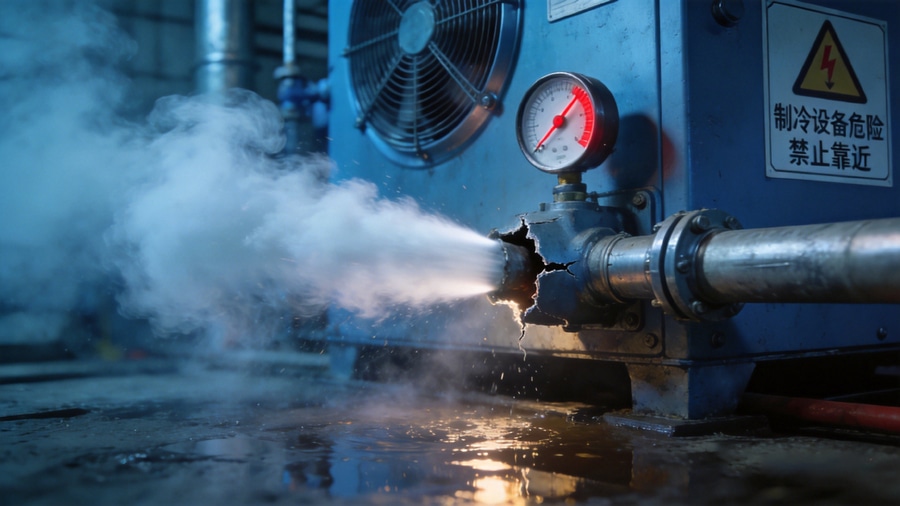
Refrigeration equipment operates at full load for a long time in summer, the outer shell temperature can reach above 60°C, and the internal pressure of the system is 2-3 times higher than that at normal temperature. The leakage probability of weak parts such as pipeline welds, valves and sealing rings is 3-5 times that at normal temperature. According to statistics from the Chinese Refrigeration Society, summer refrigeration equipment leakage accidents account for more than 75% of the total annual accidents.
However, the traditional catalytic combustion sensors widely used in the industry can no longer meet the detection requirements of new refrigerants:
• Insufficient sensitivity to small molecule hydrocarbons such as R290 and R32, unable to detect low-concentration leaks.
• Susceptible to poisoning by industrial gases such as silicon and sulfur, with a service life of less than 1 year.
• Severe zero drift in high temperature environments, with a false alarm rate of more than 30%.
• Unable to distinguish different types of refrigerants, poor selectivity.
Without special detection equipment for new refrigerants, green refrigeration is equivalent to burying hidden safety hazards.
III. MaiYa Sensor: One-Stop Refrigerant Leak Detection Solution to Help Enterprises Achieve Compliance and Safety
As a professional manufacturer of industrial gas detection equipment, MaiYa Sensor has laid out the new refrigerant detection track in advance. Based on years of technical accumulation, we have launched a full series of special gas sensors and detection systems for R290/R32/R454B, which perfectly meet the regulatory requirements of countries around the world and provide one-stop services for the refrigeration industry from sensors to complete solutions.
Core Product: Special Gas Sensors for New Refrigerants
We have carried out special optimization for the chemical characteristics of Class A2L and A3 refrigerants, with the following core advantages:
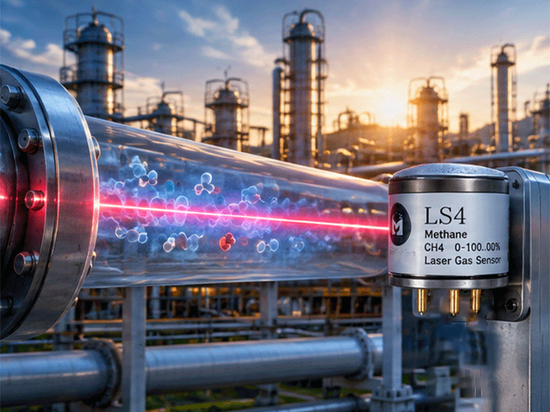
✅ Accurate Identification, Zero False Alarms: Adopting advanced Non-Dispersive Infrared (NDIR) technology and electrochemical technology, it has extremely high selectivity for target gases such as R290, R32 and R454B, and is not affected by water vapor, dust and other industrial gases.
✅ Fast Response, Early Warning: The response time is ≤30 seconds, which can capture trace gases at the initial stage of leakage and win valuable time for emergency disposal.
✅ Wide Temperature Range Design, Adaptable to High Temperature Environments: The operating temperature range is -30°C~+60°C, maintaining stable performance without zero drift even in high temperature environments in summer.
✅ Long Service Life, Low Maintenance: The sensor has a service life of more than 10 years, greatly reducing the operation and maintenance costs of enterprises.
Customized Detection Systems, Seamlessly Integrated into Existing Systems
We not only provide core sensors, but also provide full-scene customized solutions according to the actual needs of customers:
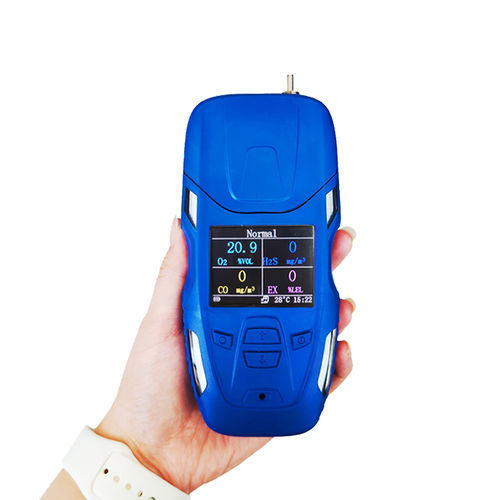
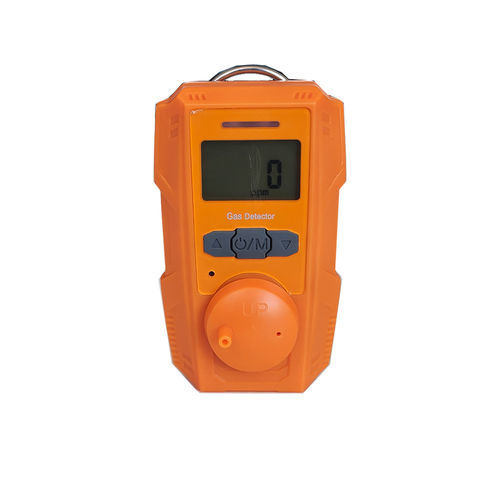
• Portable Detectors: Small in size and easy to operate, suitable for rapid detection at equipment installation and maintenance sites, as well as daily inspections by patrol personnel.
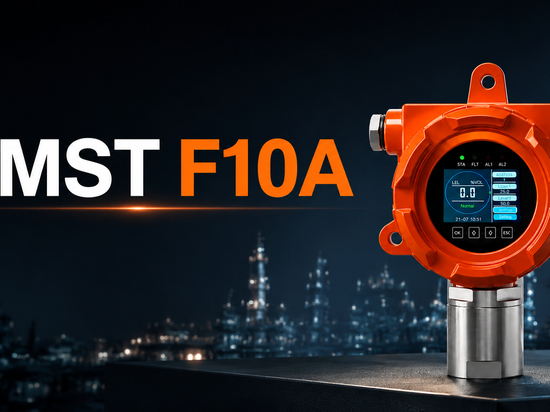
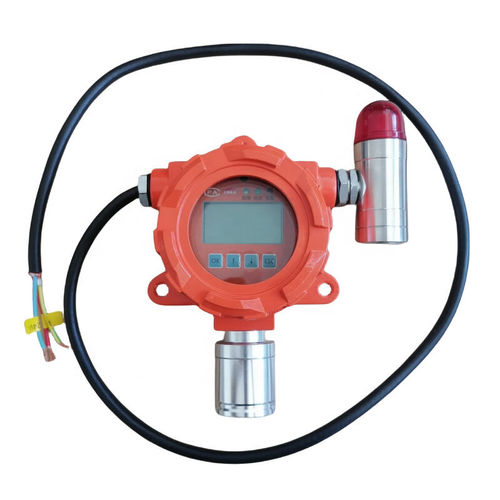
• Fixed Detectors: Support multiple installation methods such as wall-mounted and pipeline-type, can monitor 24 hours a day without interruption, and are suitable for fixed places such as workshops, computer rooms and cold storages.
• System-Level Integration: Provide standardized communication interfaces such as UART, IIC and RS485, which can be seamlessly connected to customers' existing air conditioning systems, building automation systems and fire protection systems without large-scale transformation of existing facilities.
• Integrated Detection-Alarm-Ventilation Linkage: Support multi-level alarm threshold settings. When gas leakage is detected, the system can automatically trigger sound and light alarms and link the ventilation system to force exhaust; when the concentration reaches a dangerous level, it can further link to cut off the refrigerant pipeline or shut down the main engine, realizing an automated safety closed loop from "early warning" to "disposal".
Full Scene Coverage to Meet the Needs of Different Industries
Our solutions have been widely used in:
• Household and commercial air conditioning manufacturing
• Industrial refrigeration and cold chain logistics
• Data center computer rooms
• Automotive air conditioning systems
• Refrigerant filling and storage
Conclusion
Global warming is a common challenge for all mankind, and green refrigeration is an irreversible development trend. However, in the process of promoting environmental transformation, safety is always the first priority. The full implementation of the Kigali Amendment is not only an upgrade of refrigerants, but also a comprehensive innovation of gas detection systems.
For refrigeration enterprises, upgrading new refrigerant leak detection equipment that meets regulatory requirements in advance is not only a compliance requirement for market access, but also a necessary measure to protect the lives of employees and avoid property losses.
MaiYa Sensor will continue to deeply cultivate gas detection technology, and join hands with global refrigeration enterprises to create a safe, environmentally friendly and sustainable green future with leading products and professional services.
Interactive Guide
Is your enterprise undergoing new refrigerant replacement? Do you need to upgrade your existing gas detection system?
If you have any needs, please feel free to contact us via private message. Our technical engineers will contact you within 24 hours to customize an exclusive detection-alarm-ventilation linkage solution for you!