#Industry News
Busbar Prices Explained: What Drives Copper and Aluminium Bar Costs
Metal is only part of the quote. How cross-section, plating, fabrication and short-circuit rating change what a busbar really costs, and when in-house fabrication pays back.
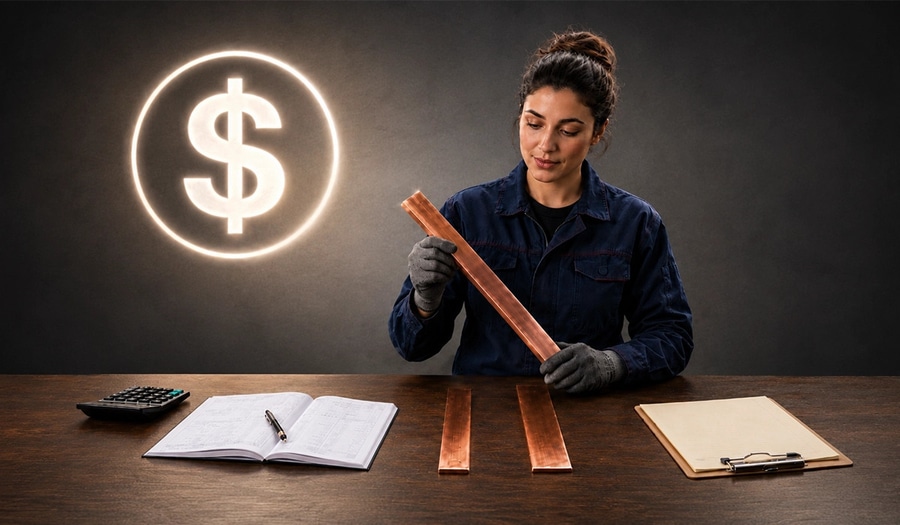
Ask a supplier for a busbar price and the number is valid for about a day. Most of it is metal, metal is indexed to the London Metal Exchange, and the LME moves every trading session. The drawing stays the same; the quote does not. For panel builders and switchgear engineers, the useful question is therefore not what a busbar costs, but what the bar is made of, how much it weighs, and what has to happen to it before it reaches the panel. Answer those three and the price can be rebuilt in any currency, on any day.
Weight sets the baseline
Busbar price per metre is weight per metre multiplied by metal price per kilogram, plus a fabrication cost per metre. Weight follows directly from geometry: a 60 x 10 mm copper bar has a cross-section of 600 mm² and weighs 5.38 kg/m; the same section in aluminium weighs 1.62 kg/m. With LME copper at 9,500 USD per tonne and a typical mill conversion premium of 15 to 30 percent, the material alone comes to roughly 64 USD per metre. Cutting, deburring, four holes and one 90-degree bend add 8 to 20 USD per metre. On a plain straight bar, metal is usually 75 to 90 percent of the price, which is why specifying a smaller standard section saves more than negotiating the fabrication rate.
Copper versus aluminium is not a per-kilogram comparison
Aluminium starts from a far lower metal benchmark, but alloy 1350 conducts at about 61 percent IACS. Equal electrical duty therefore needs roughly 1.6 times the cross-section, more enclosure space and stricter joint preparation. The fair comparison is a 600 mm² copper bar against a 960 mm² aluminium bar, not against 600 mm² of aluminium. Once section, joint hardware and maintenance are counted, aluminium's net material advantage typically narrows to 15 to 25 percent of the copper figure, and in compact low-voltage panels it can disappear altogether.
Plating, insulation and fault duty
Bare copper is the base price in clean, dry indoor assemblies. Tin plating adds a modest premium for humid service or frequently remade joints; silver belongs only on critical contact interfaces. Heat-shrink or epoxy insulation improves touch safety but also insulates thermally, which can force a larger section. The largest hidden multiplier is short-circuit withstand: moving a design from 25 kA to 50 kA roughly doubles the minimum copper section and also drives stronger supports at closer spacing, as IEC 61439 treats withstand as a verified design value. Two panels with identical load ratings can differ by more than half their busbar cost for this reason alone.
Fabrication and the make-or-buy decision
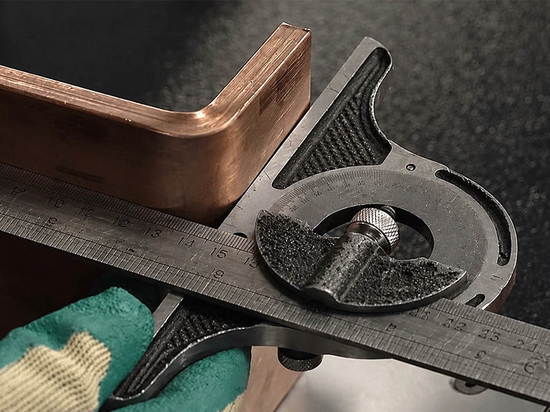
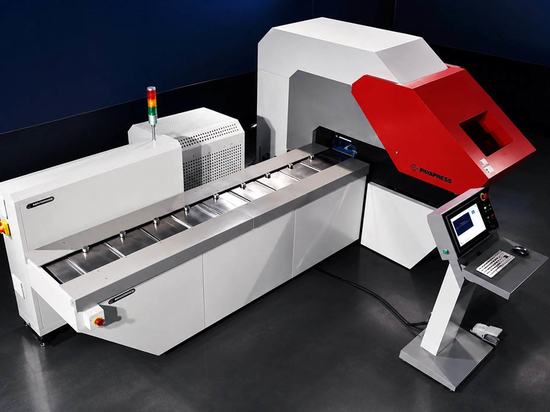
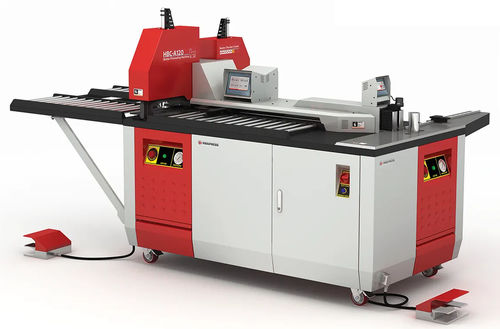
Straight bars are cheap to process. Bars with many holes, offsets, Z or U bends are not, and on short runs the setup time is spread over few parts. Prefabricated supply usually wins on low-volume, complex geometry; in-house cutting, punching and bending wins on repeat standard bars and wherever lead time matters, since a revised drawing can be turned around the same day at no rush premium. The payback test is simple: annual outsourced busbar spend, minus what the same bars would cost in metal alone, compared against machine cost plus labour.
Over a 20 to 30 year life, I²R losses, joint inspection and rework belong in the calculation as well. The full guide, including reference weight tables for common sections, a fault-level cost table and a lifecycle comparison of copper and aluminium, is published on the PAYAPRESS website.