

#Product Trends
Permanent Magnets: Driving the Next Generation of High-Torque Motors
Advancing torque density and performance while exploring more resilient magnet technologies
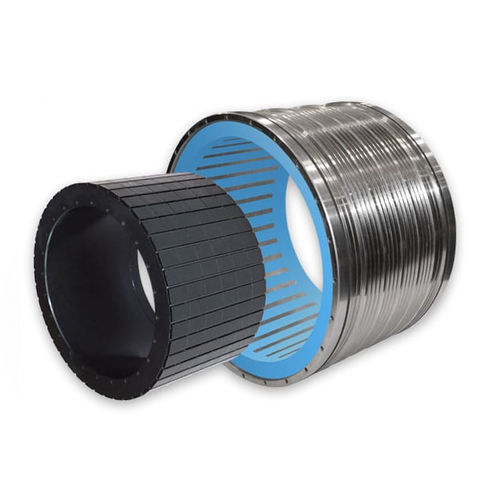
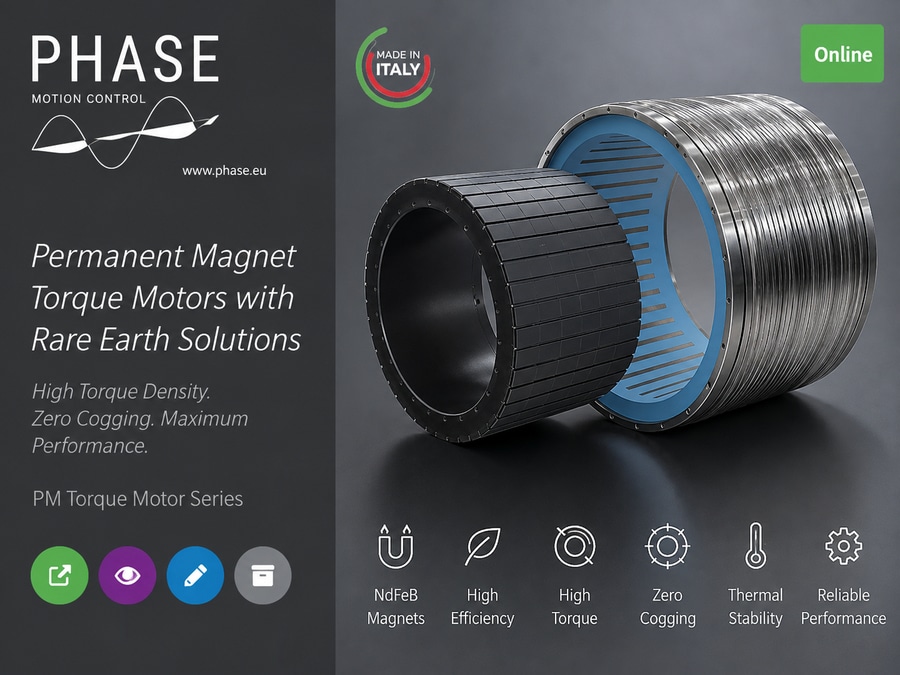
Permanent magnets are a key technology behind today’s high-performance Direct Drive and torque motors, enabling high torque density, compact designs and efficient motion without mechanical transmission components.
For high-performance motors, however, choosing a magnet is not simply a matter of selecting the strongest material. Magnetic performance, temperature resistance, motor geometry, thermal design and operating conditions must work together to achieve the best overall result.
At Phase Motion Control, we continuously investigate how to make better use of available permanent magnet technologies to push motor performance further. NdFeB magnets remain an important solution for high-performance applications, but the development of lower-HREE and alternative magnetic materials is becoming increasingly relevant.
Reducing dependence on critical rare-earth elements is not only an environmental or sustainability objective. It can also become a strategic advantage for the supply chain, helping to increase sourcing flexibility and resilience as demand for high-performance electric motors continues to grow.
This creates an interesting engineering challenge: how can we maintain or improve torque density and efficiency while reducing dependence on critical raw materials?
The answer is not necessarily a single new magnet material. It can come from the combination of magnet selection, electromagnetic design, thermal management and motor optimization.
Phase does not manufacture permanent magnets. We work with magnetic materials available on the market and engineer the motor around their characteristics, continuously looking for the best balance between performance, efficiency, thermal capability and supply-chain availability.
Because in a high-performance Direct Drive motor, every improvement in the magnetic material—and in the way it is used—can translate into more torque, more compact designs and better motion performance.
The challenge is not simply to use more powerful magnets. It is to use magnetic technology smarter.