#White Papers
Acoustic Emission Sensors: An Overview
The Types, Parameters, and Selection
1. Definition
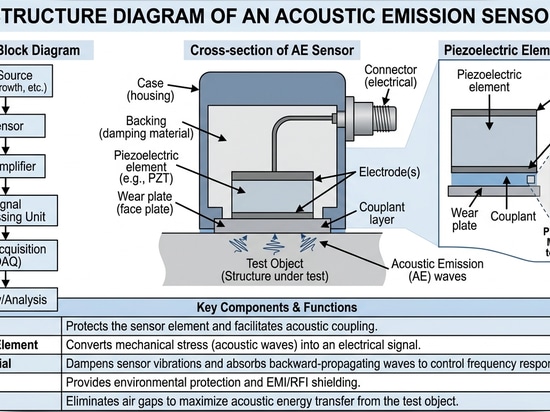
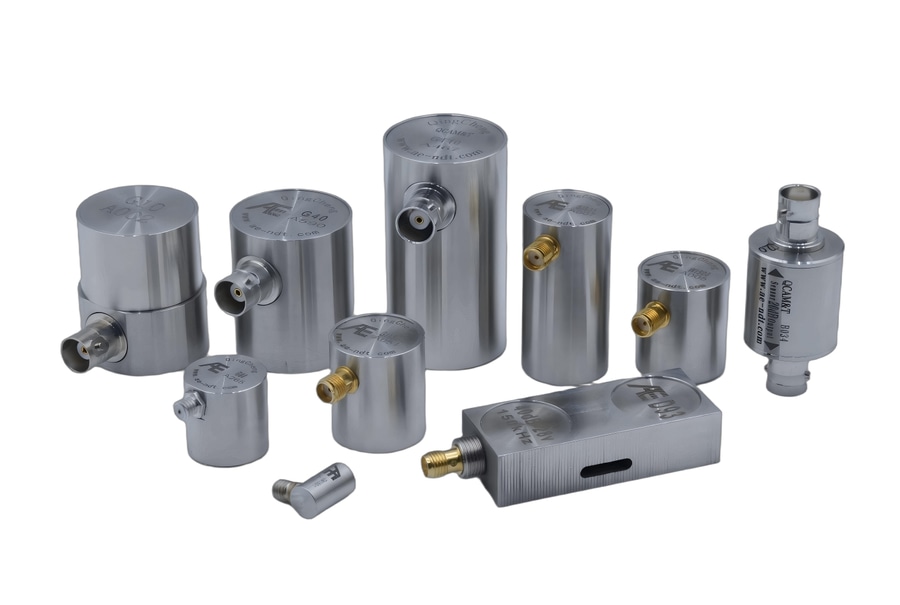
An acoustic emission (AE) sensor is a device that detects surface displacements caused by transient elastic waves generated within a material and converts them into electrical signals for analysis.
AE sensors are a critical component of any acoustic emission monitoring system, as they determine signal quality, frequency response, and detection sensitivity.
2. Types of Acoustic Emission Sensors
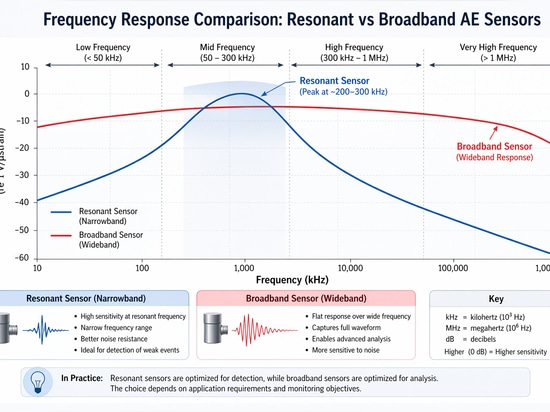
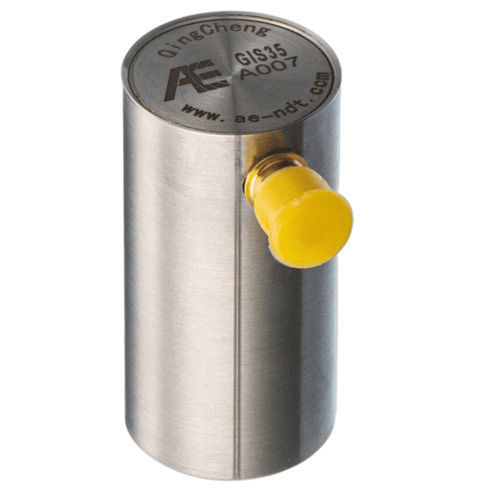
(1) Resonant Sensors: resonant sensors are designed to have maximum sensitivity around a specific frequency range.
> High sensitivity at resonant frequenc
> Narrow bandwidth
> Lower response outside target range
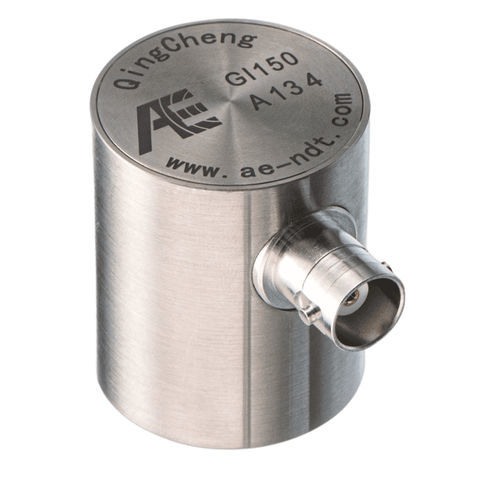
(2) Broadband Sensors: broadband sensors provide a relatively flat response over a wide frequency range.
> Wide frequency coverage
> Lower peak sensitivity compared to resonant sensors
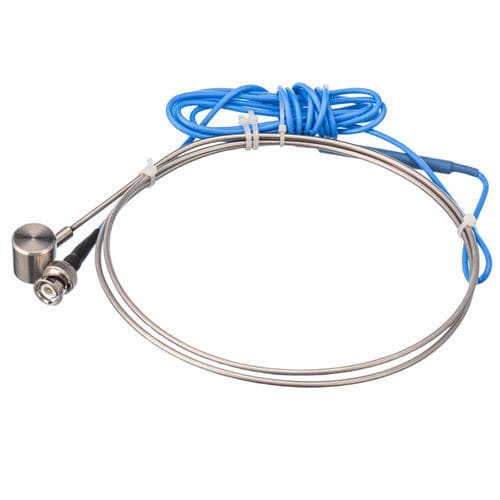
(3) Specialty Sensors: In certain applications, specialized sensors are used. For example,
> High-temperature AE sensors
> Waterproof or subsea sensors
> Miniature sensors for confined spaces
> Intrinsically safe sensors for explosion proof areas
3. Key Parameters of AE Sensors
Understanding sensor parameters is essential for proper selection and system performance.
(a) Frequency Range
> Typical AE range: 20 kHz – 1 MHz
> Selection depends on material and application
(b) Sensitivity: indicates how effectively the sensor converts mechanical waves into electrical signals.
> Higher sensitivity → better detection of weak signals
> Excessive sensitivity → increased noise pickup
(c) Dynamic Range: the range between the smallest and largest signals the sensor can measure.
(d) Directionality: Describes how sensor response varies with wave direction.
> Most AE sensors are approximately omnidirectional
> Installation affects effective directionality
(e) Operating Temperature
4. Sensor Selection Guidelines
Selecting the right AE sensor depends on the application requirements.
1) Application Type
> Crack detection → resonant sensors
> General monitoring → broadband sensors
2) Material Properties: Indicates how effectively the sensor converts mechanical waves into electrical signals.
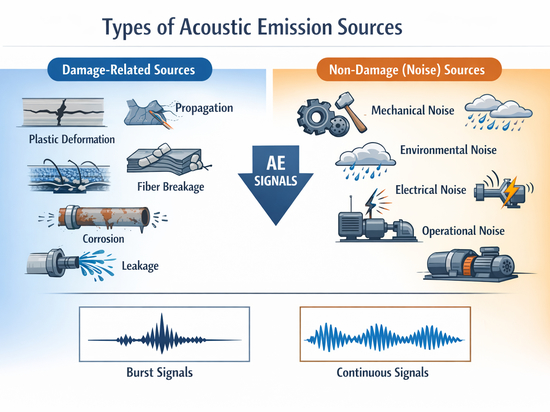
3) Expected Signal Type
> Burst signals → resonant sensors
> Continuous signals → broadband sensors
4) Environment
> High temperature → specialized sensors
> Underwater → sealed sensors
5) Noise Conditions
> High noise → narrowband (resonant) preferred
> Low noise → broadband feasible
5. Summary
Acoustic emission sensors are essential components that convert elastic waves into measurable electrical signals. Their performance depends on factors such as frequency response, sensitivity, and installation quality. By understanding sensor types and parameters, engineers can select appropriate sensors for specific applications and ensure reliable acoustic emission monitoring.