#Product Trends
Mechanical Oil Mist: A Critical Industrial Challenge for Safety and Performance
Advancing Industrial Air Quality: Balancing Occupational Health with Asset Integrity
The mitigation of machining oil mist has evolved from a secondary maintenance task into a strategic pillar of occupational risk prevention and industrial optimization. In modern production environments, the intensive use of cutting fluids—whether neat oils or water-based emulsions—generates complex aerosols through friction and thermal elevation. These airborne microparticles represent an insidious form of pollution that, if left uncontrolled, compromises everything from human physiology to the structural integrity of high-precision manufacturing assets.
The Clinical Implications of Airborne Oil Contaminants
Physiologically, oil mists represent a significant toxicological hazard. The extremely fine granulometry of these aerosols allows them to bypass the natural defenses of the upper respiratory tract and settle deep within the alveolar regions of the lungs. Prolonged exposure without effective source capture subjects operators to chronic respiratory conditions, such as occupational asthma, hypersensitivity pneumonitis, and Chronic Obstructive Pulmonary Disease (COPD). Beyond the human cost, there is a stringent regulatory dimension: compliance with Occupational Exposure Limits (OELs) is a legal mandate. Failure to adhere to these standards exposes organizations to significant liability and potential litigation.
Technical Impact: From Premature Obsolescence to Process Instability
From a technical perspective, the presence of oil mist in a facility acts as a catalyst for accelerated equipment degradation. As these particles settle, they form a persistent film that fouls precision optical scales, interferes with sensor sensitivity, and induces critical failures in electronic components through conductive bridging or overheating. Furthermore, the accumulation of oily residues on surfaces significantly escalates fire risks and increases the frequency of workplace accidents due to slips and falls. This residual pollution leads to a direct surge in corrective maintenance costs and diminishes the operational availability of Computer Numerical Control (CNC) machinery.
QleanAir Engineering: Precision Filtration for High-Output Environments
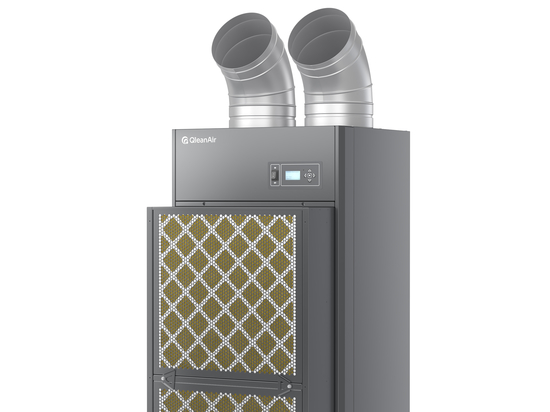
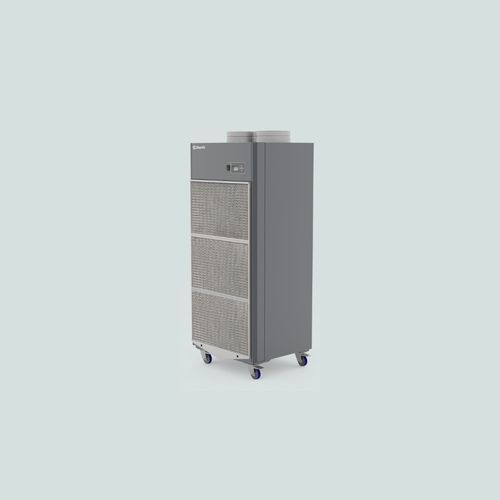
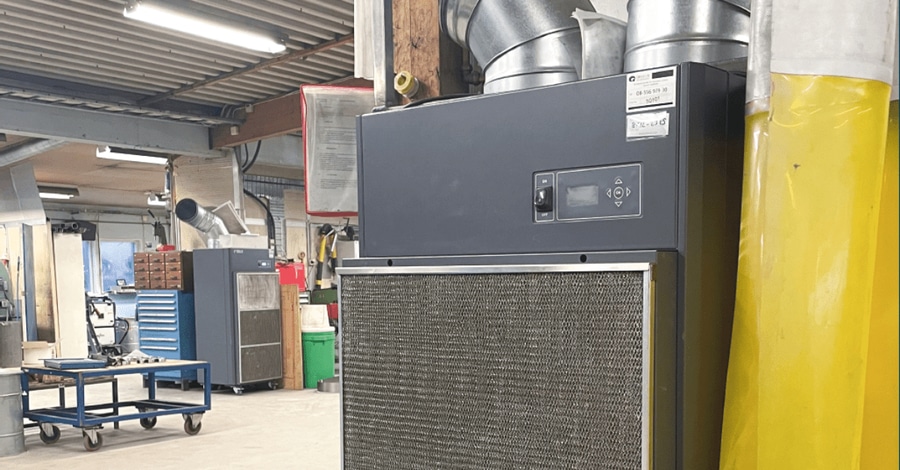
Addressing these challenges requires a sophisticated engineering approach focused on neutralizing pollutants at the point of emission. The complexity of modern lubricants—including mineral, synthetic, and semi-synthetic fluids—demands multi-stage filtration systems capable of managing fluctuating particulate loads. QleanAir’s high-performance filtration solutions are engineered to maintain constant efficiency, ensuring that residual air quality not only meets but exceeds the most rigorous international standards. This process also facilitates the efficient recovery of fluids, allowing for potential reinjection into the production cycle and promoting resource efficiency.
The QleanAir methodology is built upon precise airflow analysis tailored to specific workstations. By integrating robust capture solutions, we transform an environmental constraint into a competitive advantage. Mastering industrial air quality secures regulatory compliance, protects the long-term health of the workforce, and safeguards technological investments by ensuring a stable, sterile, and high-performing production environment.