#Industry News
Passive smoking: protecting non-smokers in sensitive environments
Constrained settings, high regulatory requirements and air control
In highly regulated and sensitive environments, protection against passive smoking requires robust, scientifically proven containment and air filtration solutions.
Passive smoking is a well-established health risk, particularly in professional environments where coexistence between smokers and non-smokers cannot always be avoided. Tobacco smoke is a complex mixture of several thousand chemical compounds, combining fine and ultrafine particles, persistent toxic gases and carcinogenic substances. Once released, these pollutants spread rapidly through indoor air and remain present long after smoking has ceased, largely beyond the control of conventional ventilation systems.
In institutions, secure facilities and environments subject to strict regulatory constraints, managing passive smoking is not a matter of comfort but of health protection and legal responsibility. Public buildings, transport infrastructures, high-security sites and sensitive industrial facilities must ensure that non-smokers are not involuntarily exposed, while maintaining operational continuity and compliance with safety and security requirements. In these contexts, indoor air becomes a critical risk vector that must be controlled with the same level of rigor as any other occupational hazard.
Scientific evidence shows that particles emitted by tobacco smoke penetrate deep into the respiratory system and can remain airborne for extended periods. Gaseous compounds diffuse even more widely, migrating beyond the smoking area into adjacent spaces through airflows and pressure differences. This behavior makes partial or improvised solutions ineffective and underscores the need for systems capable of containing pollutants at source and removing them before dispersion occurs.
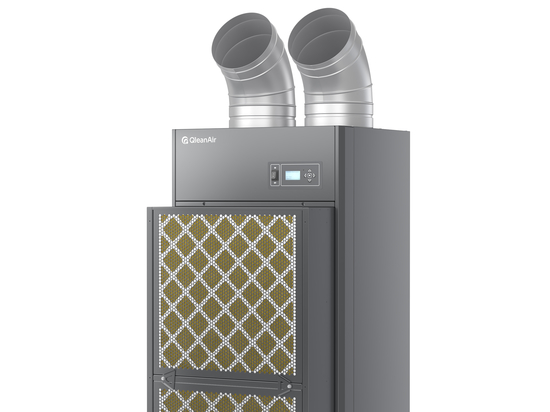
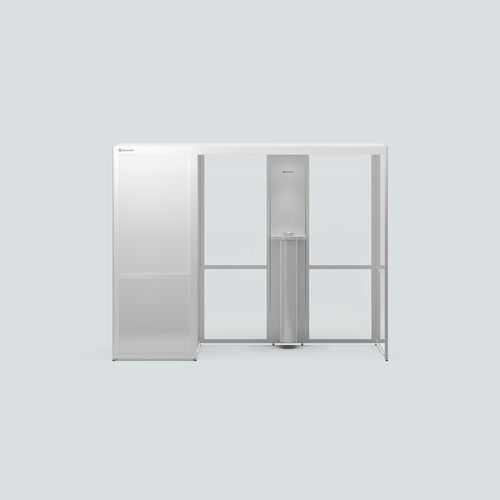
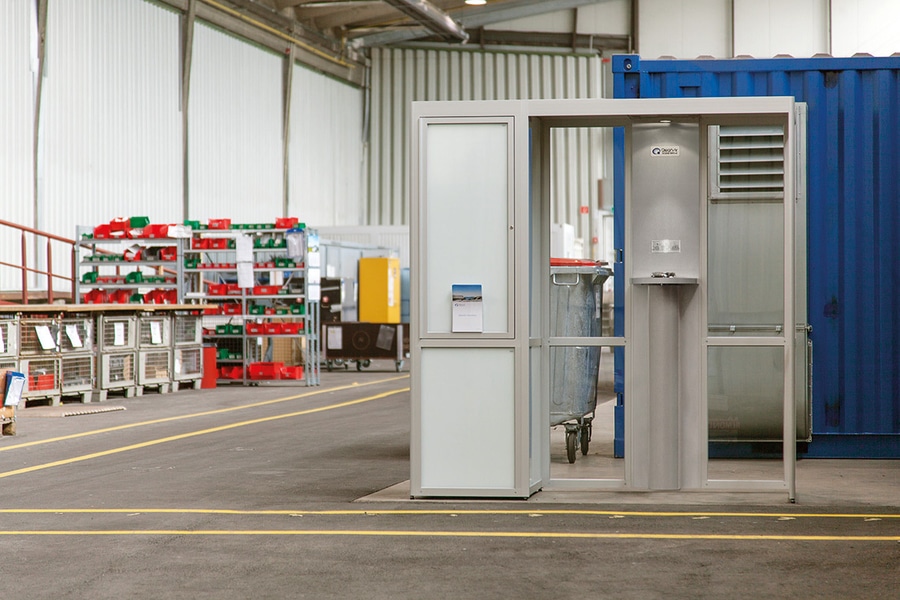
Within this framework, QleanAir France deploys containment and air filtration solutions specifically designed for complex and highly constrained environments. The approach is based on the physical isolation of smoking areas combined with advanced air treatment technologies that simultaneously address particulate matter and gaseous pollutants. The objective is to prevent any leakage of contaminants toward non-smoking zones, regardless of architectural limitations or operational constraints.
This level of air control enables site operators to meet regulatory obligations related to worker and occupant protection without compromising safety or daily operations. It also significantly reduces odour issues, which are often the first indicator of uncontrolled airborne contamination, and contributes to maintaining a stable and acceptable indoor environment.
Passive smoking can no longer be treated as a secondary issue. In constrained environments, it is part of a broader risk prevention strategy focused on health, regulatory credibility and long-term operational integrity. By delivering robust, measurable and context-adapted solutions, QleanAir France supports organisations in protecting non-smokers effectively and securing indoor environments where air quality control is non-negotiable.