#Product Trends
What Is a Thermal Camera and How Does It Work?
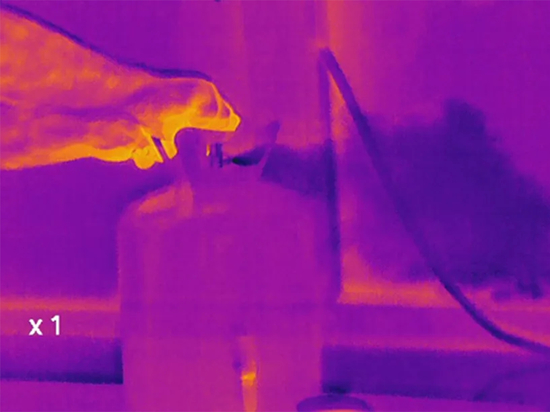
A thermal camera is an imaging device that detects infrared radiation from a scene and converts it into a visible thermal image, or a thermogram. Unlike a regular camera, it does not need reflected visible light to form the image.
A thermal camera is an imaging device that detects infrared radiation from a scene and converts it into a visible thermal image, or a thermogram. Unlike a regular camera, it does not need reflected visible light to form the image.
Infrared optics focus radiation onto a detector array. The detector converts the received energy into electrical responses, and the camera electronics process those responses into a grayscale or color image. A radiometric thermal camera can also estimate apparent surface temperatures using calibration data and measurement inputs.
In short, a thermal camera makes infrared radiation differences visible.
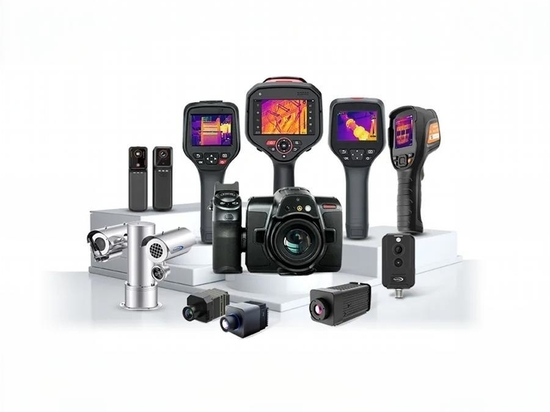
Handheld or Fixed Thermal Imaging Cameras: A Guide for Industrial Settings
Thermal Imaging Terms Beginners Should Know
Several terms describe related but not identical ideas:
A thermal camera or thermal imager is the device that forms an image from infrared radiation.
Thermal imaging is the process of creating and interpreting that image.
A thermogram is the displayed or recorded thermal image.
Thermography is the structured use of thermal imaging for observation or measurement, often with defined procedures and interpretation.
An infrared camera may mean a thermal camera, but the phrase can also describe a near-infrared camera that still depends on reflected infrared illumination.
The distinction matters because a near-infrared night camera and a thermal camera can both produce grayscale images while sensing different parts of the spectrum. Thermal cameras respond primarily to radiation emitted and reflected by surfaces in their operating band; near-infrared systems usually need an external or ambient illumination source.
Thermal Camera vs Regular Camera
Feature Thermal camera Regular visible-light camera
Main input Infrared radiation in its operating band Reflected visible light
Visible light Not required Required from the environment or a light source
Image Thermal pattern or thermogram Visible colors, textures, and shapes
Typical optics Infrared-transmitting lens materials Optical glass or transparent polymers
Temperature data Available only in radiometric systems Not normally available
Both systems use optics, a detector, electronics, and image processing, but they are designed for different wavelength ranges. Ordinary glass that is transparent to visible light blocks much of the long-wave infrared radiation used by common thermal cameras. Thermal systems therefore require lenses and protective windows selected for their spectral band.
A thermal camera can form an image in complete darkness, relying on temperature differences in the scene. A visible-light camera provides surface color and familiar visual detail that a thermal image does not.
Where Thermal Infrared Fits in the Spectrum
Visible light is one small part of the electromagnetic spectrum. Infrared radiation has longer wavelengths than visible light and is commonly divided into near-, short-, mid-, and long-wave regions. The exact boundaries vary by field, so a camera’s documented spectral band is more useful than a broad “infrared” label.
Near-infrared imaging is similar to ordinary photography: a sensor records infrared light reflected from the scene, often with the help of an illuminator. Thermal imaging uses bands in which objects at ordinary or elevated temperatures emit detectable radiation. Many uncooled thermal cameras operate in the long-wave infrared region, while other detector systems use different bands for particular imaging or measurement requirements.
Objects do not need to be hot to emit infrared radiation. Any object above absolute zero emits electromagnetic energy. Its temperature, surface emissivity, surroundings, and spectral properties influence the radiation that reaches the camera.
How Does a Thermal Camera Work?
Thermal Camera Working Principle
1. Infrared radiation reaches the lens
Objects above absolute zero emit electromagnetic radiation. At ordinary terrestrial temperatures, part of that energy falls within the infrared bands used by thermal cameras. The amount reaching the camera also depends on surface emissivity, reflections, transmission, and the atmosphere between the target and lens.
2. The optics form an image on the detector
The lens collects radiation from the scene and maps it onto a detector array. Focal length determines field of view: a wider lens covers more of the scene, while a narrower lens places more detector pixels on a distant target. Focus and lens transmission affect the quality of the signal delivered to the detector.
3. The detector creates electrical responses
Many uncooled thermal cameras use a microbolometer focal-plane array. Each detector element absorbs infrared radiation, changes temperature slightly, and produces a measurable electrical response. The array creates a spatial map of the radiation received from the scene.
Other thermal detectors use different physical mechanisms and may require cooling. The detector technology affects sensitivity, speed, spectral response, size, power, and cost, but the basic imaging chain remains the same: optics form a scene on an array, and the array converts radiation into signals.
4. Electronics turn detector signals into a thermogram
The camera reads the detector array, corrects and processes the signals, and assigns visible grayscale or color values. The displayed palette is a visualization choice. White-hot, black-hot, or multicolor palettes can make different patterns easier to interpret, but changing the palette does not change the target temperature.
Automatic image scaling may adjust the displayed contrast as the scene changes. A surface can therefore look brighter or darker in two images without a corresponding temperature change. For time-based comparisons, fix the temperature span and level settings; otherwise, the display may change independently of the actual target temperature.
5. Radiometric systems estimate temperature
Not every thermal camera reports calibrated temperature values. An imaging-only camera shows relative infrared contrast. A radiometric camera uses calibration data and a measurement model to estimate apparent surface temperature for qualified pixels or areas.
That model may account for emissivity, reflected apparent temperature, distance, atmospheric transmission, and transmission through external optics. The result is most reliable when the target fills the measurement area, focus is sharp, surface properties are understood, and environmental effects are controlled.
The camera is therefore not measuring temperature by contact. It is estimating temperature from the radiation that reaches the detector. The thermogram and the temperature calculation are related outputs, but they are not the same thing.
Cooled and Uncooled Thermal Detectors
Photon M615L Medium-Wave Cooled Infrared Module
Turing A640 Uncooled Infrared Module(Imaging), Uncooled Thermal Module
An uncooled detector operates near its surrounding temperature and does not require a cryogenic cooling assembly. Microbolometer focal-plane arrays are common in this category. They respond when absorbed infrared radiation changes the temperature and the electrical resistance of each detector element.
A cooled detector is maintained at a much lower operating temperature to reduce detector-generated noise. Depending on its design, it can support higher sensitivity, faster response, or operation in a different infrared band. The cooling assembly also adds size, power demand, mechanical complexity, startup time, and servicemaintenance requirements.
This distinction does not create a simple quality ranking. The appropriate detector depends on the imaging task and system design. For a beginner, the essential point is that both approaches perform the same high-level function: they convert an infrared scene formed by the optics into electrical signals that can be processed into an image.
Imaging-Only and Radiometric Thermal Cameras
An imaging-only thermal camera is designed to show relative infrared contrast. It can reveal that one area differs from another without assigning calibrated temperature values to the pixels. This is sufficient for tasks in which detection, observation, or pattern change matters more than temperature measurement.
A radiometric camera adds calibration data and a measurement model. It estimates apparent surface temperature using the received radiation and correction inputs such as emissivity, reflected apparent temperature, distance, atmosphere, and transmission through qualified external optics. The available inputs and measurement functions depend on the system.
Radiometric does not mean that every displayed number is equally reliable. Focus, target size, surface properties, reflections, environmental conditions, calibration range, and measurement setup still affect the result. The distinction is therefore about capability and method, not an automatic statement of measurement accuracy.
What Does a Thermal Image Show?
A thermogram represents differences in infrared radiation reaching the detector. For many opaque surfaces, the signal includes radiation emitted by the surface and radiation from the surroundings reflected by it. The atmosphere and optics can also affect the received signal.
This is why a bright region is not automatically a hot object. A polished, low-emissivity surface may reflect a warmer source outside the image. A high-emissivity surface usually provides a more direct relationship between emitted radiation and surface temperature.
Thermal cameras reveal surface patterns rather than internal structures. A hidden pipe may warm the visible wall surface and create an indirect pattern, but the camera is not seeing through the wall. Ordinary glass usually appears as a reflective surface or infrared reflection in common long-wave systems rather than a transparent window.
Interpretation should combine the thermogram with material properties, operating conditions, comparable components, and a separate verification method when the decision is important.
Likewise, the color palette is not used for temperature measurement. White-hot, black-hot, and multicolor palettes assign visible tones to the processed signal so that a person can interpret patterns. Automatic level and span can remap those tones as the scene changes. Two images can therefore use different colors for the same apparent temperature, or similar colors for different temperatures, unless the scale and settings are fixed across images.
Image detail comes from the complete imaging chain. The lens must focus the target onto enough detector elements, the detector must preserve adequate signal, and processing must display the detected contrast without creating misleading expectations. A large display or enlarged image does not recover scene detail that the optics and detector did not capture.
What Are Thermal Cameras Used For?
Thermal cameras are used wherever temperature patterns or infrared contrast provide information that visible images cannot show directly.
Common applications include:
Inspecting electrical connections and equipment for abnormal heating
Observing mechanical temperature patterns and process surfaces
Finding building-envelope heat loss, missing insulation, or moisture-related patterns
Recording thermal behavior for research and product development
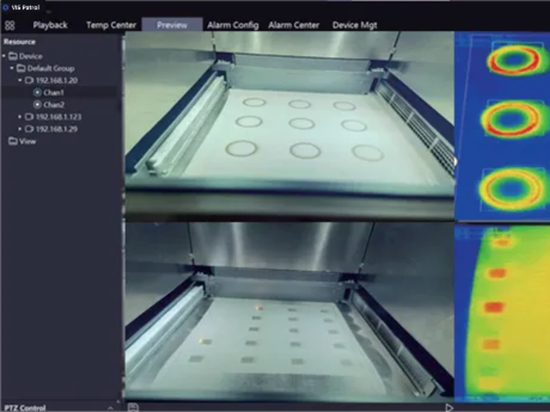
Monitoring defined areas in darkness or poor visible lighting
These uses do not all require the same camera. Some need calibrated temperature measurements, while others need only reliable imaging. Target size, distance, temperature span, required detail, and data workflow determine the appropriate configuration.
non-contact temperature measurement for rapid circuit breaker inspections
non-contact temperature measurement for rapid circuit breaker inspections
Raythink’s overview of thermal imaging applications provides additional examples across industrial and monitoring environments. For any application, the thermal image should be treated as evidence to interpret—not an automatic root-cause diagnosis.
Basic Limitations and Common Misconceptions
Thermal cameras primarily show radiation associated with visible surfaces. They do not reveal internal structures directly. A concealed component may create a temperature pattern on an exposed surface, but the camera is detecting that surface pattern rather than looking through the material.
Ordinary glass is another common source of confusion. Glass that is transparent to visible light blocks much of the long-wave infrared radiation used by many thermal cameras. The camera may show the glass surface temperature or reflected infrared radiation instead of the object behind it.
Reflective, low-emissivity materials can act like infrared mirrors. A bright or cool-looking patch may be a reflection of the surroundings rather than the surface temperature expected by the viewer. Focus and target size also matter: if the target does not occupy enough detector elements, its pattern and temperature estimate can be mixed with the background.
Finally, a thermogram is not a diagnosis. It shows an infrared pattern that must be interpreted using the material, load, process condition, comparison point, and inspection method. Important decisions should be supported by corroborating information.
Conclusion
A thermal camera uses infrared optics to form a scene on a detector array. The detector converts radiation into electrical responses, and the electronics process those responses into a thermogram. Radiometric systems add a calibrated model for estimating surface temperature.
The image represents radiation reaching the detector, so focus, surface properties, reflections, atmosphere, and target size affect interpretation. Understanding that chain is the foundation for using thermal images correctly.
If you are evaluating Raythink’s industrial thermal cameras, first check out whether the job requires imaging, radiometric measurement, or both, which determines the appropriate detector, optics, calibration, and software workflow.
FAQ
Do all thermal cameras measure temperature?
No. Imaging-only cameras display relative infrared contrast. Radiometric cameras use calibration data and measurement inputs to estimate apparent surface temperature.
Can a thermal camera work in complete darkness?
Yes. It does not require visible light. The scene must feature an infrared contrast for the target to stand out from its background.
Do thermal-image colors show the actual color of an object?
No. The camera assigns grayscale or pseudocolor values to the processed infrared signal. The palette helps a viewer interpret patterns but does not represent the object’s visible color.
Can a thermal camera see through walls?
No. As explained in more detail in Can Thermal Imaging Cameras See Through Walls?, a thermal camera normally detects radiation from the wall surface. Heat transfer from a concealed object may create an indirect surface pattern, but the camera is not imaging the object through the wall.
Is thermal imaging the same as night vision?
Not necessarily. Near-infrared night vision systems record reflected near-infrared light. Thermal imaging detects radiation in thermal infrared bands and can form an image without visible or near-infrared illumination.