#Product Trends
Best High-Temperature Thermal Cameras for Industrial Monitoring
The best high-temperature thermal camera is not always the model with the highest temperature measurement range. For process monitoring in furnace, glass, casting, or coal chemical industries, TN460U is the clear starting point. For boiler shells, ki
The best high-temperature thermal camera is not always the model with the highest temperature measurement range. For process monitoring in furnace, glass, casting, or coal chemical industries, TN460U is the clear starting point. For boiler shells, kiln shells, petrochemical equipment, confined equipment rooms, a different Raythink fixed thermal camera may be a better fit.
High Temperature Material Monitoring
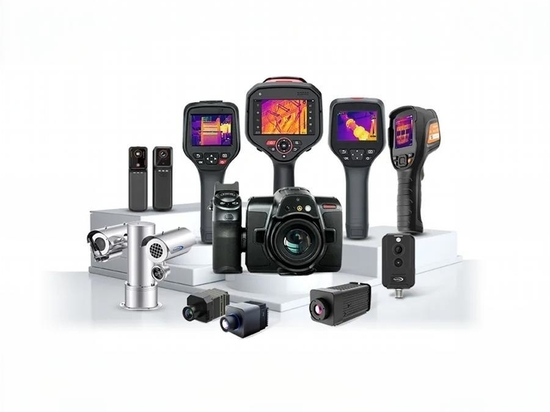
The comparison covers six Raythink fixed thermography cameras: TN460U, AT31, AT61, TN430, TN220, and TN460.
Raythink High-Temperature Thermal Camera Lineup at a Glance
Best for Recommended Raythink model Temperature range Why it fits
Ultra-high-temperature process monitoring TN460U 0℃ to 800℃; 600℃ to 2000℃ Best fit when the camera monitors furnace areas, hot materials, molten surfaces, refractory linings, and glass processes
Fixed high-resolution thermal monitoring TN460 -20℃ to 150℃; 0℃ to 650℃ 640 x 512, compact, low-power fixed camera for equipment housings, boilers, kiln surfaces, power systems, and machine vision tasks
Fast-response monitoring TN430 -20℃ to 150℃; 0℃ to 650℃ 384 x 288 resolution with 50 Hz frame rate for monitoring fast-changing surface temperatures
High-resolution with motorized focus AT61 -20℃ to 150℃; 0℃ to 550℃ 640 x 512 resolution with motorized focus for varying target distances
Fast-response monitoring with motorized focus AT31 -20℃ to 150℃; 0℃ to 550℃ 384 x 288 resolut with up to 50 Hz frame rate for automation, machine vision, and fast process inspection
Confined spaces and close-range equipment monitoring TN220 -20℃ to 150℃; 100℃ to 550℃ Compact IP67-rated cube camera with PoE, magnetic mounting, wide FOV options, and flexible system integration
Ultra-High-Temperature Monitoring: TN460U
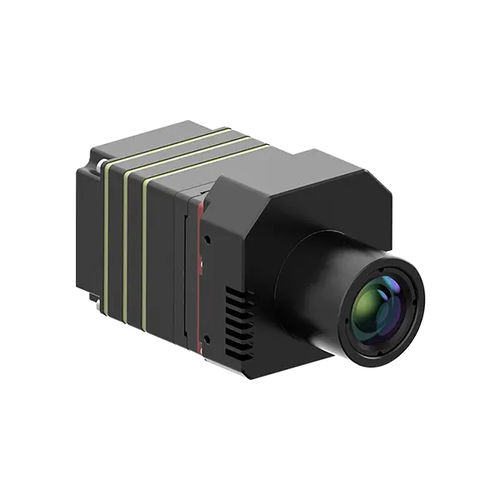
TN460U Online Ultra-High Temperature Thermal Camera
TN460U Ultra-high Temperature Thermal Camera is built for continuous monitoring of ultra-high-temperature industrial processes, including furnace monitoring, glass manufacturing, metallurgy, casting, and coal chemical processes.
Best for: furnace openings, molten material observation, high-temperature product surfaces, glass production, casting, coal chemical processes, and other applications where the camera has a valid optical path to the measured hot surface.
Not typically required for: boiler shell, pipe insulation, electrical equipment, or ordinary plant assets where the measured surface is far below 650℃.
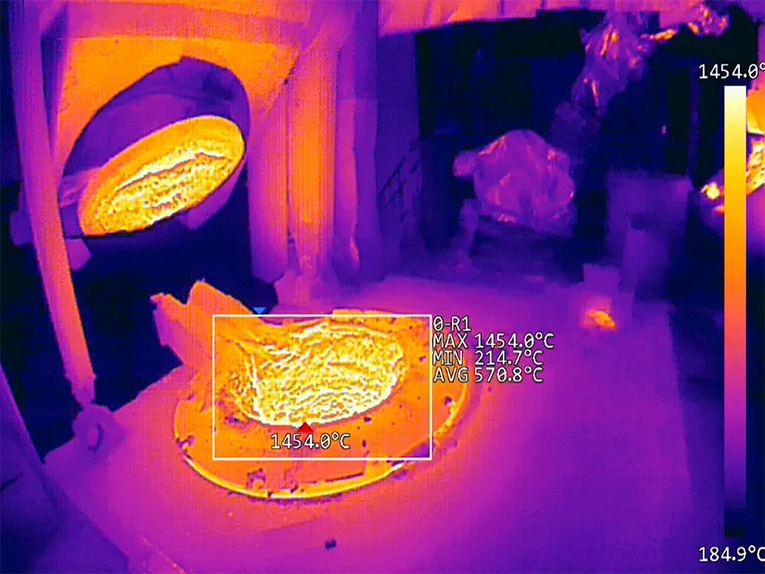
Passive Thermography for Temperature Management of the Tin Bath and Annealing Furnace
Use TN460U when the measured target can exceed 650℃. Its two measurement ranges, 0℃ to 800℃ and 600℃ to 2000℃, fit direct process monitoring where a standard camera rated for 550°C or 650°C would saturate or fall outside their effective measurement range.
In a furnace or casting line, the 640 x 512 detector and 25 Hz image/temperature output help operators see temperature distribution rather than a singlepoint. In glass production, the same wide-area view can support furnace, forming, or annealing-zone checks, but operators must properly set emissivity and account for optical-path transmission losses, since glass can emit, reflect, or transmit infrared energy differently by process condition. Raythink’s Glass Industry page covers related uses such as temperature monitoring, quality control, process optimization, equipment condition checks, defect detection, and heat-loss assessment.
TN460U is useful in production because it supports more than a single temperature reading. Operators can define multiple points, lines, and areas across a furnace mouth, refractory section, glass stream, or hot product path, then apply isotherms and alarms to the areas that matter. Correction settings for reflected temperature, ambient temperature, atmospheric transmissivity, emissivity, and distance help when the measured surface is refractory, slag, coating, oxidized metal, or glass.
TN460U also supports Modbus TCP, ONVIF, and MQTT, so temperature data can be fed into plant monitoring or control systems. Optional air-cooled or water-cooled housings help protect the camera when it is mounted near radiant heat or hot surrounding equipment.
Fixed Surface Monitoring up to 650℃: TN460 and TN430
Many high-temperature plants do not need a 2000°C-rated camera for every measurement point. Boiler shells, kiln shells, pipe insulation, furnace peripheral equipment, and power assets often require external surface monitoring below 650℃. That is why a 650℃ fixed camera can still be the right choice for petrochemical heat-loss checks, boiler casing checks, power-equipment monitoring, and rotary kiln shell monitoring. In all these cases, the camera is detecting external surface heat patterns and is not designed to measure the flame, melt, or reaction zone directly.
TN460: High-Resolution Surface Monitoring
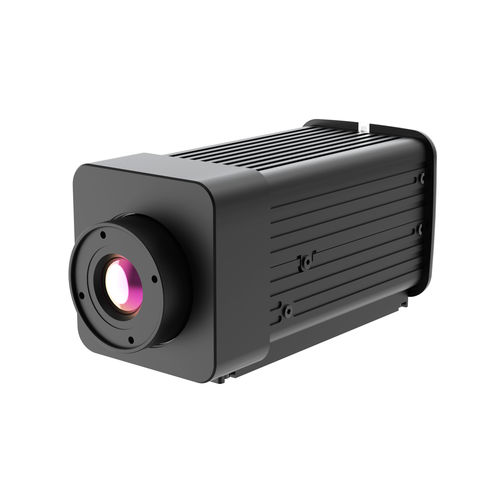
TN460 Fixed mount Thermal Camera, Fixed Thermal Imaging Camera
TN460 Fixed-mount Thermal Camera fits installations that require a resolution of 640 x 512 but not a 2000℃ measurement range. It covers -20℃ to 150℃ and 0℃ to 650℃, with 25 Hz image and temperature data.
Best for: boiler shell monitoring, rotary kiln shell monitoring, furnace peripheral equipment, power monitoring, rail or machine inspection, and industrial automation applications where surface temperatures stay within 650℃.
TN460 is designed for solid surfaces where thermal detail matters: a rotary kiln shell, boiler casing, insulated pipe run, electrical asset, or production-line hot zone. Its 640 x 512 resolution gives more measurement pixels for finding localized hot areas, while the 0℃ to 650℃ range covers many external industrial surfaces. The same surface-monitoring approach also applies to industrial infrared thermal imaging for equipment monitoring around rotating equipment, pipes, electrical assets, and production equipment. Correction settingscompensate for emissivity, distance, ambient temperature, and atmospheric effects, and Modbus TCP, ONVIF, and MQTT support make it easier to move the temperature data into plant systems.
TN430: Faster Compact Monitoring
TN430 Fixed-mount Thermal Camera, Fixed Thermal Imaging Camera
TN430 Fixed-mount Thermal Camera is the practical choice when frame rate matters more than maximum resolution. It provides 384 x 288 infrared resolution, 50 Hz frame rate, and measurement ranges of -20℃ to 150℃ and 0℃ to 650℃.
Best for: fast-moving equipment, machine vision, compact automation setups, process monitoring, railway inspection, and power equipment monitoring.
TN430 fits compact automation and applications with moving targets where process speed is more important than maximum image detail. In a robot cell, machine-vision station, railway inspection point, or fast production step, the 50 Hz output can capture changes that a slower camera may smooth over. For shotcrete robot installations, TN430 fits only when the measured surface stays within 650℃ and the optics can be protected from dust, rebound, overspray, and vibration. If the sprayed surface or refractory area can exceed 650℃, TN460U is the safer choice.
Motorized-Focus Monitoring up to 550℃: AT61 and AT31
AT61 and AT31 fit installations where target distance can vary or where manual focusing would be difficult after installation. Typical uses include test stands, chamber-area observation, industrial automation, petrochemical equipment, and power monitoring when the measured surface remains within 550℃.
Motorized-Focusing-Thermal-Camera-at61
AT61: Higher Resolution for Variable-Distance Scenes
AT61 Motorized Focusing Thermal Camera is a 640 x 512 online thermal camera with -20℃ to 150℃ and 0℃ to 550℃ measurement ranges. Its main advantage is motorized focusing, which helps when the camera needs to observe targets at different depths or when manual focusing is inconvenient after installation.
Best for: petrochemical plant monitoring, power monitoring, research and industrial automation, test stands, chamber-area observation, and installations where focusing flexibility matters.
AT61 fits sub-550℃ scenes that benefit from motorized focus. TN460 is the better match when the installation needs a 650℃ range, Modbus TCP/MQTT support, or a smaller network-type fixed camera. TN460U is recommended when the measured surface can exceed 650℃.
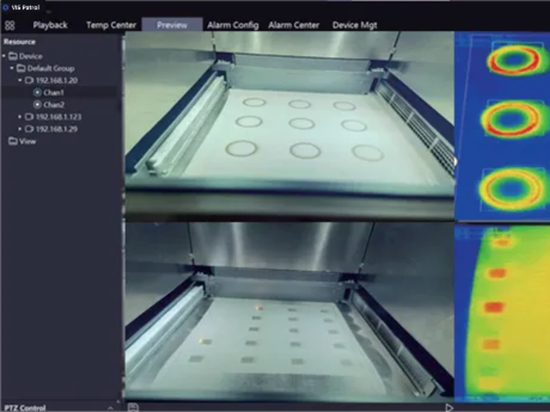
AT61 helps keep small hot areas visible even as the observation distance changes. A test stand, power cabinet, petrochemical equipment area, or chamber-adjacent installation may not always place the target at the same focal depth. Motorized focus helps operators adjust the image after installation, while 640 x 512 resolution and point/line/area measurement tools support detailed temperature checks across the scene.
AT61 motorized-focus thermal camera test setup displaying multiple small heated targets
AT31: Faster Response for Automation
AT31 Motorized Focusing Thermal Camera is the speed-focused counterpart to AT61. It uses a 384 x 288 detector, supports up to 50 Hz image and temperature output, and covers -20℃ to 150℃ and 0℃ to 550℃.
Best for: industrial automation, machine vision, electronics, test equipment, fast process changes, and moving targets where motorized focusing is useful.
AT31 is better for fast automation when the process surface stays within 550℃ and 50 Hz response is more valuable than 640 x 512 image detail. Electronics thermal tests, machine-vision temperature checks, moving fixtures, and robotic workcells can benefit from the faster output. For shotcrete or refractory repair work under 550℃, AT31 may be useful if the installation needs motorized focus, but the optical path still needs a shield, purge, or cleaning plan.
Confined Spaces and Close-Distance Monitoring: TN220
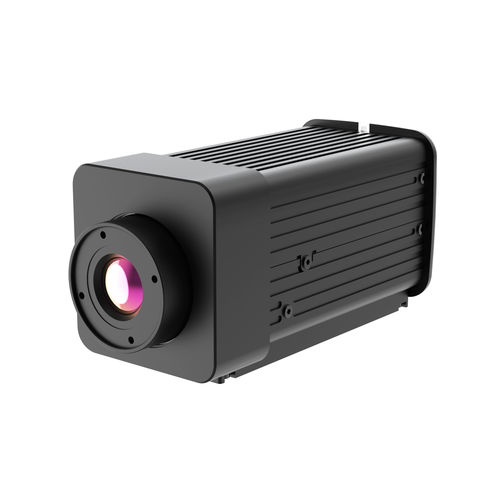
TN220 Thermographic Cube Camera is the most compact option in this product set. It uses a 256 x 192 detector, supports 1 to 25 Hz adjustable frame rate, and offers measurement ranges of -20℃ to 150℃ and 100℃ to 550℃.
TN220 Thermographic Cube Camera
Best for: power rooms, lithium battery storage, compact industrial equipment, data centers, cabinet interiors, close-distance monitoring, and sites where installation space is limited.
Use TN220 when compact installation and durability matter more than resolution or long-distance coverage. It is not the camera for direct furnace or molten-surface measurement. Its advantage is installation flexibility: IP67 protection, PoE, magnetic/wall/tripod mounting options, wide FOV choices, onboard storage, IO alarm input/output, RS485, Modbus TCP/RTU, MQTT, ONVIF, and SDK support. For compact internal or near-chamber equipment monitoring below 550℃, TN220 works best when heat, access, and mounting conditions are controlled.
Product Selection Shortcuts
For quick screening, start with the measured surface temperature and then narrow the choice by installation conditions. For a deeper engineering checklist, Raythink’s guide to choosing a high-temperature thermal camera covers calibrated range, spectral band, emissivity, enclosure cooling, lens/FOV, and PLC/SCADA integration.
If the measured surface can exceed 650℃, start with TN460U.
If the surface is below 650℃ and you need 640 x 512 detail, compare TN460.
If the surface is below 650℃ and speed matters, compare TN430.
If the surface is below 550℃ and motorized focus matters, compare AT61 or AT31.
If the installation is tight, close-distance, or cost-sensitive, compare TN220.
After the temperature range is clear, confirm the working distance, FOV, focus method, enclosure, cooling or purge design, mounting access, and communication protocol. These details determine which product can be installed and maintained reliably.
Final Site Checks Before Model Selection
Before the purchase decision, confirm the details that product tables cannot settle:
Measured Surface: A furnace, kiln, or gasifier name does not tell you whether the camera needs a 2000℃ range. Confirm whether the camera will see the process surface directly or monitor a cooler shell, wall, pipe, or equipment surface.
Process Speed: For robotic areas, moving targets, and fast temperature changes, frame rate may be more important than maximum detector resolution.
Installation Protection: Dust, steam, slag, water, vibration, corrosive gas, and radiant heat affect the enclosure, cooling, shielding, air purge, and cleaning plan.
Window Validation: Plasma nitriding and RF chamber projects need validated infrared windows. A visible-light viewport does not prove thermal measurement will work.
Acceptance Test: High-temperature metals, oxides, refractory, slag, coating, and glass can emit infrared radiation very differently. NIST high-temperature emissivity data for metals and oxides show why surface condition can change the reading. For acceptance testing, ASTM E1256 is useful because it covers performance topics such as calibration accuracy, repeatability, field of view, response time, warm-up, long-term stability, spectral range, and NETD.
Final Recommendation
Choose TN460U when the camera must directly measure furnace openings, molten materials, hot product surfaces, glass processes, or other 0℃ to 2000℃ process targets.
For external surface monitoring, first confirm what the camera will actually see: a shell, pipe, boiler casing, kiln surface, compact cabinet.
FAQ
What temperature range should a high-temperature thermal camera have?
The required range depends on the measured surface, not the nominal furnace or kiln temperature. Direct views of molten material, refractory, or high-temperature product surfaces may require a 2000℃-class camera. Shells, pipes, insulation, power equipment, and many surrounding assets often stay within 550℃ to 650℃.
Can one camera monitor both a furnace process and the external shell?
Sometimes, but not by default. Direct furnace-process measurement may require a 2000℃ range, while the external shell may sit within 550℃ or 650℃. One camera can work only if the temperature range, field of view, optical path, and installation protection fit both measurement tasks.
Is a fixed thermal camera better than a handheld thermal camera for industrial monitoring?
For continuous monitoring, yes. A fixed thermal camera can watch the same area every shift, apply alarm rules, record trends, and send temperature data to plant systems. A handheld thermal camera is better for manual inspection, troubleshooting, or confirming a reported hot area.
Can a thermal camera measure through a furnace, plasma nitriding, or RF chamber window?
Only if the viewing window is suitable for the camera’s infrared band and the measurement setup is validated. Window material, coating, thickness, angle, cleanliness, chamber atmosphere, RF environment, and target emissivity can all affect the reading. A standard visible-light viewport does not prove infrared measurement will work.
What site information is needed before final model selection?
Provide the normal and peak target temperature, measured surface material, target size, working distance, required FOV, ambient temperature, dust or steam conditions, window or sight-port design, mounting limits, alarm logic, and required protocol. This information narrows the product choice before a site test.