#Product Trends
Battery Warehouse Thermal Monitoring: Selection Guide
A useful battery warehouse thermal monitoring plan starts with five practical decisions: which zones and surfaces to observe, what camera and lens specifications are required, where clear sightlines are available, how alarm events should work, and wh
A useful battery warehouse thermal monitoring plan starts with five practical decisions: which zones and surfaces to observe, what camera and lens specifications are required, where clear sightlines are available, how alarm events should work, and what site data a supplier needs. This guide walks you through these key planning decisions before moving on to detailed system design.
Radiometric thermal cameras provide surface-temperature data as part of a facility’s broader monitoring and safety system. They are not a substitute for the site’s required detection, fire-protection, operating, or emergency-response controls. For the broader role of infrared imaging in warehouse monitoring, see our warehouse fire prevention and monitoring guide. Here, this guide focuses specifically on: defining camera, placement, alarm, and supplier requirements for battery storage monitoring plan.
Which areas should be included in battery warehouse thermal monitoring?
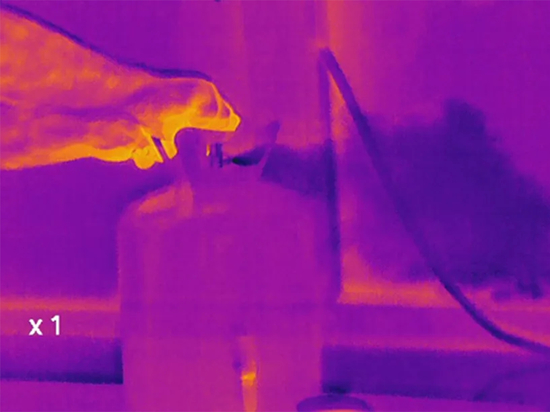
Lithium Battery Storage
Lithium Battery Storage
Start with the warehouse’s actual operations rather than a generic list of high-risk areas. Map normal storage racks and floor pallets, receiving or incoming-inspection points, and any area where batteries wait for the next handling step. Then consider whether returned, damaged, defective, or quarantined batteries follow a separate route. Charging or testing areas belong in the discussion only if they exist at the site.
The monitoring areas will vary depending on the warehouse layout and operations. For example, U.S. EPA guidance recommends separating damaged, defective, or recalled batteries when handling collected end-of-life batteries. A warehouse storing new products may have a different inventory and operating process. The key question is which conditions or handling stages require a distinct monitoring region at your facility.
Define the target surface in each zone
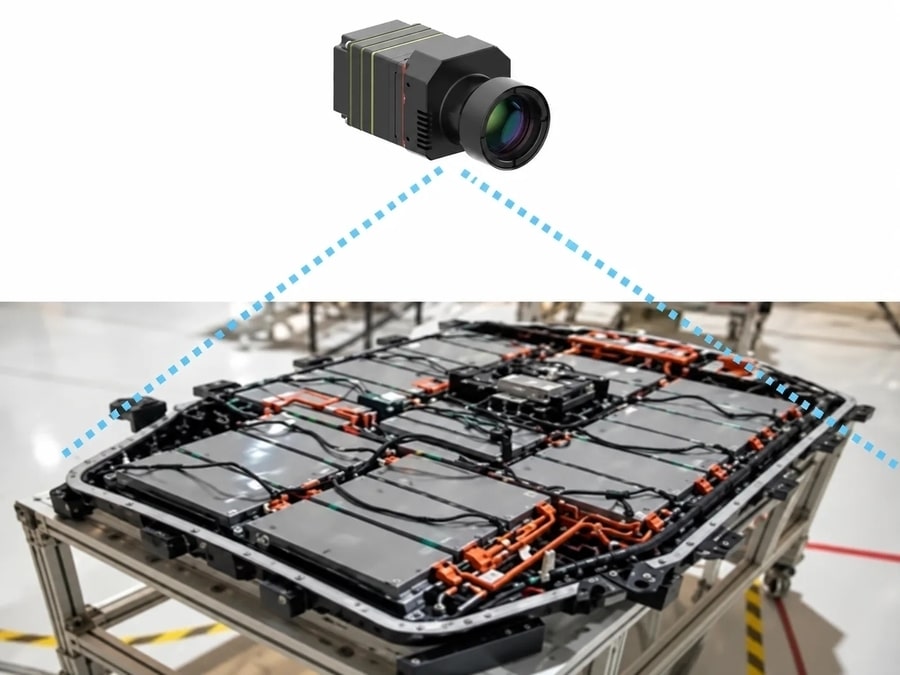
Infrared thermal monitoring of battery cell temperature
Naming a monitoring zone is not enough. Record the surface the camera is expected to observe, such as a pallet face, exposed module surface, or package exterior. Radiometric readings apply to accessible surfaces within the field of view. Opaque packaging, battery housings, rack members, front pallets, and equipment can conceal what is behind them. Surface properties and measurement settings also affect the reported temperature.
For each candidate zone, note three items: the target surface, its packaging or enclosure, and the obstructions likely to appear during normal operation. This information helps determine the right camera, lens, and mounting position for the area.
What type of thermal camera is suitable for battery warehouse monitoring?
Start with a fixed radiometric thermal camera: a permanently installed camera that provides temperature data for defined points, lines, or areas in its thermal image. A handheld thermal imager can support inspections, but it does not provide the same continuous fixed view. An imaging-only thermal viewer also cannot be assumed to provide the temperature measurements needed for alarm rules.
Match image detail to target size and distance
The smallest relevant target at the farthest monitoring distance should occupy enough thermal pixels for the intended measurement task. Detector resolution is therefore only one input. Target size, distance, lens, focus, viewing angle, and field of view work together.
A wider field of view covers more of a rack or aisle, but at the same detector resolution and distance it places fewer pixels on the same-size target than a narrower view. The viewed spot size increases with camera distance, so a target can be visible yet too small for efficient temperature measurement. For the final camera selection, check the proposed camera, lens, target, and mounting position to make sure the camera can provide enough detail for reliable temperature measurement.
Use this table to turn the site need into a supplier discussion:
Selection factor What the customer should confirm
Camera type Fixed radiometric measurement, not imaging only
Target detail Smallest relevant target and farthest distance
Lens and field of view Required coverage width at each mounting point
Measurement Required temperature range and accuracy
Monitoring regions Number and type of points, lines, or areas
Alarms Required outputs, routing, and event information
Connectivity Network and system-interface requirements
Environment Indoor conditions and required enclosure protection
Visible image Whether visual confirmation is needed
For further selection help, review our thermal camera specifications buying guide. Once the site requirements are clear, you can also compare our current fixed thermography camera options.
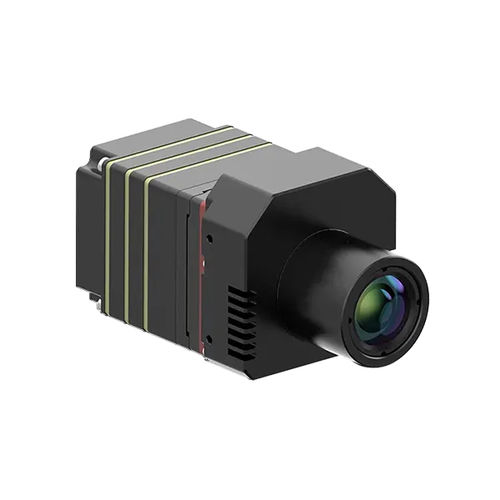
In a battery warehouse, the TN460 fixed-mount thermal camera offers lens options from 4.1 mm to 25 mm for matching nearby rack faces, floor-pallet zones, or smaller visible surfaces farther down an aisle. Its point, line, and area measurement rules can separate individual rack bays or quarantine zones. Where an alarm also requires visible-light confirmation of the affected pallet or aisle, the FC465T dual-spectrum bullet camera combines thermal monitoring with a 5 MP visible channel and specified IP66 protection. Final configuration should still reflect the visible target surface, packaging, farthest distance, and normal warehouse obstructions.
Where should thermal cameras be installed?
thermal camera inspecting ev battery pack
Start with a clear, maintainable line of sight to the relevant target surface. At each candidate mounting point, check whether columns, rack beams, front pallets, building structure, doors, conveyors, or other equipment will block the view. Also consider how the target will be packaged and whether that visible exterior is the surface the monitoring plan intends to measure.
Thermal cameras report the temperature of a visible target surface under configured measurement conditions. Reliable surface-temperature readings require the camera setup to account for the target surface, reflected heat from the surroundings, and anything in the viewing path that weakens the infrared signal. The camera does not measure through opaque packaging, battery housings, rack members, or other obstructions, and the relevant measurement conditions still need to be reviewed for the actual target.
Separate overview coverage from measurement detail
A camera can show an entire rack while representing a small pallet surface with too few pixels for the intended temperature measurement. Check the smallest target that needs to be monitored, the nearest and farthes viewing distances, the selected lens, focus, and viewing angle. The goal is not simply to place the rack inside the frame. The camera should provide enough thermal detail on the surfaces where temperature needs to be measured.
High or deep storage positions may need a different angle or additional view. Determine those choices from the actual rack height, depth, target size, available mounting positions, and obstructions.
Check the camera view under typical storage conditions
An empty aisle can make a preliminary view look better than it will during normal operation. Review the proposed sightlines with representative pallet positions and expected inventory levels. Include:
front pallets that can hide rear or lower positions;
maximum typical storage height and rack depth;
packaging or wrapping that changes the visible surface;
equipment and moving loads that temporarily cross the view; and
inventory changes that create new obstructions.
Use this full-load check during planning to identify likely blind areas early enough to compare mounting positions, viewing angles, or overlapping views before a quotation is finalized. Define the formal project commissioning criteria separately for the installed system.
How should temperature alarms work?
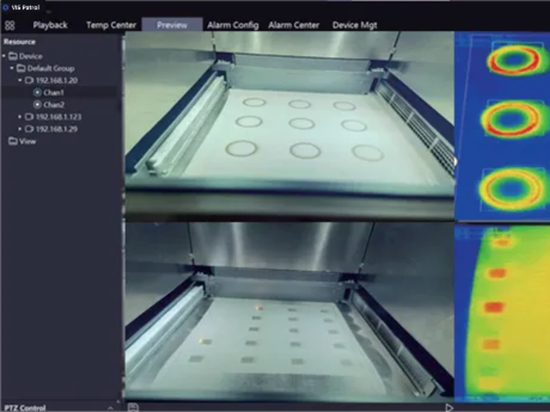
Battery Production and Assembly Monitoring Applications
Ask the supplier to evaluate which alarm-logic patterns the proposed camera and software can implement, and how each available pattern will be verified for the battery and site. The discussion can cover:
Absolute temperature: Verify whether the proposed configuration can create an event when a defined measurement region reaches a configured temperature, and how that setting will be validated.
Temperature difference: Ask whether the implementation can compare a monitored target with an appropriate reference or genuinely comparable targets under similar surface and environmental conditions.
Temperature rise over time: Ask whether trend or rate logic is available, which time window it uses, and how a sustained change will be distinguished from normal variation.
No single threshold, temperature difference, persistence time, or rate-of-rise setting suits every battery warehouse. The settings should reflect battery type and manufacturer information, storage conditions, the visible surface being measured, ambient conditions, and the facility’s operating and safety procedures. Comparing dissimilar packaging materials or locations as though they were equivalent can make the result hard to interpret.
Define the event information and routing
An alarm is more useful when the recipient can identify what happened and where it happened. During procurement, confirm whether an event record should include:
the monitored location or region of interest;
a thermal image or saved record;
the relevant temperature value;
the event time;
the alarm type or rule that was triggered.
Then define where the output must go, such as a monitoring platform, control room, existing alarm interface, or designated personnel workflow. Keep the responsibilities explicit: the camera or software can generate data or an output, while the verified platform, controller, operator, or procedure performs the downstream action. Equipment shutdown, inventory isolation, suppression, and emergency notification require a separately verified system design.
What information should you prepare before selecting a system?
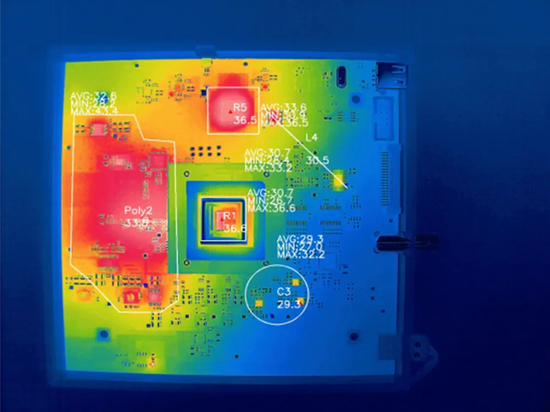
Application of Thermal Imaging in lithium-ion battery
A supplier can narrow camera and lens options more effectively when the inquiry describes the site geometry and measurement task. Group the information into four parts.
Layout
warehouse floor plan;
rack layout, rack height, and aisle width;
candidate monitoring zones;
available camera mounting positions; and
representative full-load obstructions or moving-equipment routes.
Target and distance
target surface and packaging or enclosure;
smallest relevant target size;
nearest and farthest monitoring distances; and
required coverage width from each candidate position.
Environment
indoor or outdoor location;
expected ambient temperature and humidity;
dust, moisture, cleaning, or other enclosure considerations; and
whether visible-light confirmation is required.
Alarm and integration
required alarm approach and event information;
intended event recipients or platform;
network and interface requirements; and
required measurement range and accuracy.
Together, these inputs give the supplier the geometry and measurement requirements needed to recommend a suitable system. They support a focused discussion of detector resolution, lens and field of view, approximate viewing coverage, measurement regions, alarm and interface capability, enclosure needs, visible confirmation, and current product options.
To discuss your application, contact us with your warehouse layout, monitoring distances, target size, available mounting positions, and alarm requirements. We can then review suitable thermal camera and lens options and clarify the expected viewing coverage, measurement regions, alarm outputs, and interface requirements for your application.