#Industry News
Can OGI Cameras Be Used for LDAR Inspections?
Yes. An OGI camera for LDAR work is a well-established tool in oil and gas, refining, and petrochemical sites. Optical gas imaging (OGI) shows hydrocarbon and VOC leaks as a visible plume on screen, so a trained operator can find leaking components d
Yes. An OGI camera for LDAR work is a well-established tool in oil and gas, refining, and petrochemical sites. Optical gas imaging (OGI) shows hydrocarbon and VOC leaks as a visible plume on screen, so a trained operator can find leaking components during routine surveys and screening. For how the imaging works and where it helps most, see our overview of advantages and principles of optical gas imaging.
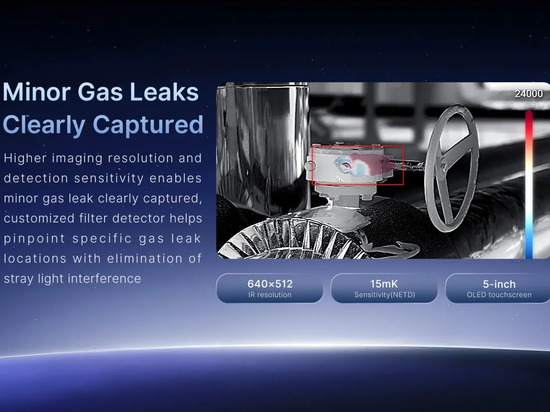
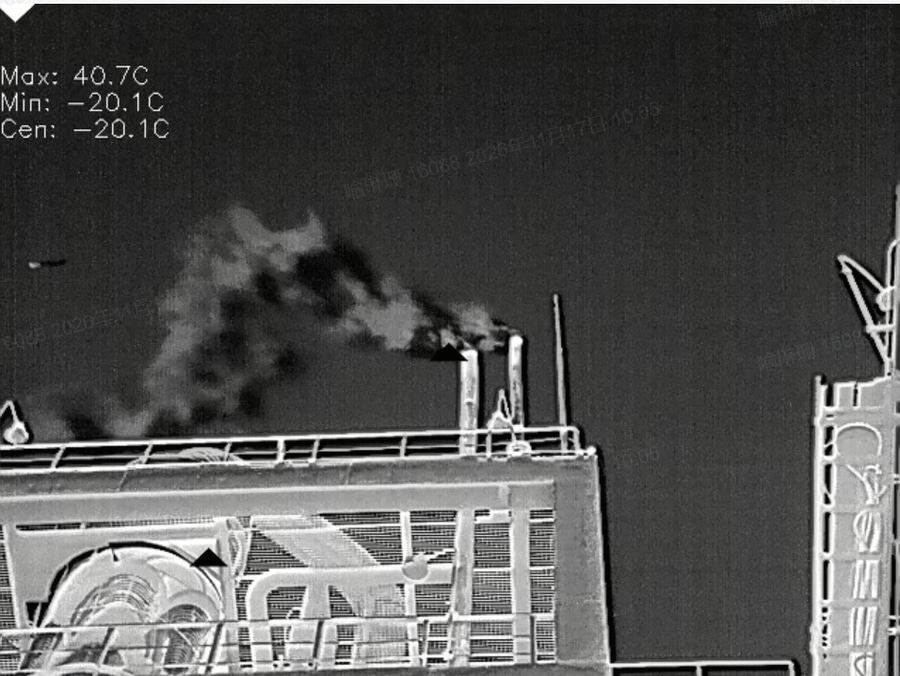
OGI visualization of a gas plume escaping from an industrial vent. Infrared absorption creates image contrast, making the otherwise invisible leak visible against the background.
Key benefits of an OGI camera for LDAR
Method 21 is an EPA-established procedure for detecting volatile organic compound (VOC) leaks by measuring gas concentrations near equipment components. The instrument gives a number at the point where the probe sits. An OGI camera shows a moving gas cloud against the background, so the operator can trace it back to the flange, valve, or fitting it comes from. EPA’s alternative work practice expects the instrument to give the operator an image of both the leak and the leak source. Operators also report fewer mix-ups about which component is actually leaking, and the video gives repair crews and auditors a clear record.
Screening can move faster. Instead of touching a probe to each component one at a time, an operator can scan a run of pipe, a manifold, or a group of connectors in one view. In practice, this lets teams cover large or crowded areas more quickly, and find bigger leaks sooner. How much time you save depends on the site layout, the rule you follow, and the dwell and coverage steps in your monitoring plan, so treat speed as a typical benefit rather than a fixed percentage.
Viewing from a safer position. Because the camera works at a distance, operators can often look at elevated, hot, or hard-to-reach components without climbing to them or standing at the leak point. The safe viewing distance depends on the camera, the gas, and site conditions, and your plan may set a maximum distance for valid surveys.
One tool, more than one job. Some OGI platforms also support general thermal inspection work, which can help maintenance teams get more use from the same equipment. Keep LDAR surveys and general inspections clearly separated in your records.
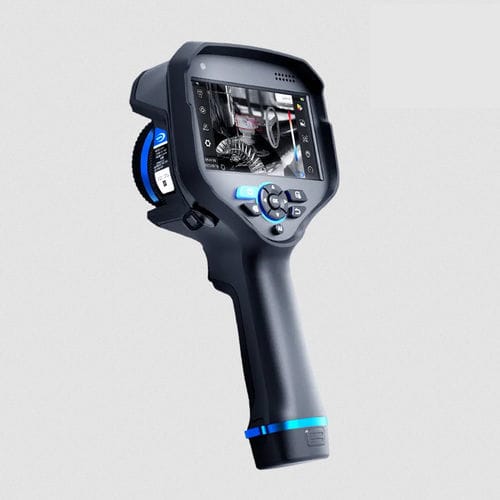
For handheld options built for walk-around surveys, see our optical gas imaging cameras.
OGI vs Method 21
Method 21 and OGI answer different questions. Method 21 uses a portable VOC instrument at the component surface and compares the reading with a leak definition in ppm, following EPA’s Method 21 procedure. OGI uses imaging to show where gas is escaping. Neither one directly measures a mass emission rate.
Dimension Method 21 OGI
Output Concentration reading (ppm) at the component Image or video of a gas plume
What a “leak” means Reading at or above the rule’s leak definition Visible plume under the plan’s conditions
Typical role Component-by-component monitoring and repair checks Fast locating and screening of areas and components
Strengths Numeric result tied to a defined threshold Shows the source; covers many components per view
Limits Slow on large component counts; no picture of the source Depends on wind, temperature contrast, distance, and operator skill
Common pattern Used where the rule requires a concentration result Used to find leaks, often alongside Method 21
In many programs, the two work together. Crews use OGI to find and document plumes, then use Method 21 or another concentration method where the rule or site plan calls for it. Even under EPA’s OGI alternative work practice, an annual Method 21 survey still applies. So the real choice is usually not “one or the other” but which method covers which task.
Limits and field conditions (and a note on QOGI)
OGI is powerful, but it is not magic. Whether a plume shows up depends on several conditions:
Wind: strong or gusty wind spreads gas and makes plumes harder to see.
Temperature contrast (ΔT): the camera needs a difference between the gas and the background behind it. A low contrast weakens the image.
Viewing distance: small leaks get harder to spot as distance grows.
Background: clear sky, cluttered steel, or reflective surfaces all change what the operator sees.
Gas type and concentration: the camera must respond to the compounds in your stream. For a practical list of gases OGI can target, see what gases OGI cameras can detect.
Operator technique: training, viewing angles, and enough time on each scene matter.
This is why protocols ask teams to set an operating envelope, or run a daily field check, before surveys count. A key point follows: “no plume seen” does not prove zero leak, especially outside those valid conditions. Good practice is to record the weather, the viewing position, and the camera mode with each survey, so a reviewer can tell whether a clear image really means a clean component.
A basic OGI image is qualitative. It tells you where gas is escaping, not how much. Quantitative OGI (QOGI) adds software and a defined procedure to estimate an emission rate, but published results show that accuracy depends heavily on conditions and individual readings can be far off. Treat QOGI as a separate method with its own uncertainty, not as an automatic upgrade to any camera that sees gas. Teams focused on methane screening can also read our notes on methane leak detection with gas cameras.
What to verify for your LDAR program
Before you rely on OGI, check these items against the text that governs your equipment. Think of it as a short OGI LDAR compliance checklist, not a guarantee.
Applicable requirements. Confirm which regulations, industry standards, or site-specific requirements govern the use of OGI for your equipment and LDAR program.
Camera and configuration records. Verify that the camera model and its operating configuration meet the applicable performance requirements for your target gases. Request configuration-specific documentation and check that the camera’s detection sensitivity is suitable for the intended application.
Survey media and operating envelope. Check what video or images you must keep, what daily checks apply, and the wind, ΔT, and distance limits in your plan.
Frequency and repair. Survey intervals and repair deadlines come from the referencing rule. Verify them for your site type instead of copying another facility’s schedule.
People and records. Confirm operator training, proficiency checks, and record retention required by your route.
FAQ
Handheld or fixed OGI — which fits LDAR surveys?
Handheld units suit walk-around LDAR routes, temporary campaigns, and hard-to-reach components you visit on a schedule. Fixed cameras suit continuous watch on a known high-risk bay, header, or compressor package. Many sites use both: fixed for persistent coverage, handheld for periodic full-component surveys. Match the form factor to access, staffing, and whether your plan needs video from a set viewpoint.
Can OGI alone replace Method 21 everywhere?
No. Imaging and Method 21 answer different questions. Some routes let OGI cover many monitoring tasks, but concentration checks, annual Method 21 overlays under the alternative work practice, and permit-specific duties can still apply. Read the citing subpart before you drop Method 21 from the program.
Where do we look up OGI survey frequency?
In the rule or permit that references your equipment—not in a camera brochure. Frequency can vary by site type, leak history, and whether you follow an alternative work practice, OOOOa/OOOOb fugitive provisions. Start with the subpart text and any state or consent-decree add-ons your site already uses.
Do we need separate QOGI tools to report leak rates?
Yes, if you need a mass emission estimate. A standard OGI survey locates and documents plumes. Rate estimates need a defined quantitative method (often sold as QOGI software plus a controlled procedure), and results carry condition-dependent uncertainty. Do not treat a plume video as a silent rate measurement.
What operator training should we plan for?
Plan for camera operation, leak recognition, viewing technique, and the record steps your route requires. When Appendix K or a similar protocol applies, it also sets proficiency and oversight expectations—verify those hours and audit intervals in the citing text rather than guessing. Keep training records with your survey files.
Talk to us about your OGI setup
If you are planning or expanding OGI work in an LDAR program, tell us your target gases and stream makeup, site conditions such as access and ambient extremes, whether you prefer handheld or fixed cameras, and the rule you must meet. Our team can help you compare documented configuration options. Compliance decisions stay with your facility and regulators.