#Industry News
What is a VSI Crusher? & Differences Between Cone Crusher and VSI Crusher
Cone Crusher vs. VSI Crusher: Core Difference Analysis and Selection Guide
In the field of sand and gravel processing and building materials production, the selection of crushing equipment directly determines the finished product quality, production efficiency, and project returns. As two core pieces of equipment, cone crushers and VSI crushers both serve the material crushing process, but they have significant differences in application scenarios due to their distinct working principles and positioning. This article will deeply analyze the core differences between the two to help enterprises make accurate selections, and also recommend a professional equipment solution provider for you.
I. Crushing Principle: Compression vs. Impact – Fundamentally Different Logic
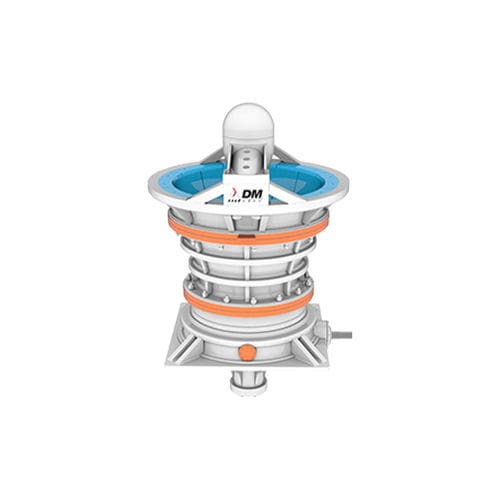
The cone crusher is based on the principle of laminated crushing. Driven by a motor, the eccentric sleeve rotates to drive the moving cone to swing periodically. The materials between the moving cone and the fixed cone are crushed by extrusion, bending, and shear forces. The entire process is centered on "compression crushing", and the materials are in a relatively static compression environment during crushing.
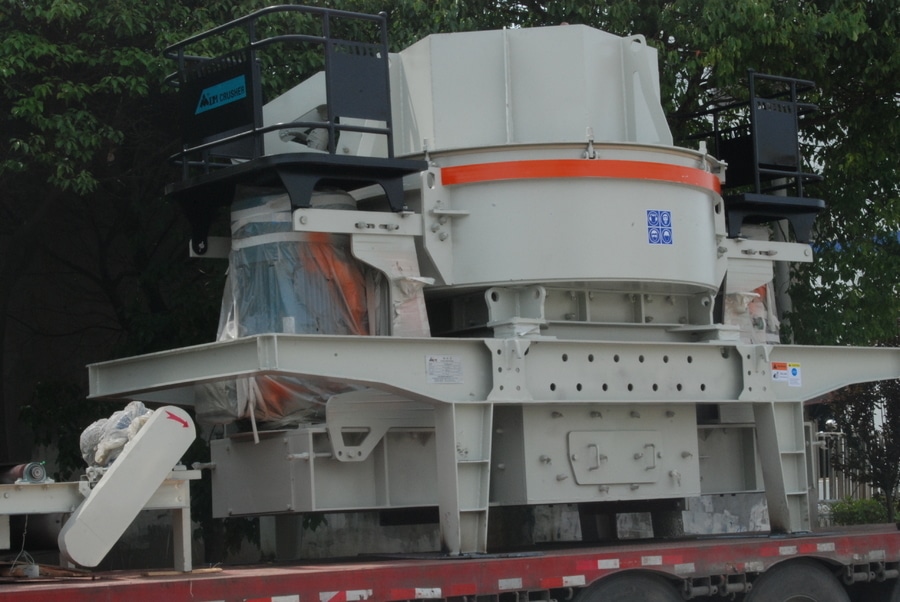
In contrast, the VSI crusher (Vertical Shaft Impact Crusher) relies on the principle of impact crushing. After entering the equipment, materials are accelerated and thrown out by the high-speed rotating impeller at a speed of tens of meters per second, hitting the impact lining plate or other materials. Crushing is achieved through the impact and grinding of "stone-on-stone" or "stone-on-iron" modes, and the crushing process depends on the high-speed movement and collision of materials.
II. Core Positioning: Medium-Fine Crushing of Aggregates vs. Sand Making + Shaping – Each Performing Its Own Function
The core positioning of the cone crusher is in the medium and fine crushing stages, commonly used for secondary and tertiary crushing after primary crushing. The discharge particle size is generally between 10-60mm (which can be fine-tuned by adjusting the discharge opening). It cannot directly produce fine sand (0-5mm) that meets the standards for construction use, and the finished products are mostly aggregate-grade particles.
The VSI crusher, on the other hand, focuses on fine crushing and sand making functions and is the core equipment in sand making production lines. It can process 10-30mm stone materials into fine sand that meets construction standards. At the same time, it can shape aggregates to improve their particle shape and gradation, meeting the dual needs of sand making and high-end aggregate production.
III. Finished Product Quality: Conventional Requirements vs. High-End Standards – Significant Differences
Affected by the compression crushing principle, the finished products of the cone crusher have a relatively high content of needle-like and flaky particles, with irregular particle shapes and uneven gradation. They can only meet the aggregate needs of ordinary construction projects and are difficult to meet the high-standard aggregate requirements of key projects such as high-speed railways and expressways.
Through multiple impacts and grinding, the finished products of the VSI crusher are cubic in shape, with the content of needle-like and flaky particles controllable below 5%. They have rounded particle shapes and reasonable gradation. Not only can they produce high-quality construction sand, but the shaped aggregates can also meet the high-quality requirements of key projects such as high-speed railways and expressways.
IV. Application Scenarios: Large-Scale Aggregate Production vs. High-Quality Sand Making – Precise Matching
The cone crusher has a wide range of adaptability to compressive strength (≤350MPa) and can process medium-hard to ultra-hard materials such as granite and basalt. The single-machine processing capacity can reach hundreds of tons per hour, making it suitable for large-scale and continuous aggregate production scenarios such as large sand and gravel plants and metal mines.
The VSI crusher is more suitable for sand making and shaping of medium-hard and below materials (≤280MPa), such as river pebbles, limestone, and construction waste recycled materials. Although the single-machine processing capacity is lower than that of cone crushers of the same specification, it has higher efficiency in sand making scenarios. The wear of vulnerable parts is related to the material hardness, and the loss will increase significantly when processing ultra-hard materials. It is an essential equipment for small and medium-sized sand and gravel plants, high-quality sand making projects, and aggregate processing of key projects.
V. Selection Suggestions and Professional Support
Cone crushers and VSI crushers are not opposites but "golden partners" in sand and gravel production lines – the cone crusher completes the medium and fine crushing of aggregates, and the VSI crusher is responsible for subsequent sand making and shaping. The cooperation of the two can build a complete sand and gravel processing system to meet the material needs of different particle sizes and qualities.
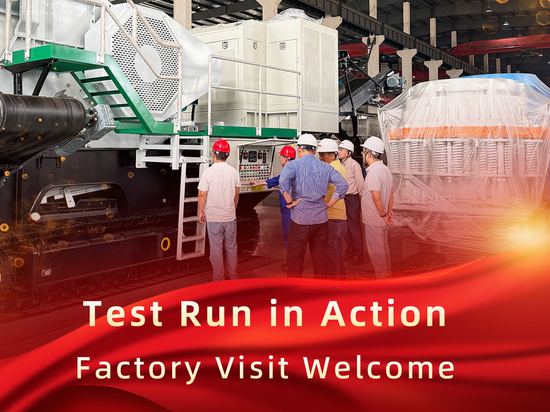
If you are confused about project equipment selection or need customized crushing and screening solutions, Dongmeng Group (https://dongmeng-group.com/) , as a professional manufacturer and service provider of crushing and screening equipment, can offer a full range of services including plant design, timely supply of key equipment and spare parts, as well as free installation guidance and project test-run services. Relying on a global network of professional teams, Dongmeng Group can accurately match your production needs, provide efficient and environmentally friendly equipment support for the green development of the building materials industry, and help you seize opportunities in the wave of infrastructure construction.