
#Product Trends
Ruicom GKG3 Vibration Sensor Targets Spindle Collision Detection and Tool Condition Monitoring on CNC Machine Tools
Triaxial MEMS sensing with ±40 g range and 500 Hz bandwidth catches crash transients and chatter signatures at the source — over standard RS485 / MODBUS RTU
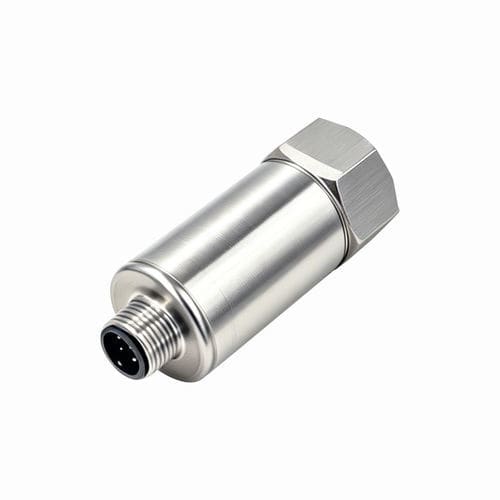
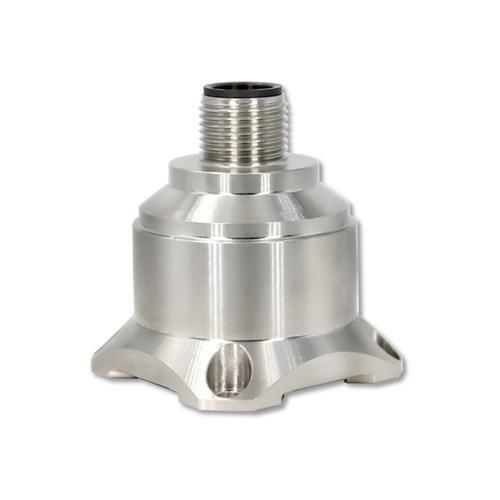
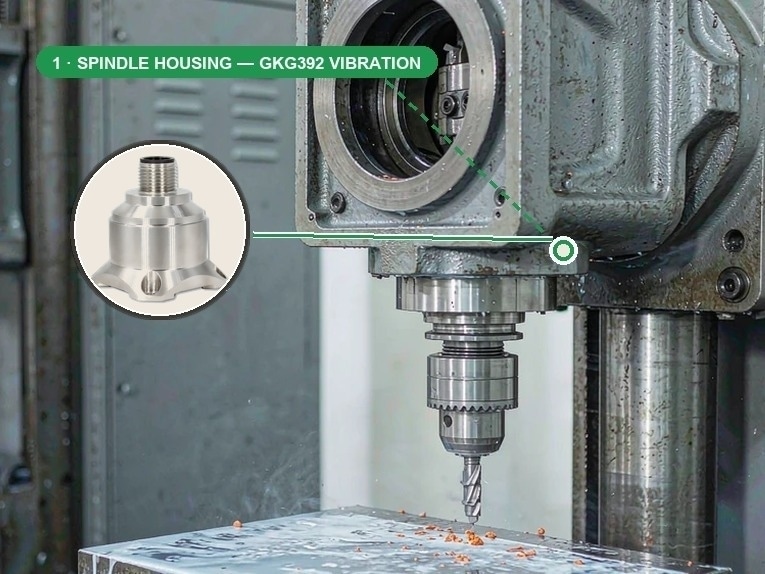
Ruicom today introduced the GKG3, a triaxial MEMS digital vibration sensor purpose-built for machine structure, spindle and tooling vibration monitoring. Bolted to the spindle housing and the machine column, the GKG3 streams 500 Hz-bandwidth vibration data to the CNC or the plant monitoring system over RS485 / MODBUS RTU: crash transients up to ±40 g are captured as they happen, and the chatter spectrum that warns of tool breakage is on record before the tool fails.
Why the structure knows before the controller does
A spindle crash can write off a workpiece, a tool and sometimes the spindle itself — and the machine's own protection only reacts after contact. A collision dumps a shock wave into the casting long before the drive current or the position loop reacts. A sensor mounted at the source resolves the impact transient a crash actually produces, while the same triaxial channel picks up the tooth-passing frequency and the chatter signature of a wearing tool. One sensor covers two protection jobs — with no proprietary bus required.
Vibration truth at the cutting point
Spindle crash & collision detection — logs the impact transient as it enters the structure, giving the controller or a safety PLC a trigger before more scrap is cut, plus a peak-g record for the post-mortem.
Tool wear & breakage watch — tooth-passing frequency and chatter amplitude trend inside the same 500 Hz band; a rising trend flags a dulling tool, a step jump flags a broken one.
Spindle bearing & gearbox health — bearing defect frequencies and gear-mesh harmonics compared against a commissioned baseline, on machines that run around the clock.
Plant-wide roll-out — many machines share one RS485 / MODBUS chain and one log format; where the monitoring network is IP-based, the GHA360 adds an Ethernet triaxial channel of the same measurement.
Key specifications
Measurement axis: X / Y / Z (triaxial)
Range: ±2 / ±4 / ±8 / ±10 / ±20 / ±40 g
Resolution @ 1 Hz: < 1 mg
Bandwidth (3 dB): 500 Hz
Noise density: 21 µg/√Hz (±2 g version)
Output rate: 5–1000 Hz settable
Interface: RS232 / RS485 / TTL · MODBUS RTU
Supply: DC 9–36 V · < 60 mA @ 12 V
Protection: IP67 aerospace aluminium · magnetic base
Housing / weight: 34.2 × 34.2 × 38.5 mm · ≤ 68 g
With a magnetic base, multi-point RS485 / MODBUS networking and a configurable range up to ±40 g, the GKG392 gives machine builders and plant operators a single, standard-interface sensor for both collision protection and condition-based tooling maintenance.