#Industry News
Sampling liquefied CO2 from anaerobic digestion
For CO2 valorisation
Methanization has become a key solution for the energy transition and the circular economy. This biological process transforms organic waste - from agriculture, the food industry and local authorities - into biogas and digestate that can be used as fertilizer. Biogas, composed mainly of methane (CH₄) and carbon dioxide (CO₂), is a renewable energy source that can be fed into the grid, used to produce electricity, heat, or even alternative fuel (bioGNV).
But beyond the valorization of methane, the industry is increasingly interested in the CO₂ produced by methanization. Once separated and purified, this CO₂ can be recovered, liquefied and used in numerous industrial applications: soft drink production, agricultural greenhouses, the chemical industry or even cooling processes.
This is where SOCLEMA 's expertise comes into play.
For liquefied CO₂ to become a valuable resource, it is essential to guarantee its quality and purity through reliable analysis. Yet obtaining a representative sample under these pressure and temperature conditions is a challenge.
The challenges of liquefied CO₂
Liquefied CO₂ from anaerobic digestion plants has special physical characteristics:
- Pressure 15-20 bar,
- Temperature down to -30°C,
- Minimum purity requirement > 99
These constraints make sampling a tricky business. It's not simply a matter of taking CO₂, but of ensuring that the sample is representative and stabilized to enable relevant analysis, without denaturation due to phase change or contamination.
SOCLEMA's intervention
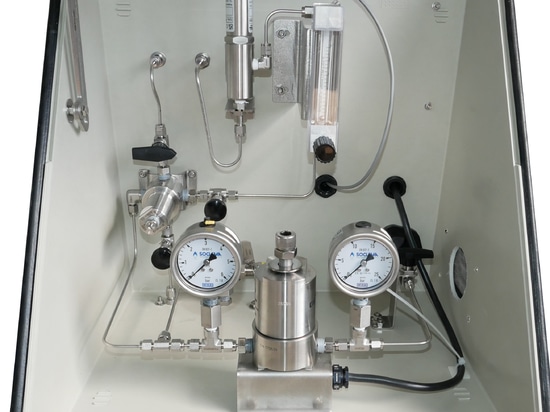
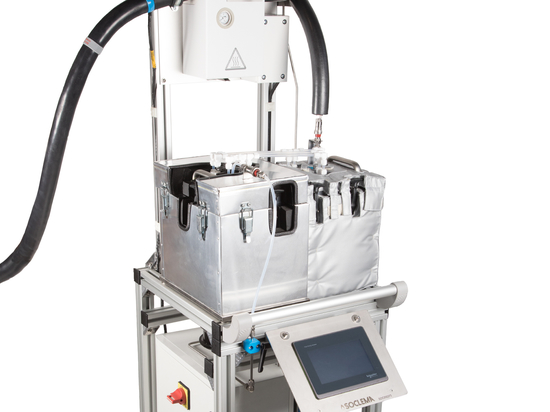
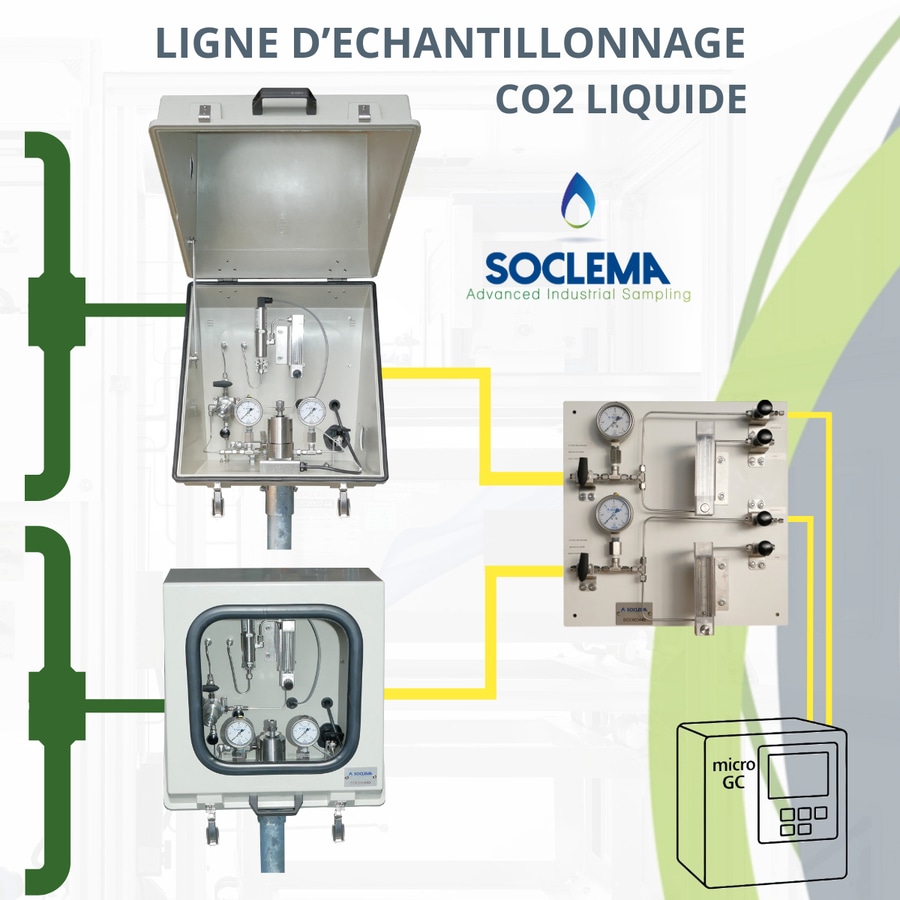
Faced with these challenges, SOCLEMA designs and supplies completesampling and conditioning systems for liquefied CO₂.
Our solutions enable you to :
1- Take liquid CO₂ directly from storage tanks or production unit:
- Integration of suitable tappings with flanges,
- Isolation and purge valves for safe sampling,
- Insulated lines to limit heat loss and maintain the liquid phase.
2- Condition the CO₂ to make it analyzable:
- Passage through conditioning boxes,
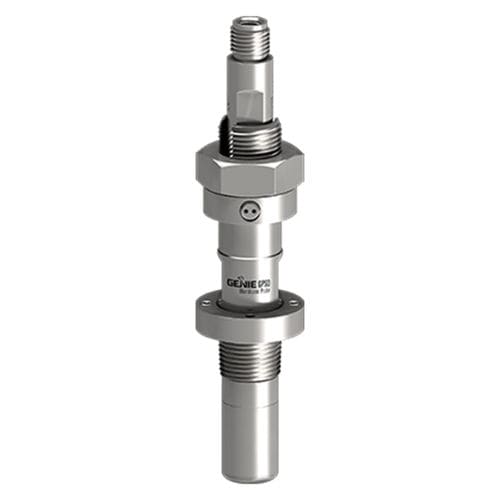
- Controlled vaporization thanks to a heated expansion valve,
- Particle filtration to limit clogging,
- Integration of a humidity sensor to monitor this critical gas quality parameter.
3- Route the conditioned sample to the analysis unit:
- Stainless steel tube network sized to limit losses,
- Sampling stage designed to connect a micro GC (gas chromatograph),
- Management of several independent analysis channels, with selection valves, flowmeters and pressure gauges.
Guaranteeing sample representativeness
The main aim of SOCLEMA's design is to keep circulating volumes of liquid CO₂ to a minimum, in order to limit the risk of premature vaporization. The fluid is thus maintained in stable conditions until its controlled transformation into the gaseous phase in the enclosure.
This approach ensures that the sample fed to the micro GC faithfully reflects the actual composition of the liquefied CO₂, an essential condition for validating its purity and suitability for recovery.
An essential step in the value chain
In the overall process of anaerobic digestion and CO₂ recovery, sampling and conditioning represent a critical but often invisible step. Without a representative sample and reliable analysis, it's impossible to ensure the quality of the gas destined for industrial applications.
By contributing its technical expertise, SOCLEMA helps to secure the industry, strengthen the credibility of biogas producers and optimize the recovery of every molecule of CO₂.
In short: methanization is not just about producing renewable energy via methane. It also opens the way to a circular CO₂ economy, where every stage - from capture to liquefaction, then sampling and analysis - must be perfectly mastered.
SOCLEMA's expertise is in line with this logic, providing a robust and reliable technical response to the energy transition.