#Product Trends
AI Thermal Validation Enters a New Era: Why TTVs Are Becoming Essential for Next-Generation Cooling Systems
From Air Cooling to Advanced Liquid Cooling
The AI industry is rapidly transitioning toward multiple liquid cooling architectures, each designed to address different performance and deployment requirements.
These include:
Direct-to-Chip (D2C) Liquid Cooling
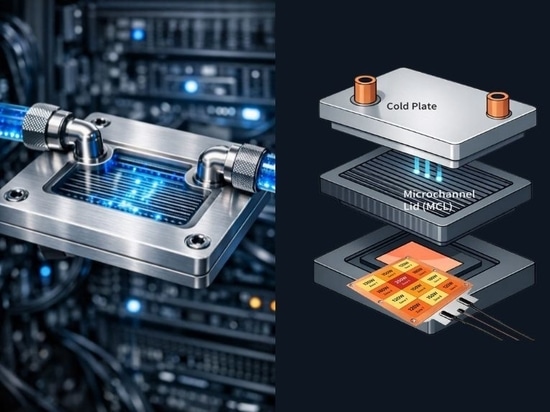
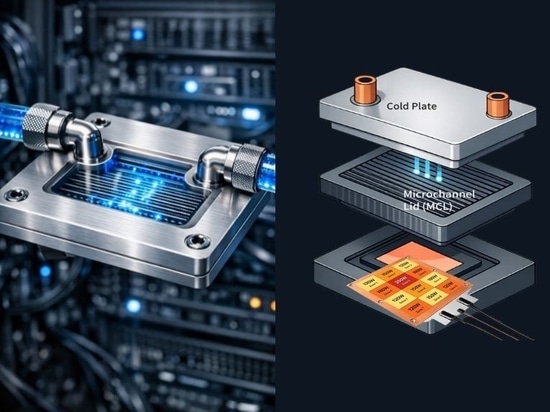
Cold Plate Cooling
Single-Phase Immersion Cooling
Two-Phase Immersion Cooling
Two-Phase Direct-to-Chip Cooling
Among these technologies, two-phase cooling is attracting increasing attention because it removes heat through liquid-to-vapor phase change, enabling significantly higher heat transfer capability for extremely high-power AI processors. While the technology requires greater infrastructure complexity than single-phase cooling, many experts expect its adoption to increase as AI rack densities continue to rise.
The Missing Piece: Realistic Thermal Validation
Selecting an advanced cooling technology is only part of the engineering challenge.
The equally important question is:
Can the cooling system be validated under realistic operating conditions?
Many traditional thermal test methods still generate uniform heat.
However, modern AI processors generate anything but uniform thermal loads.
Current AI devices commonly feature:
Chiplet architectures
High Bandwidth Memory (HBM)
Localized thermal hotspots
Non-uniform power maps
Dynamic power distribution
Testing a cold plate or immersion cooling system using a uniform heat source may not accurately represent real operating conditions.
This has created growing demand for more sophisticated thermal validation methods.
Why Thermal Test Vehicles (TTVs) Matter
A Thermal Test Vehicle (TTV) is designed to emulate the thermal behavior of an actual semiconductor device without requiring a functional chip.
Rather than testing computational performance, engineers can focus entirely on thermal characteristics, allowing cooling solutions to be evaluated earlier in the product development cycle.
Typical applications include:
Cold Plate performance evaluation
Direct-to-Chip liquid cooling validation
Single-Phase Immersion Cooling testing
Two-Phase Immersion Cooling testing
Thermal Interface Material (TIM) evaluation
AI server thermal verification
Cooling system comparison and optimization
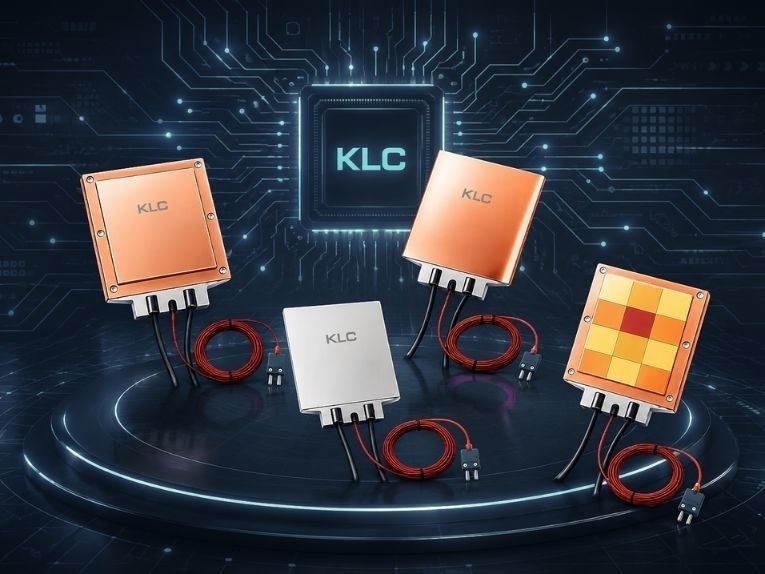
KLC TTV 2.0: A Modular Platform for AI Thermal Validation
To address these emerging requirements, KLC developed TTV 2.0, a standardized thermal validation platform designed specifically for modern AI cooling applications.
Key capabilities include:
High Power Density Heat Simulation
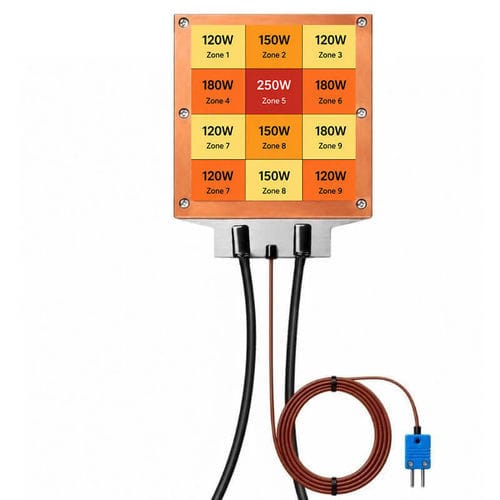
Optional Multi-Zone Power Control for hotspot emulation
Customer-defined Power Maps
Custom chip dimensions
T type sensor and Thermocouple integration
High repeatability for engineering validation
Modular architecture for faster customization
Instead of reproducing only total power, TTV 2.0 can simulate how heat is actually distributed across today's complex AI processors.
This enables engineers to obtain more representative thermal data when validating advanced cooling technologies.
Looking Ahead
As AI processors continue evolving toward higher power densities and increasingly complex package architectures, the role of thermal validation will become even more important.
Future cooling solutions will not be evaluated solely on cooling capacity, but also on how accurately they can be validated under realistic thermal conditions.
Whether developing:
AI GPU Cold Plates
Direct-to-Chip Cooling Systems
Single-Phase Immersion Cooling
Two-Phase Cooling Systems
Next-generation AI Server Platforms
Accurate thermal simulation is becoming a critical engineering requirement—not simply a testing option.
Thermal validation is rapidly emerging as one of the key enablers of reliable, efficient, and scalable AI infrastructure.