#Industry News
Laser cleaning: Clean surface, contaminated air — how to control ultrafine emissions
Laser cleaning is booming — and so are ultrafine emissions. Here’s how manufacturers are controlling the plume at source.
Laser cleaning looks clean — but the process can release fumes and fine particles in the µm range and potentially an ultrafine fraction in the nm range. Because these emissions are often invisible, effective source capture and high-performance filtration (e.g., W3 / EN ISO 21904) are key to occupational safety and compliance.
Laser cleaning is booming — and so are the emissions
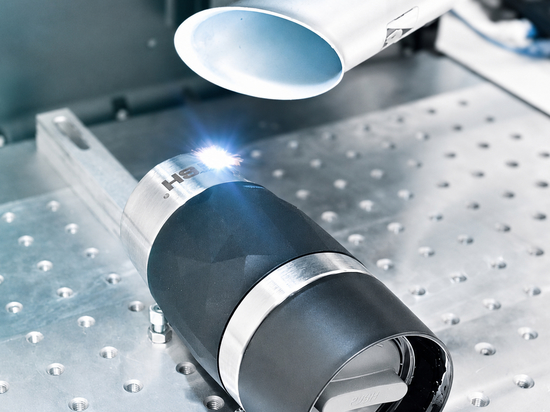
Laser cleaning has become a preferred method for removing rust, paint, oxides, residues, and release agents. It’s contactless, precise, and easy to automate — inline, robotic, or portable.
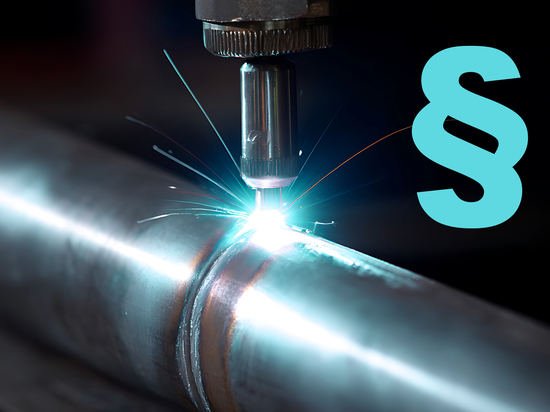
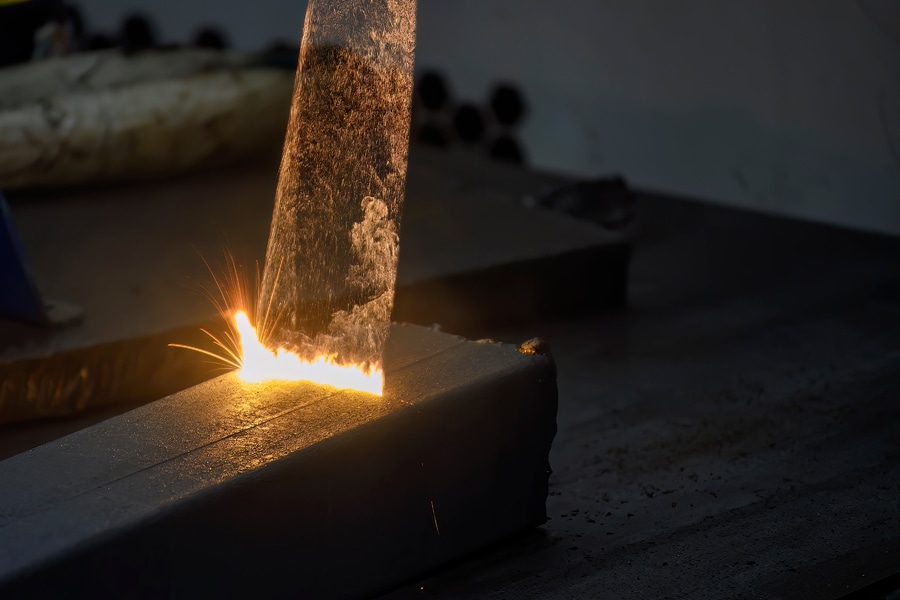
What’s often underestimated: when contaminants absorb laser energy, they are ablated and transformed into airborne particles and process fumes. The result can be a “clean” workpiece — but a contaminated breathing zone.
Why “invisible” matters: ultrafine particles and health protection
Particles around and below 1 µm can penetrate deep into the respiratory system. TBH explains that many process fumes contain particles smaller than 1 µm and classifies particles below 0.1 µm as ultrafine (nanoparticles) — a fraction that the body’s natural filters cannot reliably retain. TBH’s FAQ also emphasizes that laser emissions can be harmful and that controlling very small particles requires technical measures, not only PPE.
Standards and documentation: TRGS 528, EN ISO 21904 and W3
In industry, the practical question is less “Do we need extraction?” and more: Which performance level is required — and can it be documented?
TBH’s workplace safety materials reference systems tested to EN ISO 21904 (W3) and EN 60335-2-69 Annex AA (dust class H) for reliable separation of very fine welding and laser smoke particles. For applications in the GermanTRGS 528 context, documentation and verified performance become central — especially if the goal is recirculation rather than ducting outside.
Practical takeaway: If you want safe recirculation, plan for the right certification strategy and a monitoring concept (e.g., volume flow monitoring and periodic verification).
Trend: “capture at source” becomes the default in laser cleaning cells
As laser cleaning moves from manual stations to automated cells, the trend is clear: capture at the point of origin, not in the room. Typical capture approaches include:
• Extraction arm/hood positioned close to the plume
• Integration into enclosures or robot cells
• Portable extraction for field/service work
The closer the capture point is to the plume, the more effective (and energy-efficient) the overall system can be.
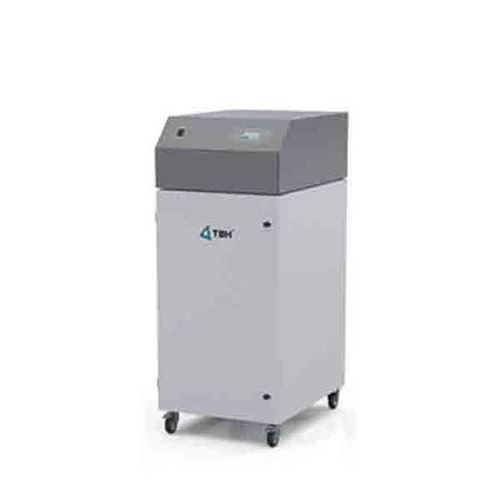
TBH solution focus: TFS series extraction for laser cleaning fumes
Quick checklist: selecting extraction for laser cleaning
• Capture concept: plume capture vs. enclosure/robot cell integration
• Compliance plan: W3 / EN ISO 21904 and documentation needs (e.g., TRGS 528 context)
• Recirculation vs. exhaust: certification + monitoring aligned with your requirements
• Filter strategy: fine/ultrafine particles + optional activated carbon for gases/odours
• Service & exposure control: closed-housing and fast, low-contact filter changes
Conclusion:
Laser cleaning is an efficient surface process — but it can generate hazardous fine and ultrafine emissions. With well-designed source capture, verified filtration performance, and the right monitoring strategy, manufacturers can reduce exposure, support compliance expectations, and keep automated cleaning cells running reliably.