
#Industry News
What Are the Key Differences Between SMT and Through-Hole Assembly in Material Selection?
A Comprehensive Look at How Solder, Substrates, Flux, and Component Design Differ Between SMT and Through-Hole Technologies
When comparing SMT (Surface Mount Technology) with THT (Through-Hole Technology), the variations in material selection mainly appear in the types of solder used, substrate properties, flux performance, and the design of electronic components.
1. Solder Materials
SMT generally relies on solder paste, which is a mixture of metal particles and flux in a semi-liquid form suitable for stencil printing. The alloys commonly used include traditional Sn-Pb compositions such as Sn63/Pb37 or lead-free options like SAC305. These pastes typically melt at lower temperatures, around the eutectic point of 183°C, which supports fast and efficient reflow soldering.
THT, on the other hand, may use solder wire, preforms, or higher-metal-content solder pastes. The solder alloys used in through-hole manufacturing often need to withstand higher temperatures, usually above 230°C. Materials such as Sn-Bi or Sn-Ag-Cu-Bi are selected for superior mechanical strength. Wave soldering and selective soldering are common processes, requiring fluxes with specific flow and wetting characteristics to achieve consistent joints.
2. Substrate Materials
SMT assemblies are typically designed on FR-4 epoxy-glass laminates optimized for high-density circuits and microvias. To endure standard reflow soldering, these laminates usually feature a Tg of at least 170°C.
THT applications often call for substrates with higher thermal capability. High-Tg FR-4, ceramic materials like alumina (Al₂O₃), or boards with metalized surfaces (such as nickel–gold finishes) are used to manage thermal expansion and mechanical stress. Through-hole boards also require mechanically drilled holes, commonly ranging from 0.5 mm to 1.5 mm, which are plated to ensure electrical continuity.
3. Flux Types and Process Requirements
In SMT processes, water-soluble or no-clean fluxes are used to minimize residues and facilitate precise stencil printing. Temperature-controlled reflow profiles are critical to prevent solder defects such as bridging or tombstoning.
THT assembly often involves processes that expose components and boards to wave soldering. For this reason, fluxes with higher activity levels are selected to resist oxidation during high-temperature solder flow. Additional manufacturing stages—such as flux activation and wave soldering—are typically required.
4. Component Packaging and Mechanical Design
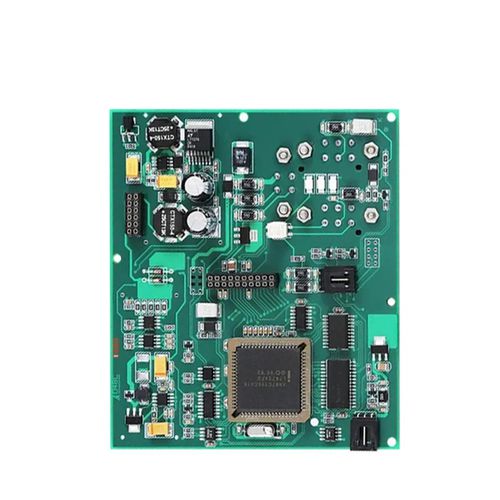
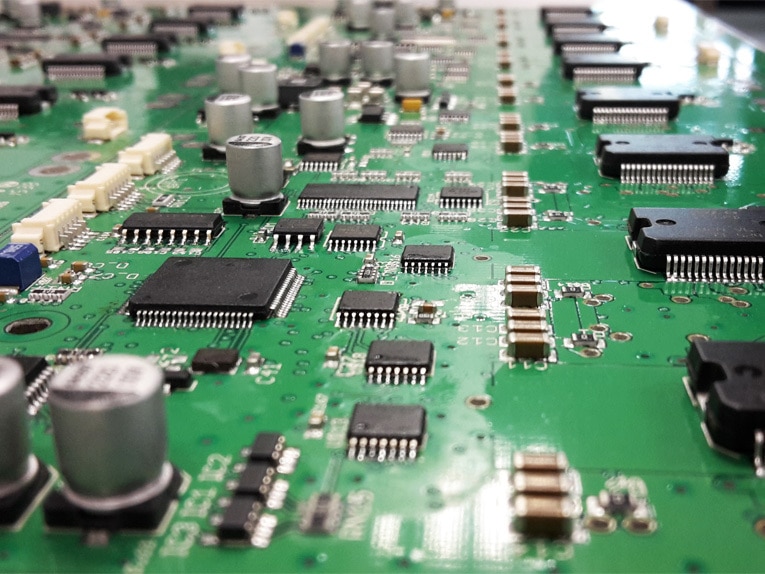
SMT components are usually leadless or feature very short leads. Packages such as QFPs and BGAs are designed with fine pitch spacing, sometimes as tight as 0.4 mm, and must withstand reflow temperatures up to 260°C. Materials like LCP and EMC are common for their dimensional stability.
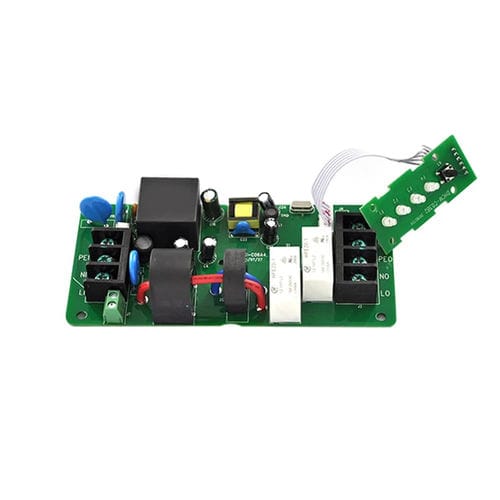
THT components, by contrast, use long pins that pass through the PCB and are soldered from the opposite side. These packages, such as DIP connectors or large power components, must tolerate even higher thermal loads—often above 300°C—and require sufficient pad spacing to accommodate lead bending and mechanical stresses.
5. Other Important Differences
SMT is usually applied on thinner circuit boards—typically between 1.6 mm and 2.0 mm—because it does not rely heavily on mechanical support from the PCB. THT boards are often thicker, 2.4 mm or more, to improve structural rigidity and support large components.
Surface finishes also differ. SMT commonly uses ENIG (Electroless Nickel Immersion Gold) for better solderability and planarity. THT manufacturing, however, depends heavily on plated through-holes to guarantee electrical conduction and strong mechanical bonds.
In terms of regulatory requirements, SMT designs are often aligned with RoHS and REACH restrictions, especially for lead-free manufacturing. THT processes may still use Sn-Pb solder in certain cost-sensitive or legacy applications.
Typical Applications
SMT is widely applied in smartphones, wearables, compact sensors, and high-frequency modules where size and density are critical. THT remains the preferred choice for power connectors, relays, circuit breakers, ignition systems, and other components that must endure significant mechanical or thermal stress.
In many modern products, hybrid assembly is adopted: SMT handles miniaturized or RF circuitry, while THT provides durability for components that require stronger mechanical anchoring.
Conclusion
The decision between SMT and THT ultimately depends on design priorities:
SMT is ideal for miniaturization, high component density, and cost-effective mass production.
THT excels in environments requiring superior mechanical strength, high thermal tolerance, and long-term reliability.
Many mission-critical sectors, such as aerospace and automotive electronics, integrate both technologies to achieve balanced performance.