#Product Trends
Control System Upgrade Checklist
Modernizing Plastics Manufacturing
As production demands grow and technology advances, many plastics processors find their legacy control systems becoming a bottleneck. Whether you’re dealing with inefficiencies, limited data visibility, or planning a plant expansion, upgrading your control system is a strategic step toward modern plastics manufacturing.
A control system upgrade improves equipment performance and operational efficiency while enabling Industry 4.0 capabilities such as real-time data monitoring, automated decision-making, remote diagnostics, and centralized system visibility, essential tools for today’s competitive plastics processing environment-
When Is the Right Time to Upgrade Your Control System?
Not every system needs replacing immediately, but there are clear signs that your controls may be limiting your plant’s performance. Watch for these indicators:
Frequent downtime or inconsistent product quality
Incompatibility with new equipment or protocols
Lack of remote access or plant-wide data integration
Planned expansion or production changes
These challenges often point to system constraints that a modern industrial control platform can resolve efficiently and cost-effectively.
What Should You Audit Before You Upgrade?
Before upgrading, it’s critical to assess your current control infrastructure. A thorough system audit will identify performance gaps, technical limitations, and integration opportunities to ensure your investment delivers long-term value.
Key areas to audit include:
Existing hardware (PLCs, HMIs, sensors, drives)
Software logic and data architecture
Field wiring and I/O communication (Ethernet/IP, Modbus, OPC UA)
Operator workflows, interface usability, and training needs
Energy usage and historical performance metrics
This evaluation clarifies what can be retained, what needs replacing, and what can be upgraded for full Industry 4.0 compatibility.
Key Components to Consider in Your Upgrade
Modern control systems go beyond replacing PLCs, they serve as the core of a connected, data-driven production environment. Your upgrade should include components that drive automation, performance visibility, and flexible operation.
Essential components include:
Scalable PLC or industrial PC platforms
HMI interfaces with intuitive control logic
Real-time analytics, trend tracking, and data visualization
Integration with SCADA, MES, or ERP systems
Secure remote diagnostics and cloud support
Choosing future-ready components ensures your system evolves alongside your plant’s needs.
Ensuring Seamless Integration with Existing Equipment
Upgrading doesn’t mean rebuilding. Many systems can be retrofitted or bridged into new control platforms with minimal disruption. With proper planning, protocol compatibility, and phased commissioning, you can avoid downtime and maintain productivity.
Prioritize systems that support:
Bridge technologies to connect legacy and modern components
Modular design for scalable expansion
Compatibility with your current infrastructure
With the right strategy and a technology partner like TSM, you can upgrade confidently while keeping production on track.
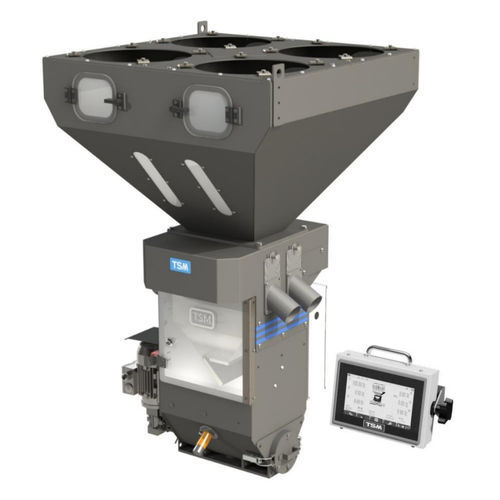
A TSM Weigh Scale Blender Upgrade module with a red warning light, designed to enhance blending efficiency through faster control response, real-time load cell monitoring, and advanced data management for industrial material processing applications.
Checklist: What to Finalize Before You Commit
A successful upgrade requires more than new hardware, it demands planning, alignment, and execution. Use this checklist to prepare:
Define goals, KPIs, and budget – Sets a clear project direction, measures success, and aligns spending with expected returns.
Engage key stakeholders early (operations, engineering, IT) – Builds cross-functional alignment, avoiding delays and miscommunication later in the process.
Confirm hardware/software scalability and vendor support – Ensures the solution can grow with your needs and that expert help is available when required.
Plan for training, documentation, and change management – Equips teams to adopt new systems smoothly and sustain performance improvements.
Establish timelines and commissioning milestones – Keeps the project on track and ensures readiness for production without costly overruns.
Preparing these elements reduces risk and helps ensure measurable success.
How TSM Supports Smart Control System Upgrades
TSM Control Systems has decades of experience delivering automation solutions purpose-built for the plastics industry. Our platforms are designed for modularity, uptime, and seamless integration, minimizing disruption and maximizing ROI.
We offer:
Site audits and upgrade scoping – Assess current equipment performance and identify improvement opportunities, ensuring investments target the highest-impact areas.
Retrofit-ready control systems and modular blending platforms – Enable seamless technology upgrades without full equipment replacement, extending asset life and reducing capital costs.
Integration with dosing, feeding, and material handling systems – Streamlines production flow and minimizes manual intervention, improving efficiency and consistency.
Ongoing support, remote access, and diagnostics – Keeps operations running at peak performance with rapid troubleshooting and proactive maintenance.
Whether you’re upgrading one line or transforming an entire plant, we help you build a smarter control architecture.
Start Your Control System Modernization with Confidence
A control system upgrade can transform your operation, improving consistency, visibility, and scalability across your plant. With TSM as your partner, you can move forward confidently, knowing your investment supports the future of plastics processing.
Ready to modernize your control architecture? Schedule a no-obligation system audit with our automation specialists.