
#Industry News
Direct Coding on Cardboard: Industrial Efficiency and More Sustainable Packaging
Direct coding on cardboard makes it possible to reduce consumables and simplify the marking of secondary packaging. This technology helps optimize industrial processes while moving toward more efficient and sustainable packaging.
Direct printing on cardboard simplifies marking processes for secondary packaging and reduces the use of additional elements. In a context where operational efficiency and sustainability are becoming increasingly important, this technology is establishing itself as an effective alternative for optimizing industrial coding.
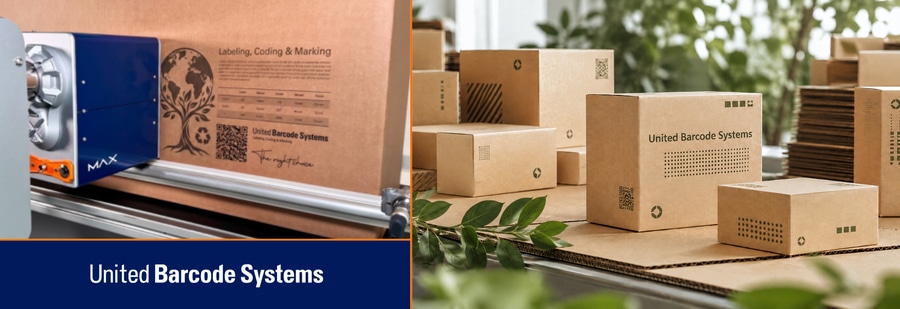
Secondary packaging coding is evolving toward more integrated, efficient models that are aligned with new packaging requirements. Instead of relying on labels or other additional elements, direct inkjet printing on cardboard makes it possible to apply marking directly on the production line, simplifying the process and improving identification control.
This integration reduces intermediate steps, consumables, and potential sources of error, supporting a more continuous operation. By applying information directly onto the packaging, companies can optimize resources, minimize waste, and maintain clear, readable coding throughout the logistics chain.
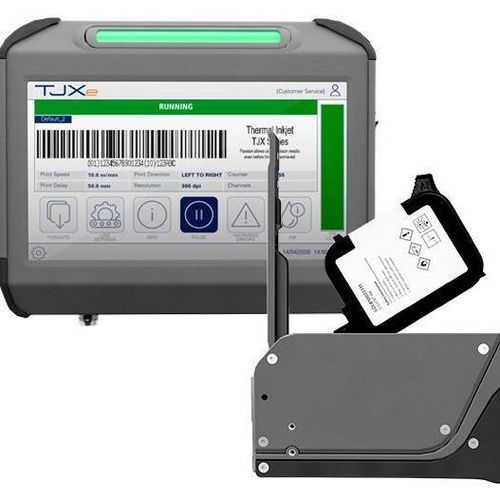
Industrial inkjet systems make it possible to print variable data, text, codes, and graphics directly onto corrugated cardboard, adapting to production requirements without compromising marking quality. This flexibility is especially useful on production lines with multiple product references, frequent format changes, or specific traceability requirements.
In addition, advances in printing technology make it possible to control parameters such as contrast, density, and ink consumption with greater precision. Solutions such as the APLINK HRX SERIES integrate advanced marking management systems such as CPE, which allows contrast to be adjusted by individual element to highlight key information without unnecessarily increasing ink consumption.
The role of ink is also essential in this type of application. ECO INK oil-based inks have been developed to provide a balance between technical performance and sustainability, using formulations free of mineral oils and volatile compounds. Their compatibility with cardboard recycling processes helps keep packaging within an efficient recycling stream.
At United Barcode Systems, we develop direct printing solutions for cardboard designed to improve marking efficiency, reduce consumables, and simplify integration into industrial production lines. The combination of high-resolution inkjet equipment, specialized inks, and control tools makes it possible to achieve more precise, flexible, and sustainable coding.
Contact our team to discover how to implement a direct coding system for cardboard tailored to the needs of your production line.