
#Industry News
Why SiC Components for Extreme Energy Applications Are Changing Cutting Requirements
Why Cutting Large SiC Components Is Forcing a Rethink in Precision Machining
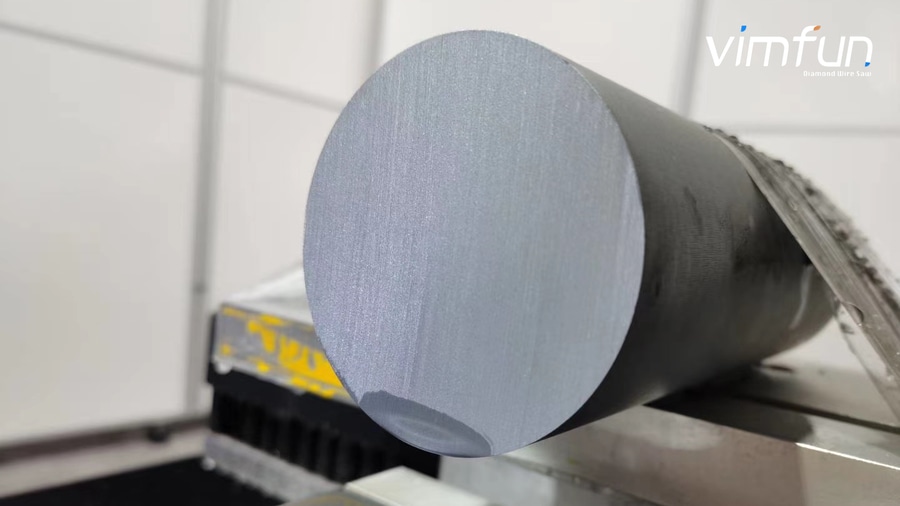
In recent years, silicon carbide (SiC) has moved beyond its traditional roles in electronics and wear parts. It is now increasingly specified for extreme-environment applications — including high-temperature structural components, plasma-facing parts, and advanced energy systems. As component size increases and geometry becomes more complex, the cutting stage is drawing renewed engineering attention.
For many manufacturers, the challenge is no longer simply “how to cut SiC,” but how to do so without compromising material integrity, yield, and downstream processing time.
When Material Value Changes the Cutting Equation
Silicon carbide combines high hardness, low fracture toughness, and strong thermal stability. These properties make it ideal in service — but difficult during machining.
As component dimensions grow, three constraints become more visible:
Micro-crack sensitivity at the cut edge
Subsurface damage affecting strength and lifetime
High material cost amplifying kerf loss and scrap risk
In high-value applications, even small edge defects can propagate during thermal cycling or mechanical loading. What might have been acceptable in smaller industrial parts becomes a reliability concern in advanced energy or research-grade components.
This shift is gradually moving cutting from a “preparatory step” to a critical quality-determining process.
Where Traditional Cutting Approaches Reach Their Limits
Conventional reciprocating cutting systems were historically favored for their simplicity and adaptability. However, as SiC blocks become thicker and more valuable, several limitations appear:
Direction changes introduce localized stress variations
Intermittent motion can amplify vibration and wire fatigue
Surface consistency varies along the cut path
In brittle ceramics, instability during cutting is not always visible immediately. Damage may only become apparent during polishing, inspection, or final testing — when rework is significantly more expensive.
As a result, some engineers are reevaluating motion design rather than focusing solely on cutting speed or abrasive aggressiveness.
Stability Over Speed: A Subtle but Important Shift
A growing number of precision manufacturers are exploring cutting architectures based on continuous motion rather than reciprocating cycles.
The engineering logic is straightforward:
Eliminating directional reversal reduces dynamic load fluctuation
Constant wire tension improves trajectory consistency
Smoother cutting behavior lowers the probability of micro-crack initiation
In brittle materials like SiC, maintaining a stable mechanical environment often proves more important than maximizing feed rate. The objective shifts from “cutting faster” to “cutting predictably.”
This approach also aligns with another emerging priority: reducing kerf loss. When material costs are high and block sizes are large, even minor improvements in cut width translate into measurable savings over multiple parts.
Process Stability as a Cost Control Strategy
For advanced ceramic components, overall production cost is increasingly influenced by:
Yield rate
Downstream polishing time
Scrap and rework frequency
Process repeatability across batches
A cutting method that reduces subsurface damage can shorten polishing cycles. Improved stability can widen the process window, making operator training easier and reducing variability between shifts.
In this context, machine architecture, motion continuity, and tension control are no longer secondary design features. They become strategic considerations in equipment selection.
A Broader Industry Direction
The growing use of large-format SiC in demanding environments is highlighting a broader trend in precision cutting: stability, predictability, and material preservation are gaining priority over raw cutting speed.
As high-performance ceramics continue to enter advanced energy and research applications, more engineers are reassessing whether traditional motion systems fully support their quality and yield requirements. Continuous wire cutting designs and closed-loop tension control concepts are increasingly being evaluated as part of this shift.
The conversation is no longer limited to how to cut hard materials — but how to do so while preserving their full structural potential.