#Product Trends
Challenges and Solutions for Automotive Door Panel Tightening
Challenges and Solutions for Automotive Door Panel Tightening
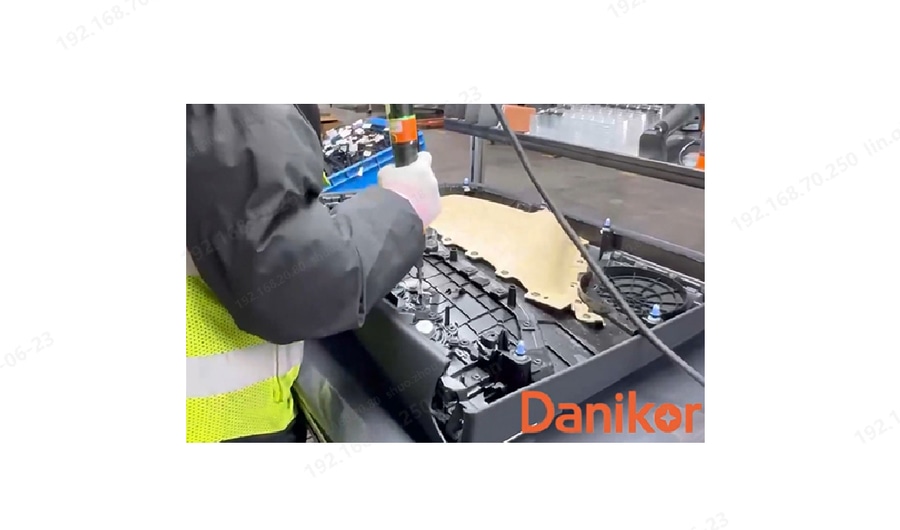
The tightening and assembly of automotive door panels is a core process in the integration of vehicle interior trim. While it may seem like a simple screw-fastening task, there are actually many technical difficulties due to factors such as varying materials and limited space.
We will analyze the tightening difficulties and intelligent solutions for automotive door panels from four core dimensions: precision, takt time, tightening strategy, and tightening data.
I. Precision Dimension: The Conflict Between Soft Materials and High Precision Requirements
Challenges in Door Panel Tightening:
Material Deformation and Creep: Door panels are mostly made of plastic (PP, ABS) or composite materials, which have a relatively soft substrate. When tightening screws, the plastic is prone to deformation or stress relaxation. This means that even if the screw is properly tightened at the moment, the residual preload force can significantly decrease over time. If the torque is slightly too low, the joint is not secure; if slightly too high, the plastic hole can be stripped or damaged. This demands very high torque control precision from the tightening tool.
Advantages of the Danikor Intelligent Tightening Screwdriver:
High-Precision Sensor: The Danikor intelligent tightening screwdriver is equipped with a built-in high-precision torque sensor that can capture minute torque changes in real-time.
Self-Developed High-Precision Algorithm Control: It achieves a 6σ precision of ±5% across the entire measurement range. Furthermore, under ±5% process conditions, it meets a Cmk value > 1.67, significantly enhancing tightening consistency.
II. Takt Time Dimension: Efficiency Bottlenecks from Multiple Stations and Long Travel Paths
Challenges in Door Panel Tightening:
High Number and Scattered Positions of Screws: Door panels typically have 10-15 tightening points distributed across components like window regulators, door locks, speakers, and main boards.
Deep Holes and Obstruction Interference: Many tightening points are located deep inside handle recesses or storage compartments, making it slow for traditional tools to enter and exit.
Tight Production Takt Time: The time allocated for door panel assembly is limited, leaving low tolerance for errors at individual tightening points.
Advantages of the Danikor Intelligent Tightening Screwdriver:
Equipped with a high-performance brushless motor, reaching a maximum speed of 3000 rpm, which enhances both efficiency and performance.
Servo control algorithm with instantaneous torque response, which improves the tightening takt time.
III. Tightening Strategy Dimension: Complex Connection Conditions
Challenges in Door Panel Tightening:
Deformation and squeezing of trim panels.
Torque creep and attenuation leading to door rattles.
Hole misalignment and thread stripping.
Uneven door panel gaps.
No monitoring for missing or incorrect tightening.
Inability to trace quality data.
Automotive door panels are a multi-layer, soft composite structure consisting of sheet metal, plastic trim panels, and rubber pads. They are subject to various constraints, including assembly tolerances in hole positions, uneven stress distribution across multiple tightening points, and mixed production of bolts of different specifications. Traditional tightening tools with a single torque process cannot execute compound tightening strategies such as staged pre-tightening, stress relief, variable speed control, and symmetrical step-by-step tightening. This can lead to a chain of assembly defects including:
Advantages of the Danikor Intelligent Tightening Screwdriver:
Basic Strategies: Speed Control, Torque Control, Angle Control, Angle Control/Torque Control.
Advanced Strategies: Clamp Torque Control, Torque Angle Method, Delay Wait, Zero Speed Hold, Tighten to Torque, Electric Pulse Tightening, Torque and Angle.
It offers a rich set of tightening strategies:
These strategies ensure that every screw achieves its optimal fastening state.
IV. Tightening Data Dimension: High Requirements for Traceability and Error-Proofing
Challenges in Door Panel Tightening:
Risk of Missing or Incorrect Tightening: With so many screws on a door panel, workers can easily miss one. This could lead to later issues like door rattles or even safety hazards (e.g., a loose airbag sensor bracket).
Inability to Trace Quality Backwards: Traditional pneumatic tools or power-off tools cannot record process data.
Advantages of the Danikor Intelligent Tightening Screwdriver:
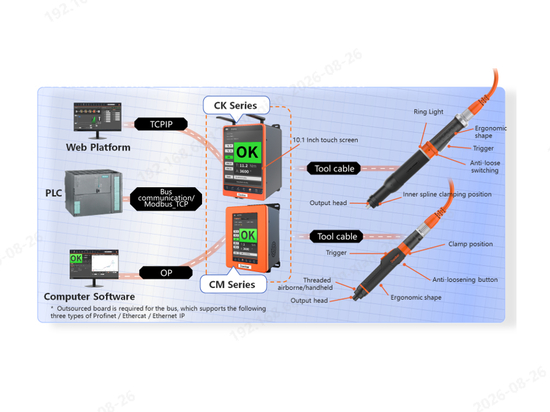
Strong Error-Proofing and Data Traceability: The tightening process is monitored in real-time for torque, time, and angle, accurately identifying abnormal issues such as floating screws or stripped threads. It interfaces directly with the MES (Manufacturing Execution System), supporting data recording, storage, and uploading functions, making tightening results fully traceable.
By implementing the Danikor intelligent tightening system, automotive door panel assembly is elevated from traditional manual operations to digital, programmed intelligent assembly, successfully addressing the dual challenges of efficiency and quality in interior assembly.