#Product Trends
Danikor Flexible Workstation: Solving the Mixed-Line Feeding and Assembly Challenges for Multi-Model Automotive Parts
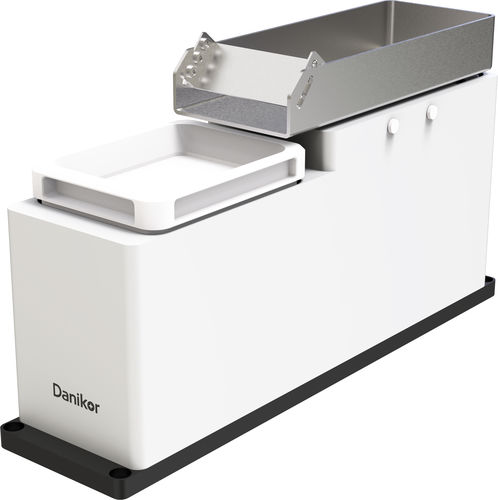
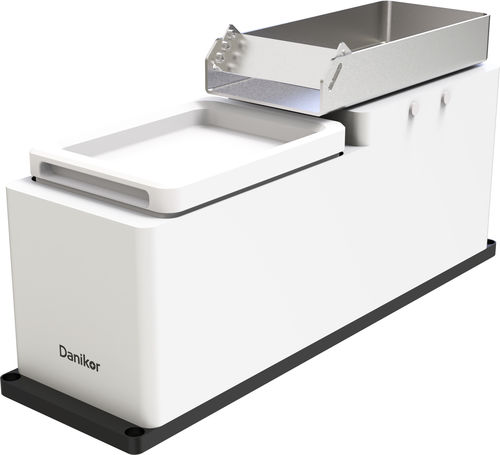
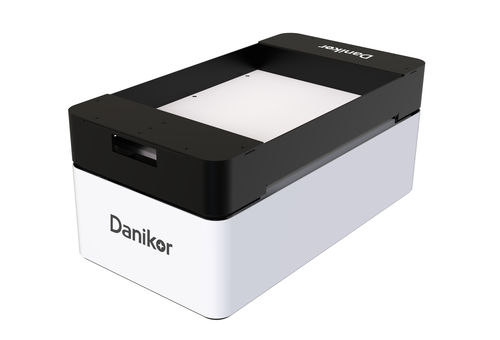
Danikor Flexible Workstation
Against the backdrop of the rapid development of the automotive parts manufacturing industry, mixed-model production on the same line has become the mainstream manufacturing model for automakers to reduce costs and increase efficiency. However, the mixed-line operation of multi-category, special-shaped parts has given rise to numerous production pain points. Traditional fixed automated production lines have increasingly prominent shortcomings, such as poor adaptability, high changeover costs, and heavy reliance on manual labor. In response, DANIKOR has launched a flexible feeding system that offers a one-stop solution to the entire process challenges of mixed-line feeding and assembly for automotive parts, creating a highly adaptable, high-precision, and highly automated flexible production solution for parts manufacturers.
Three Core Industry Pain Points in Mixed-Line Production of Automotive Parts
The categories of automotive parts are complex. Special-shaped parts such as seat retaining rings, connectors, door lock components, and actuator covers are processed simultaneously on the same line. Traditional production lines struggle to adapt to the demands of multi-variety flexible manufacturing. The industry generally faces three major challenges:
Frequent Changeovers and High Difficulty in Multi-Category Mixed-Line Compatibility
The iteration cycles for new vehicle models are continuously shortening. A single production line needs to simultaneously accommodate the production of dozens of special-shaped parts. Traditional specialized tooling and fixed feeding mechanisms can only handle a single part. Switching materials requires a large amount of manual effort to disassemble and assemble fixtures, resulting in lengthy changeover times and significantly reducing the production line's overall equipment effectiveness (OEE).
Strict Feeding and Positioning Accuracy Requirements, Uncontrollable Manual Operation Errors
Automotive parts assembly demands extremely high positioning accuracy, with repeated positioning accuracy needing to be stably controlled within the range of ±0.05-0.5mm. Manual feeding is prone to misalignment and improper placement, leading to defective assembly. Common, simple automated equipment lacks sufficient stability for repeated positioning, making it difficult to match the standards of precision assembly.
Rising Labor Costs and Dependence on Manual Labor Hindering Long-Term Cost Reduction
The processes of parts sorting, feeding, positioning, and assembly are highly repetitive. The industry has a large demand for labor, and labor costs are rising year by year. At the same time, the turnover rate of frontline operators is high, and product quality heavily depends on the workers' operational experience. Personnel changes can easily lead to fluctuations in the qualification rate, continuously increasing the pressure on enterprise operating costs.
Core Advantages of the DANIKOR Flexible Feeding System for Automotive Parts Production
To address the existing industry pain points, the DANIKOR flexible feeding system achieves breakthroughs in three key dimensions: changeover efficiency, process compatibility, and quality standardization, adapting to the multi-model parts mixed-line production scenario:
Rapid Changeover: Efficient and Convenient Material Switching
Without the need for large-scale replacement of tooling and fixtures, production switching for different parts can be completed simply by adjusting equipment parameters. This significantly reduces production line downtime for changeovers, adapting to automakers' high-frequency model and material switching needs.
Process Compatibility: Covering Diverse Parts Processing Requirements
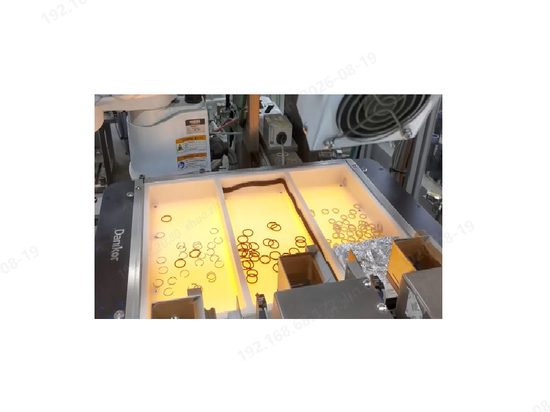
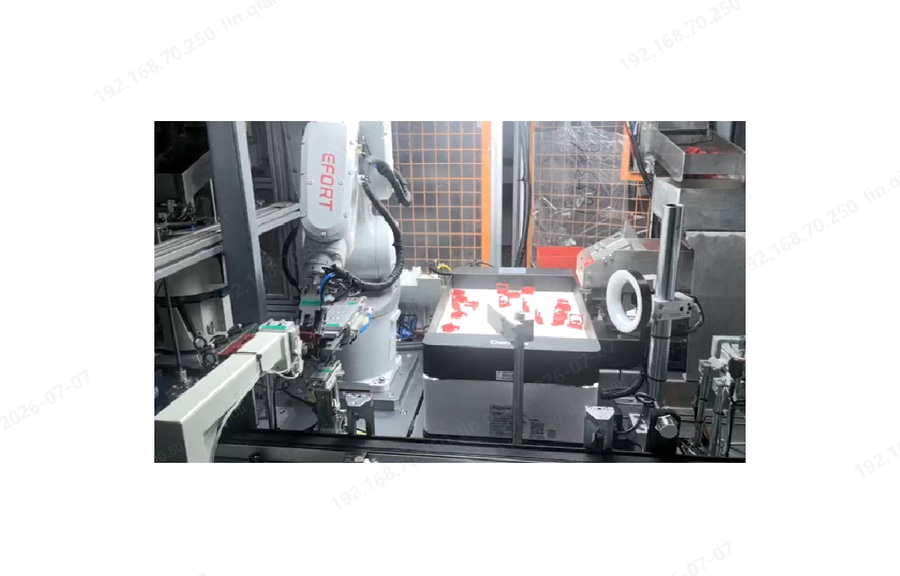
As different automotive parts vary greatly in material, shape, and assembly processes, the DANIKOR flexible feeding system supports modular selection. It can be equipped with damage-prevention grippers to avoid workpiece scratches, integrate vision sensors for dimension and position inspection, and optionally include fly-finding and flipping tooling as needed. This enables the simultaneous execution of composite processes like material placement and press-fit assembly, ensuring stable production for various special-shaped parts such as seat retaining rings, connectors, door lock components, and actuator covers.
Standardized Production Processes: Eliminating the Impact of Human Factors on Yield Rate
The feeding system converts mature assembly and feeding operational knowledge into fixed equipment operating parameters. The entire process of sorting, positioning, grasping, and assembly is automated, completely eliminating issues like placement misalignment, missing components, and incorrect assembly caused by manual operations. Even with personnel turnover, the product qualification rate remains stable, fundamentally reducing defective product losses.
The DANIKOR flexible feeding system breaks the limitations of traditional dedicated production lines. With its comprehensive capabilities of high flexibility, high precision, and full automation, it effectively solves the feeding and assembly pain points in mixed-line production of automotive parts.