#Product Trends
Advantages of Electric Tightening Modules in Lightweight Body Tightening
Electric Tightening Modules in Lightweight Body Tightening
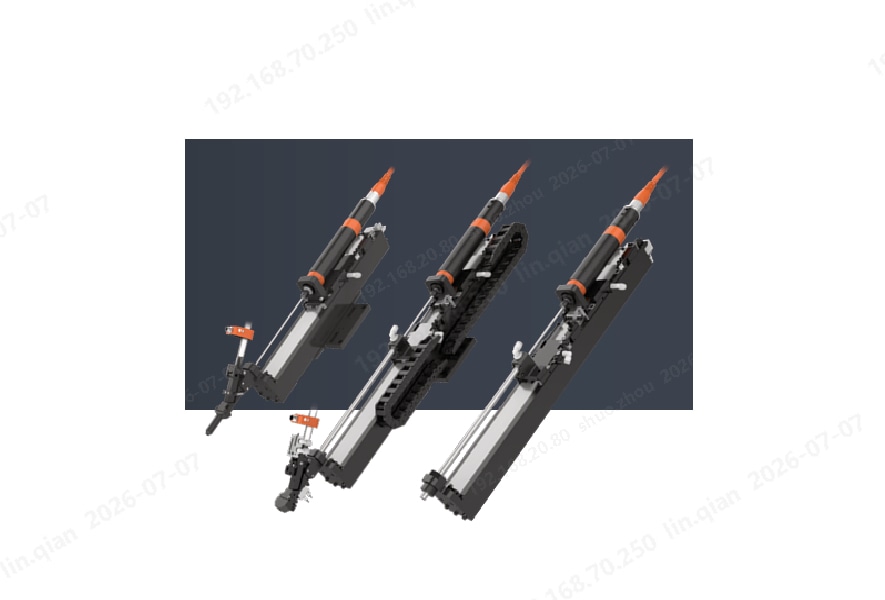
As the demand for extended range and reduced energy consumption in new energy vehicles continues to rise, vehicle lightweighting has become a significant trend in industry development. Consequently, lightweight housings, primarily represented by aluminum die-castings, are being widely adopted. However, the tightening challenges presented by soft threaded holes have introduced new demands for assembly processes. DANIKOR's servo modules provide a professional solution for the high-precision, high-reliability tightening required for lightweight vehicle bodies.
I. Core Pain Points in Lightweight Body Tightening
Lightweight vehicle bodies frequently utilize die-cast housings made of soft materials such as aluminum and copper. The threaded holes in these materials are relatively soft, and traditional tightening modules expose numerous difficult-to-solve problems during operation:
High Risk of Thread Damage: Traditional modules cannot precisely control parameters like speed and downforce during the tightening process, leading to unstable tapping, torque overload, and consequently, thread stripping or damage, which directly results in part rejection.
Difficulty in Ensuring Tightening Quality: Soft threaded holes demand high precision in torque and angle control during tightening. Traditional solutions struggle to achieve comprehensive process monitoring. Abnormalities such as floating screws, stripped threads, and missed fastenings occur frequently, compromising the body assembly quality.
Poor Adaptability to Complex Working Conditions: The structural complexity of lightweight body parts, along with height differences and interference conditions at various tightening points, makes it difficult for traditional modules to accommodate multiple complex scenarios. This often necessitates additional mechanisms, increasing costs.
Conflict Between Production Efficiency and Energy Consumption: Traditional modules operate at slower speeds and have high air consumption during tightening, making it difficult to balance production takt time with energy control, thus failing to meet the cost-reduction and efficiency-improvement needs of mass production.
II. Core Advantages of DANIKOR Servo Modules
Addressing the pain points of lightweight body tightening, the DANIKOR servo module achieves high-precision, high-reliability tightening for soft threaded holes. Its core advantages are as follows:
Full-Process Closed-Loop Control, Safeguarding Soft Thread Integrity
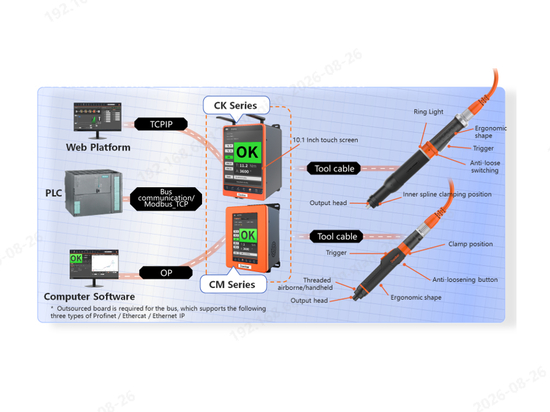
The servo module utilizes PLC for information exchange, establishing a comprehensive closed-loop control system for all elements:
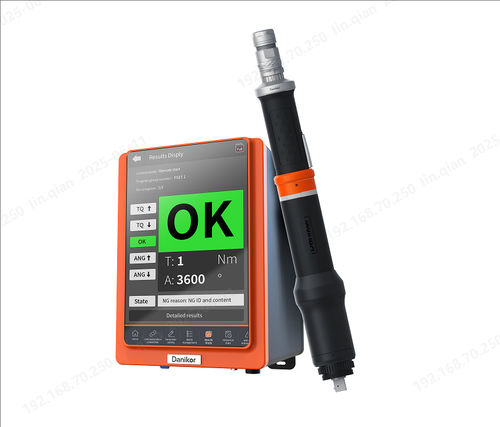
In coordination with intelligent tightening tools, it achieves precise control of torque and angle, while simultaneously regulating speed, displacement, and downforce via the servo module.
It dynamically adjusts pressure, speed, and torque for different tightening phases (e.g., entry into the hole, contact with the machine thread, engaging the machine thread, and seating surface) to prevent impact damage to the aluminum threaded holes.
It provides real-time monitoring of tightening parameters throughout the entire process, with immediate detection and alerts for abnormal conditions like floating screws, stripped threads, and missed fastenings, fundamentally preventing defective products from proceeding further.
Strong Compatibility with Complex Conditions, Reducing Mechanism Adaptation Costs
It can accommodate tightening points with varying height differences without the need for additional complex Z-axis mechanisms, helping customers save on equipment investment costs.
It adapts to a variety of complex interference conditions, meeting the tightening needs of diverse scenarios such as new energy vehicle battery packs and lightweight vehicle bodies. It has been widely applied in the products of several emerging electric vehicle manufacturers.
High Efficiency and Low Consumption, Balancing Production Efficiency and Cost Control
Compared to traditional tightening modules, the DANIKOR servo module achieves significant performance improvements:
With servo electric drive control, the screw feeding cycle time is improved by 25% to 30% compared to pneumatic control modules, substantially increasing production efficiency.
Under the industry trend of vehicle body lightweighting, the DANIKOR servo module, with its precise full-process control, strong adaptability to various working conditions, and high-efficiency, low-consumption performance, effectively resolves the core challenges associated with tightening soft threaded holes.