#Product Trends
Servo Nutrunner Multi-Spindle Simultaneous Tightening: Solving the Pain Points of Automotive Tire Fastening
Servo Nutrunner Multi-Spindle Simultaneous Tightening
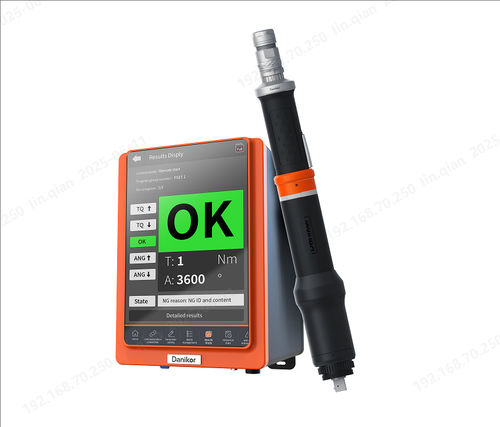
As the only link between the car and the ground, the bolt tightening process for tires is of paramount importance. Tire bolt tightening is classified as an "A-class safety tightening station" in automotive assembly, allowing for no negligence. This article delves into the core process pain points of automotive tire tightening. Combined with the technical features of Danikor's TQC series servo nutrunners, it provides an in-depth analysis of how multi-spindle simultaneous tightening technology overcomes these industry challenges.
I. Four Core Pain Points of Automotive Wheel Tightening Processes
Uneven Multi-Spindle Load Distribution Leading to Wheel Hub Deformation and Loosening Risks
Automotive wheels are typically secured by 4 to 6 bolts arranged in a circular pattern. If single-spindle sequential tightening or traditional non-synchronous equipment is used, the bolts tightened first bear excessive initial preload. When subsequent bolts are tightened, the preload of the initially tightened bolts often decays. This "uneven load distribution" can easily cause minor profile deformations in the wheel hub. During high-speed vehicle operation, this not only triggers severe body vibration but can also lead to fatigue fracture of bolts due to uneven stress, potentially causing the fatal hazard of wheel detachment.
Dynamic Torque Attenuation and High Control Precision Dispersion
During the tightening process of wheel bolts, due to variations in the microscopic roughness of the mating surfaces, changes in the thread friction pair, and the elastoplastic deformation of materials, a significant "torque attenuation" phenomenon often occurs. Traditional tightening tools lack sufficient precision and cannot capture the microscopic load changes of the material in real-time during the various stages of tightening (especially when entering the yield zone). If the tightening precision cannot be controlled within an extremely narrow tolerance range, it leads to excessive dispersion of preload force among the vehicle's bolts, making it difficult to meet the stringent process window requirements of high-end automotive manufacturing.
Inability to Perform Online Closed-Loop Repair, Resulting in Significant Line Stop Losses
In highly automated automotive final assembly lines, once a tightening abnormality occurs on a bolt (e.g., thread stripping, insufficient clamping force, torque over-limit, etc.), traditional tightening systems cannot intervene intelligently without interrupting the production line. This typically requires the entire assembly line to trigger an alarm and stop, or the vehicle to be diverted to an offline rework area for manual disassembly of the entire set and rework. This severely disrupts the production takt time, causes huge economic losses due to line stops, and increases the risk of secondary damage from repeated operations.
Lack of Full-Lifecycle, Comprehensive Data Tracking and Traceability Mechanism
As a critical safety component, the parameters of wheel tightening are a core part of the automotive quality traceability system. Traditional tightening equipment has a low level of informatization; the torque-angle curves, peak torque values, and other data generated during tightening are scattered and cannot be linked to the vehicle's VIN in real-time for centralized management. If quality disputes or recalls occur later in the market, companies struggle to achieve precise line-wide traceability and accountability.
II. How the Core Functions of Danikor Servo Nutrunners Precisely Solve the Pain Points
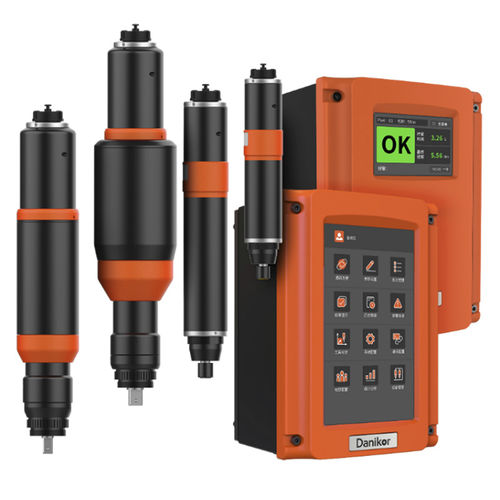
Targeting the aforementioned pain points in automotive wheel tightening processes, high-end servo nutrunners, represented by the TQC series, offer intelligent solutions leveraging their wide torque coverage (2~600 Nm), superior hardware architecture, and advanced control strategies.
Multi-Spindle Simultaneous Tightening Strategy: Achieving Greater Consistency in Multi-Spindle Coordination
To address the pain point of uneven load on multiple bolts, this servo nutrunner system supports synchronous control for up to 30 spindles. At the tire assembly station, a tightening matrix composed of multiple servo nutrunners can, through a master control platform, achieve strict synchronization of all steps throughout the entire tightening process. During tightening, all servo nutrunners increase the load proportionally with the same torque rise slope and speed, ensuring absolutely uniform force on the wheel hub and brake disc. This superior synchronization capability fundamentally eliminates the mutual interference and dispersion of preload force caused by the tightening sequence, maximizing the elimination of wheel hub deformation risks and ensuring the consistency and stability of connection quality at critical stations.
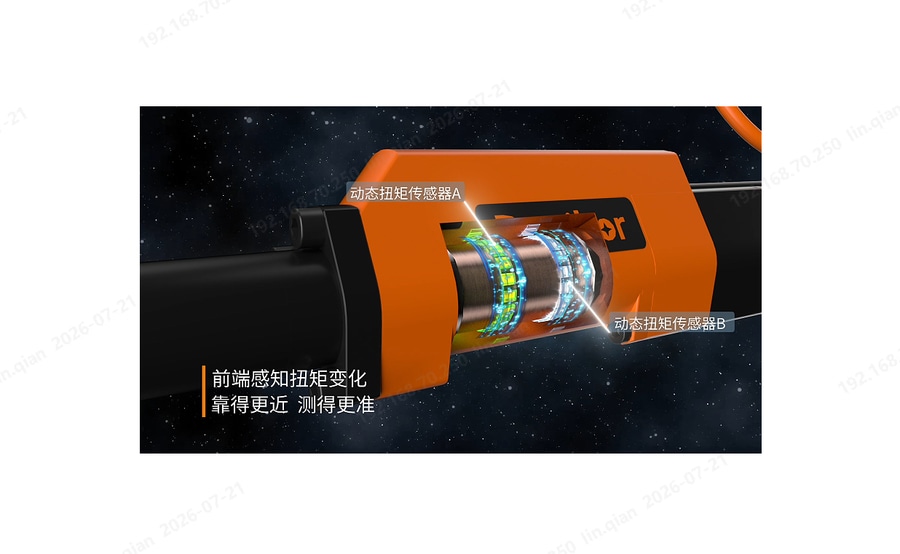
Dual Dynamic Sensors Front-Mounted: Achieving Ultra-High Precision Output of 6σ ±2.5%
To overcome the challenge of torque control precision, the servo nutrunner employs highly innovative hardware design. The system is equipped with dual dynamic torque sensors, combined with advanced algorithms for real-time compensation control, achieving an ultra-high precision control capability of 6σ ±2.5%. More importantly, the device features a "front-mounted" design, placing the dynamic torque sensors directly at the foremost end of the main spindle. This structure allows real-time, direct capture of torque changes closest to the end of the bolt friction pair, significantly reducing transmission errors and torque losses from the mechanical drive train, thereby greatly improving measurement consistency. Furthermore, the "dual sensor, dual assurance" design allows data to back each other up and torque values to cross-verify, further enhancing the long-term reliability of the servo nutrunner under high-intensity operation.
Advanced Control Strategies for Safeguarding: Yield Point Control and Zero-Speed Hold Technology
In addressing material deformation and preventing torque attenuation, high-end servo nutrunners demonstrate significant advantages in software strategy:
Yield Point Control: The system can identify the critical point where the bolt enters the yield zone in real-time through high-speed sampling, accurately controlling the bolt to its optimal stress state. This not only maximizes the mechanical properties of the bolt material but also significantly enhances the long-term reliability of the wheel connection and the consistency of preload force.
Zero-Speed Hold / Delay Wait Control: Once the servo nutrunner drives the bolt to reach the target torque, the system does not release immediately. Instead, it controls the motor to enter a micro-speed hold or delayed waiting state. This strategy effectively overcomes the elastoplastic creep of connected parts, releases internal microscopic stress, effectively reduces subsequent torque attenuation, and further enhances the stability of the final preload force for critical connections.
Simultaneous Online Rework and Centralized Data Management: Creating a Quality Closed Loop Without Line Stops
Facing the significant pain point of line stop losses, the intelligent control system based on this servo nutrunner has developed a "simultaneous online rework" function. When a single spindle detects an abnormality during tightening (e.g., thread misalignment, abnormal resistance), the system automatically initiates a single-spindle asynchronous online rework operation. This eliminates the need for disassembling and reworking the entire set and, more importantly, avoids stopping the entire production line, ensuring stable operation of the line's takt time. In terms of informatization, all data generated by the servo nutrunner during each tightening process (torque, angle, time, curve) is aggregated to the master control platform in real-time. The system not only enables centralized management and unified traceability of data across the entire line but also allows for efficient monitoring of the tightening status at each station, providing powerful underlying data support for the factory's MES system and quality analysis.
By adopting servo nutrunners that integrate cutting-edge technologies such as multi-spindle synchronous control, front-mounted dual-sensor design, yield point control, and simultaneous online rework, automotive manufacturers can comprehensively overcome the various process pain points of tire tightening across the entire process. Choosing high-quality, high-performance servo nutrunners is not only an inevitable choice for enhancing the core processes of the vehicle's final assembly chassis system but also a core engine driving vehicle manufacturing towards "zero defects, high intelligence, and full traceability."