#Product Trends
Fastening Solutions for the Automotive Parts Industry: Danikor Pulse Series Tightening Tools
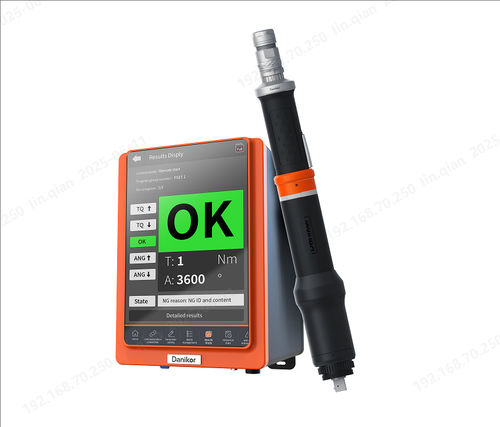
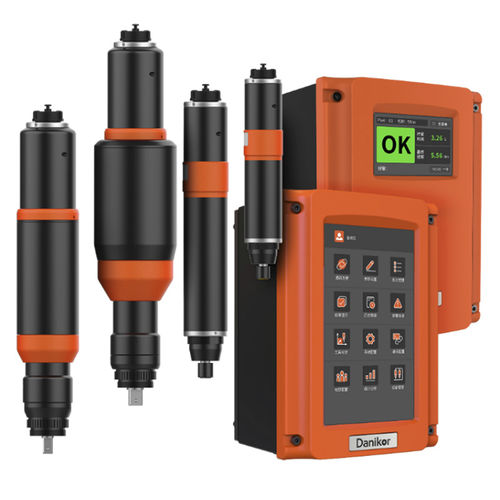
Danikor Pulse Series Tightening Tools
In automotive parts manufacturing scenarios, high-frequency operations exceeding 3,000 fastenings per day per workstation have become the norm. Under high-takt-time and high-torque conditions, traditional tightening tools expose problems such as excessive reaction force, operator fatigue, and declining efficiency and consistency, which continuously constrain production line efficiency and product quality improvement.
I. Core Pain Points of Tightening Stations in Automotive Parts Manufacturing
Accumulation of Reaction Force from High-Frequency Operations, Leading to Declines in Both Efficiency and Consistency
Traditional tightening tools generate continuous reaction force during operation. As operators perform thousands of repetitive tasks daily, fatigue accumulates, which not only reduces operational stability but also directly impacts the consistency of tightening quality, and may even lead to safety hazards due to fatigue-related errors.
Poor Ergonomics Under High-Torque Conditions, with Risk of Long-Term Physical Injury
During high-torque tightening operations, the sustained reaction force from traditional tools places continuous stress on the operator's wrists and arms, which can easily lead to health issues. Simultaneously, human fatigue indirectly affects the tightening takt time and quality.
Susceptibility to Overshoot at High Speeds, Making it Difficult to Balance Takt Time and Precision
When traditional tools pursue high rotational speeds for tightening efficiency, they are prone to torque overshoot, leading to over-tightening of bolts or component damage. Conversely, reducing speed to ensure precision negatively impacts the line's takt time. This makes it impossible to simultaneously meet the dual demands of "high takt time" and "high precision."
Unstable Wireless Tool Signals, Prone to Data Transmission Loss
In cross-workstation mobile assembly scenarios, some wireless tightening tools suffer from weak WiFi signal penetration and unstable connections. This not only affects equipment online rates but can also lead to interruption or loss of tightening data transmission, preventing complete quality traceability.
Limited Adaptability of Tools to Single Scenarios, Making it Difficult to Cover Complex Workstation Needs
Traditional tightening tools have relatively fixed forms and functions, making them unable to adapt to the different requirements of pistol-grip, angle, and other types of workstations in automotive parts production. They also struggle to accommodate both wired and wireless operation scenarios. This poor equipment versatility increases the equipment investment costs for the production line.
II. Danikor Pulse Series Tightening Tools Solution
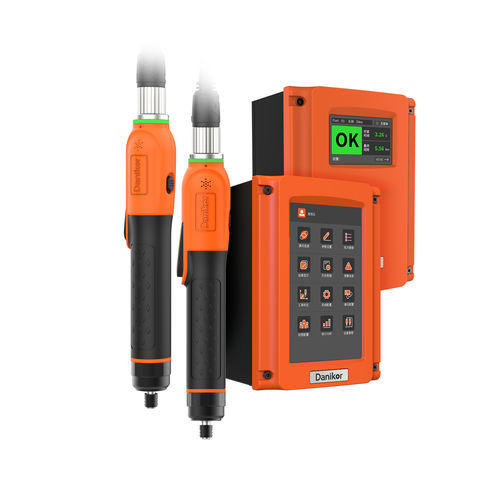
Targeting the high-frequency, high-takt-time, and high-torque tightening pain points in the automotive parts industry, Danikor's Pulse Series (TBE/TTC/TCP) tightening tools are specifically designed for manual workstations. With core advantages of low reaction force, high stability, high efficiency, and intelligence, they provide a more comfortable and reliable tightening experience for automotive parts assembly.
Pulse Technology Innovation, Fundamentally Reducing Operator Fatigue
The Pulse Series tools achieve low-reaction-force operation through a combination of special structural design and pulse algorithm control:
Structurally, the tools can absorb reaction force within 40ms, effectively reducing vibration and impact. Simultaneously, they rely on high rotational speed and large inertia to accumulate torque in a short time.
Algorithmically, they feature millisecond-level high-speed response, applying torque through short-duration pulse accumulation. This significantly reduces continuous force on the operator, truly achieving "high torque with low reaction force" and solving the fatigue problem caused by reaction force.
High Speed Without Overshoot, Balancing Takt Time and Precision Simultaneously
The tools support pulse mode tightening, enabling high-speed run-down. During the pulse tightening phase, the speed is automatically adjusted to prevent overshoot. Coupled with a precise torque control algorithm, they achieve a maximum tightening speed of 3000 rpm while ensuring tightening accuracy, allowing for faster line takt times with consistently stable and reliable tightening quality. The tools also support dual-mode switching: in pulse mode, accuracy can reach 6σ ±7.5%, while in traditional mode, accuracy can reach 6σ ±5%, adapting to the precision requirements of different tightening processes.
Wireless Freedom with Stable Online Connectivity, Eliminating Signal Anxiety
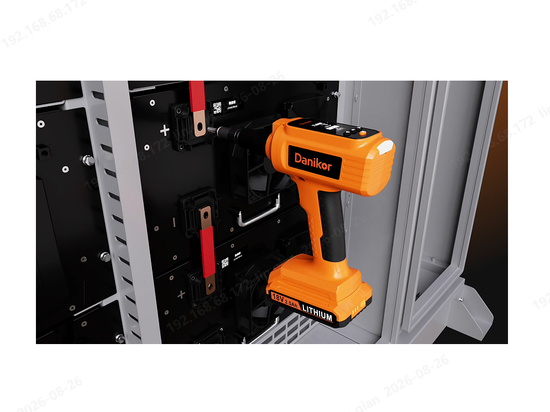
The TBE wireless pulse tool integrates portability, intelligence, and high performance:
It comes with a built-in control system and barcode scanning module, allowing for strategy configuration, data collection, and MES interface directly from the unit. It supports quick WiFi connection, with signal coverage up to 40 meters in interference-free environments, ensuring stable signal even when moving across workstations.
It features automatic protection the instant the signal disconnects, ensuring complete tightening data is not lost. It also supports multiple devices online simultaneously (the controller can connect 6 tools, and the host computer can connect 20 tools), meeting the needs of multi-station collaborative operations.
Three-Tool Matrix, Comprehensive Coverage for Multiple Application Scenarios
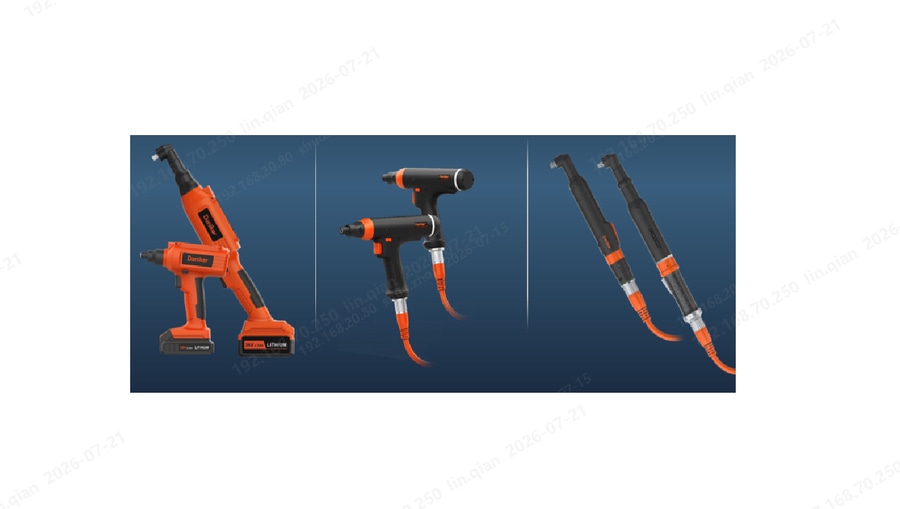
The Pulse Series includes three main product forms, adaptable to various tightening scenarios in the automotive parts industry:
TBE Wireless Pulse Tool: Available in pistol-grip/angle designs. Wireless operation without constraints, suitable for cross-workstation and mobile assembly scenarios.
TCP Wired Pistol-Grip Pulse Tool: Wired power supply for stable, high efficiency, suitable for high-frequency operations at fixed stations.
TTC Angle Pulse Tool: Angle design allows access to confined spaces, adapting to the tightening needs of complex workstations.
Danikor's Pulse Series tightening tools provide a more comfortable, efficient, and reliable solution for manual tightening stations. They help automotive parts manufacturers increase line takt time, reduce operator fatigue, and achieve full-process traceability of tightening data.