#Product Trends
Danikor Smart Electric Screwdriver Solves the Pain Point of Torque Attenuation in Soft Connections
Solution of Torque Attenuation in Soft Connections
In industrial assembly production, bolt tightening is one of the most fundamental and critical processes. Many production professionals have observed a common industry phenomenon: with the same tightening parameters and the same operating procedures, the tightening quality of steel plates and metal hard workpieces remains stable and controllable. However, plastic part tightening is highly prone to issues such as thread stripping, floating screws, later-stage loosening, and sealing failures, making it difficult to consistently improve assembly yield rates.
It is often said in the industry that tightening plastic parts is ten times harder than tightening steel plates. The root cause is not differences in operation, but rather the unique soft connection characteristics of plastic materials and the shortcomings of traditional tightening tools, such as insufficient precision and poor process adaptability.
I. Why is Tightening Plastic Parts Far More Difficult than Tightening Steel Plates?
Metal steel plates are rigid materials. When bolts are tightened, the metal contact surfaces experience even force distribution with minimal deformation, and the pressure formed at the moment of tightening is immediate and stable over the long term. Once the torque reaches the target, the preload can be maintained for a long time without significant attenuation, ensuring extremely high consistency in tightening quality.
In contrast, polymer materials like plastics and rubber possess unique viscoelastic properties. This characteristic directly makes plastic part tightening a difficult and problematic point in industrial assembly, with core issues concentrated in three areas:
1. Elastic Deformation Causes Significant Torque Attenuation
When plastic parts are continuously compressed by screws, they do not maintain a fixed deformation like metal. Instead, they undergo slow plastic deformation over time—what the industry refers to as elastic deformation. During operation, the instantaneous torque value displayed by the torque meter may meet the target precisely. However, shortly after tightening is completed, the torque rapidly and significantly attenuates. This directly leads to insufficient bolt preload, burying hidden dangers for subsequent product loosening, sealing failure, and abnormal noise faults. Such lagging quality issues cannot be detected immediately through visual inspection or by ordinary electric screwdrivers.
2. Low Material Strength, Almost Zero Tolerance for Error in Tightening
The yield strength of plastic parts is far lower than that of metal materials. In self-tapping screw assembly scenarios, the tolerance for tightening precision is extremely low—a classic case of "a small error leads to a huge deviation." If the torque parameters are slightly too high, it can directly damage the plastic threads, causing stripping or scrapping. If the torque is slightly too low, the bolt cannot properly compress the workpiece, leading to floating or loose screws. Traditional ordinary electric screwdrivers have poor torque accuracy and uncontrollable speeds, making them completely unsuitable for the high-precision tightening requirements of plastic parts.
3. Significant Fluctuations in Friction Coefficient, Poor Clamping Force Consistency
Plastic materials have very poor thermal conductivity. The frictional heat generated during the tightening process accumulates rapidly at the contact surface, causing a sharp local temperature rise in the plastic part and substantial fluctuations in the friction coefficient. Even if a uniform tightening torque is used throughout the process, the actual clamping force ultimately formed will be uneven. In mass production, this can easily lead to unstable batch quality, significantly affecting product assembly precision and service life.
II. Core Failure Hazards of "Soft Connections" in Plastic Parts
In bolted joint assemblies, as long as they include flexible materials like plastic or rubber with high deformation, a typical soft connection structure is formed. The tightening characteristics of such structures are very distinct: the torque rises slowly during the tightening process, and after formation, the torque attenuates quickly and significantly.
Many manufacturing companies tend to overlook the characteristics of soft connections and continue to use the same tightening processes and equipment as for metal workpieces, ultimately triggering a series of quality problems. Insufficient preload directly leads to long-term bolt loosening, equipment sealing failure, and component misalignment or displacement. This not only increases product rework and scrap rates, raising production costs, but in sectors like home appliances, new energy, and precision electronics, it can also cause equipment failures and safety hazards, severely impacting product reputation and market competitiveness.
III. Danikor Smart Electric Screwdriver: Precisely Overcoming the Pain Points of Soft Connection Tightening for Plastic Parts
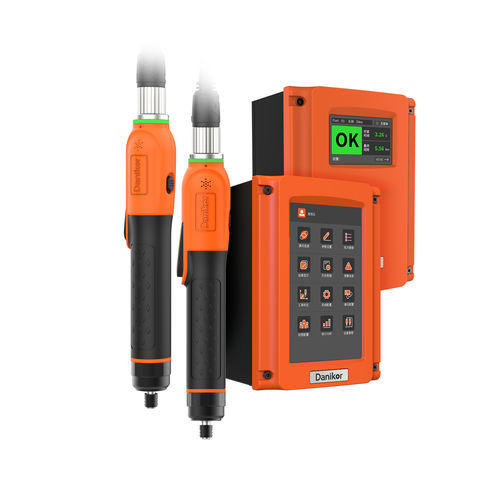
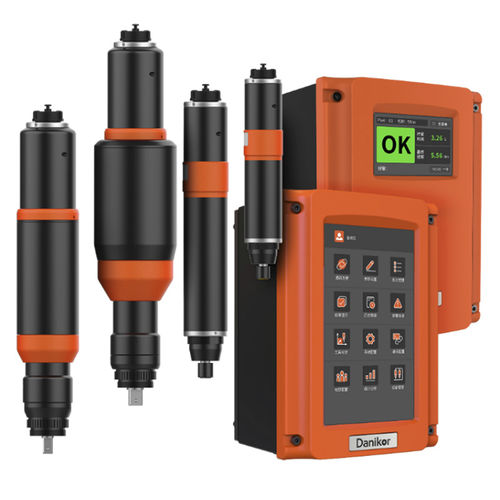
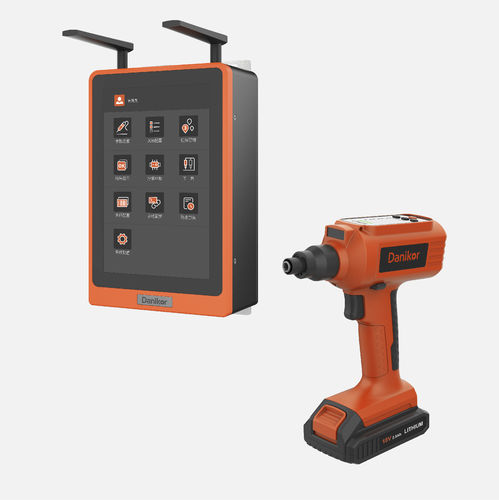
With years of deep expertise in the intelligent tightening field, Danikor has developed a series of high-precision, programmable, and fully controllable smart electric screwdriver products tailored to the tightening characteristics and industry pain points of soft materials like plastic and rubber. These tools perfectly adapt to soft connection assembly scenarios, precisely solving core issues such as torque attenuation, thread stripping, floating screws, and poor consistency, making them essential equipment for precision plastic part assembly.
1. High-Precision Torque Closed-Loop Control, Eliminating Stripping and Floating Screws
Danikor smart electric screwdrivers are equipped with high-precision built-in torque sensors, enabling closed-loop torque control throughout the entire process. They achieve torque accuracy up to 6σ ±5%, far exceeding the accuracy standards of ordinary electric screwdrivers. Targeting the low yield strength and low error tolerance of plastic parts, they can precisely lock onto minute torque ranges, solving the problems caused by large torque deviations in traditional tools: torque is precisely controllable, preventing damage to plastic threads from over-tightening (which causes stripping) and preventing under-tightening (which leads to floating or loose screws). This significantly improves the tightening pass rate at the equipment level.
2. Supports Multi-Step Tightening, Adapting to Dedicated Soft Connection Processes
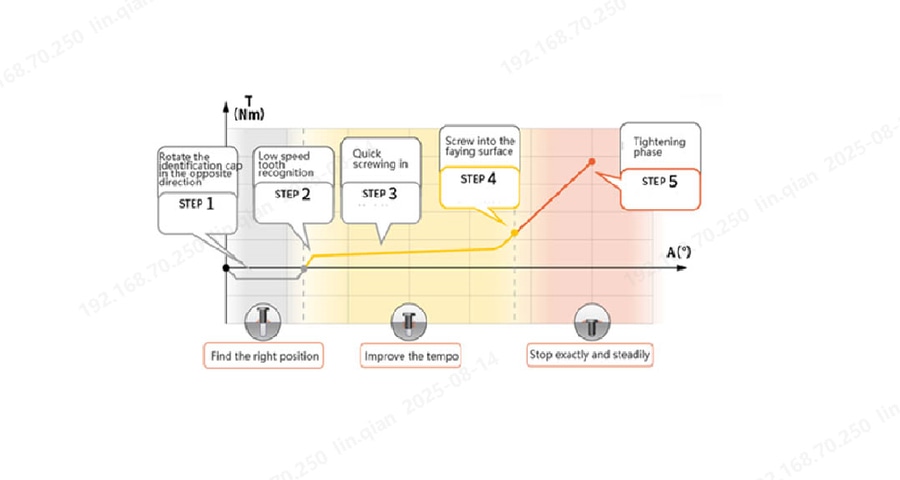
The equipment supports customizable multi-step tightening programs, allowing users to freely set a step-by-step tightening process (e.g., 60%-80%-100%) and also accommodates a "tighten-loosen-final tighten" re-tightening strategy. Operators can flexibly adjust initial tightening torque, tightening speed, pause time, and final tightening parameters based on the plastic material, screw specifications, and workpiece thickness. Low-speed, stable tightening reduces frictional heat buildup, while the step-by-step approach gradually releases plastic creep stress. This effectively suppresses late-stage torque attenuation and significantly enhances the stability and durability of bolt preload.
3. Full-Process Data Traceability, Enabling Process Iteration and Optimization
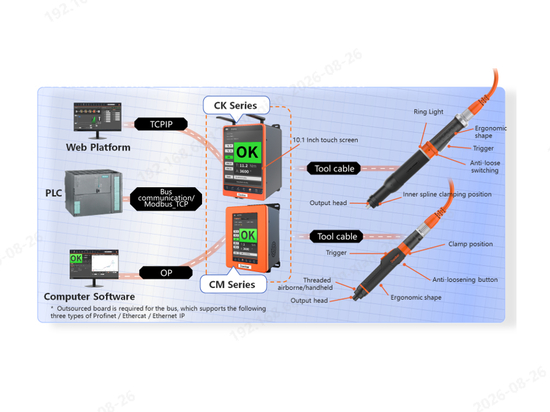
Unlike ordinary electric screwdrivers that can only perform basic tightening tasks, Danikor smart electric screwdrivers can collect and record tightening data, torque curves, and angle parameters for every single screw in real-time. They support data storage, query, and statistical analysis, and can also interface with MES systems for digitalized management and control. Through the analysis of vast amounts of tightening data, enterprises can specifically optimize tightening process parameters for plastic parts, continuously reducing the probability of torque attenuation. This achieves production processes that are inspectable, controllable, and traceable, aiding workshops in their digital quality upgrade.
IV. Conclusion: Smart Equipment Empowers the Precision Assembly Upgrade of Plastic Parts
The primary reasons for the difficulty and high failure rate in tightening plastic parts are the characteristics brought by the material's viscoelasticity: creep-induced torque attenuation, low strength making it prone to damage, and an unstable friction coefficient. Traditional manual operations, ordinary tightening tools, and singular process optimizations cannot completely solve the pain points of soft connection assembly.
Danikor smart electric screwdrivers, leveraging four core advantages—high-precision torque control, programmable multi-step tightening, full-process data traceability, and intelligent error-proofing monitoring—perfectly meet the tightening process requirements for soft connection workpieces like plastic and rubber. From the three dimensions of equipment precision, operational process, and quality management, they thoroughly solve challenges such as loosening, stripping, torque attenuation, and poor consistency in plastic part tightening. They help enterprises improve assembly yield rates, reduce production costs, and achieve digital upgrades in tightening processes. They are the preferred intelligent tightening equipment for assembly scenarios involving plastic parts in home appliances, precision electronics, new energy, and other industries.