#Product Trends
Large and Heavy Material Automatic Feeding Solution
Automatic Feeding Solution, flexible feeding system, flexible feeder
In automated assembly lines, the feeding of large and heavy components has long presented numerous challenges. Conventional flat flexible vibratory feeders have limited load capacity and struggle to stably transport large-sized, heavy workpieces. When handling large metal parts, irregular plastic components, and easily tangled soft rubber parts, they frequently encounter issues like material jamming, accumulation, and difficulty in flipping, which constrain the automation production cycle. Danikor's turntable-style vibratory feeder specifically addresses these automatic feeding challenges for large and heavy materials, providing a reliable vision-guided feeding solution for smart manufacturing.
I. Industry Pain Points in Feeding Large and Heavy Materials
Traditional flat flexible vibratory feeders are better suited for small precision parts, and their shortcomings are pronounced in large material application scenarios:
Insufficient Load Capacity: Unable to bear the weight and volume of large workpieces, resulting in poor operational stability.
Narrow Material Adaptability: Irregular large parts, heavy metal components, and easily tangled soft rubber parts are difficult to orient and adjust.
High Changeover Difficulty: Cleaning is cumbersome when switching products, leading to low efficiency in mixed-model production lines.
Mutual Process Interference: Feeding and picking cannot occur simultaneously, restricting the production tact time.
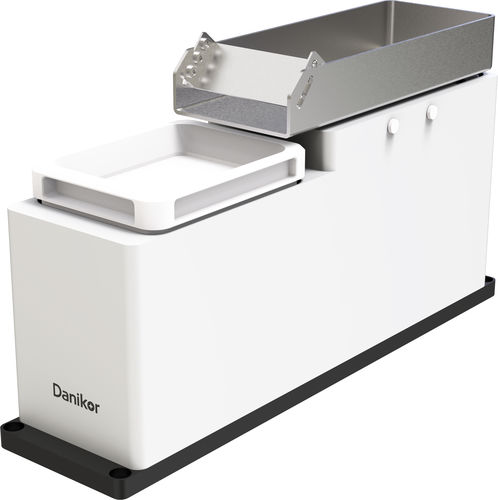
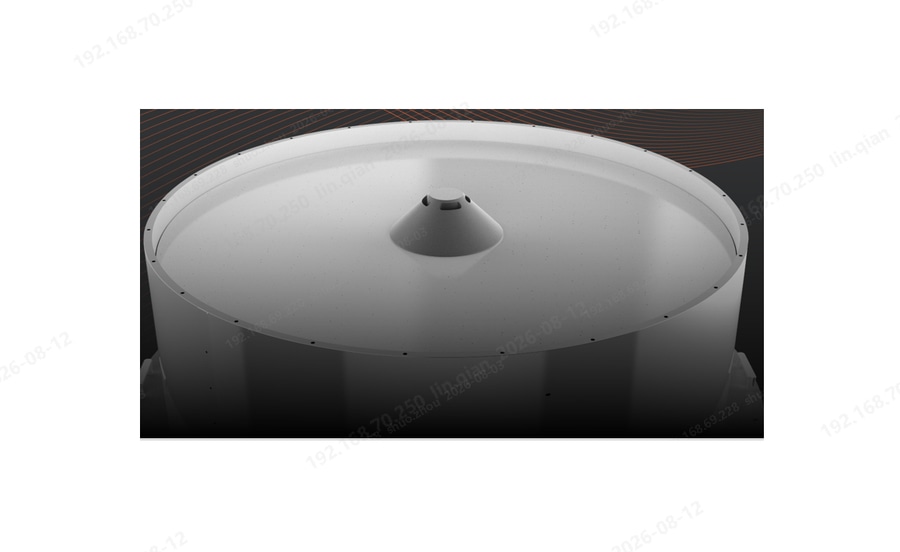
To address these industry challenges, Danikor has launched the Ring Feeder, a visual flexible feeding system specifically designed for large and heavy components.
II. Working Principle of Danikor Ring Feeder
The Ring Feeder is divided into four functional zones: the Loading Zone, Vibration Zone, Identification & Pickup Zone, and Clearing Zone, enabling a standardized automatic feeding process:
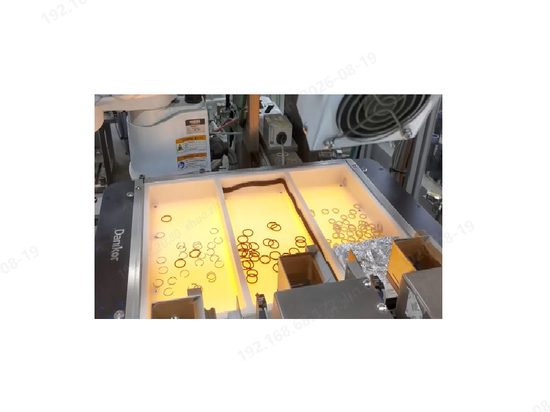
Loading: Materials are placed into the hopper and automatically conveyed to the ring tray surface via a vibration mechanism.
Orientation & Separation: The drive motor rotates the turntable while the cylinder provides vertical vibration, disrupting the material arrangement and achieving workpiece loosening and positional adjustment.
Vision & Recognition: The vision camera captures the components on the tray, identifies those in the correct orientation, and sends the coordinate information to a collaborative robot.
Pickup & Cycling: The robot receives the positioning signal, picks the material, and completes the assembly. Unqualified components continue to cycle with the turntable to be re-oriented.
The equipment supports independent operation of each zone, ensuring that the loading process does not interfere with the vision-guided pickup, thus guaranteeing continuous production line operation.
III. Three Core Advantages of Danikor Ring Feeder
1. Excellent Load Capacity, Adaptable to Large and Heavy Materials
Specifically designed for large workpieces, the Ring Feeder supports the feeding of components ranging from 1 to 300mm in size and 1 to 300g in weight. It is compatible with various materials including metal, plastic, soft rubber, ceramics, and electronic components:
Large Metal Parts: High-volume, heavy stampings and machined parts.
Large Plastic Parts: Irregularly shaped injection-molded housings and structural components.
Large Soft Rubber Parts: Easily deformable, intertwined rubber components.
This compensates for the limitation of ordinary flat flexible vibratory feeders, which have a low maximum load and cannot convey heavy large parts.
2. Flexible and Rapid Changeover, Suitable for Multi-Variety Production
The ring structure is equipped with an independent clearing mechanism. When switching products, the discharge baffle is opened, allowing materials on the tray to be quickly discharged into a collection box without the need for manual cleaning of the tray surface.
This enables one machine to handle multiple tasks, supporting mixed-model production with multiple component types. It significantly reduces downtime for product changeovers, making it ideal for multi-category, small-batch automated production lines.
3. Zoned Efficient Collaborative Control, Improving Feeding Cycle Time
The feeder is divided into four independent zones: the Loading Zone, Vibration Zone, Vision & Pickup Zone, and Clearing Zone, which operate simultaneously. The processes of material feeding, vibration-based orientation adjustment, visual recognition, and robot picking run in parallel without interfering with each other.
The system allows for freely programmable action logic, with customizable operating parameters such as movement, oscillation, vibration, and delay. This flexibility allows it to adapt to different material feeding processes and integrate with various automated assembly solutions.
IV. Typical Application Scenarios of the Ring Feeder
The Ring Feeder is widely used in automotive parts assembly, home appliance assembly, new energy component production, and 3C structural parts processing. It is suitable for flexible feeding of various large and irregular workpieces, including:
Automotive plastic housings
Metal stamped brackets
Rubber and plastic seals
Large connectors
Structural plastic parts
It can be combined with collaborative robots and vision systems to form a complete flexible feeding workstation, seamlessly integrating with tightening, assembly, and inspection processes.
As the size of components in automated assembly continues to increase, traditional small flexible vibratory feeders are no longer sufficient to cover the feeding needs of large and heavy materials. Danikor's Ring Feeder, with its powerful load capacity, rapid changeover capability, and advantages in zoned collaborative control, fills the gap in flexible feeding for large workpieces. As a new-generation turntable-style vision-guided feeding solution, it effectively solves the challenges of chaotic orientation, unstable feeding, and troublesome changeovers for heavy large parts, helping factories achieve a comprehensive automation upgrade.