
#Industry News
Chrome Plated Rod Hardness Testing: Vickers vs Rockwell and What the Numbers Mean
Why chrome plated rod hardness must be tested with light-load Vickers, not standard Rockwell, and how method mismatch causes false rejections.
Title: Vickers vs Rockwell: Why Your Hardness Tester Is Measuring the Wrong Thing
A quality manager once rejected a batch of chrome plated rod because his Rockwell tester read far below the HV 800–1000 quoted on the certificate. The supplier insisted the plating was correct. Neither side was lying.
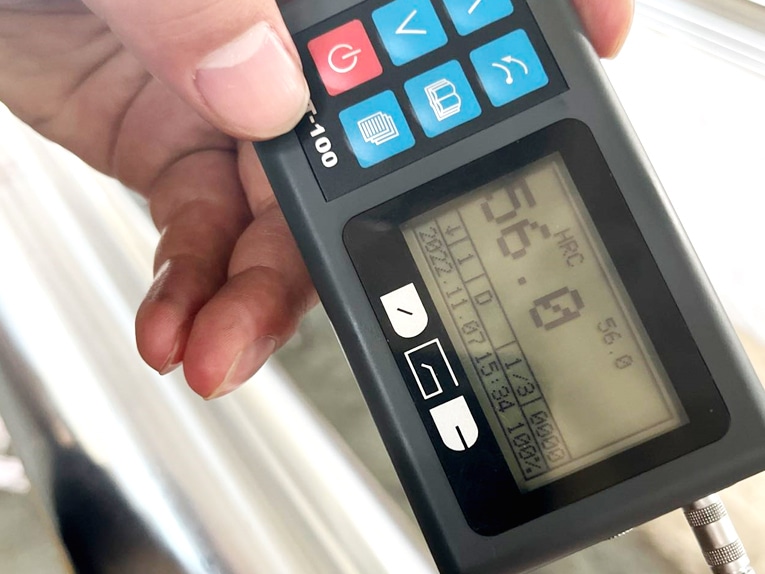
The certificate reported Vickers hardness measured directly on the thin chrome layer. The shop used a standard Rockwell C indenter with a load far too heavy for a coating only tens of microns thick. The indenter punched straight through the chrome into the softer base steel, reading the substrate instead of the coating.
This is one of the most common — and costly — QC mistakes in chrome plated rod verification. Hard chrome is too thin for standard Rockwell testing. Use light-load Vickers for coating hardness. Keep Rockwell for base steel heat treatment checks. Comparing the two directly only creates false rejections.
There is a simple rule to confirm which property you are actually testing before rejecting a batch.
Read the full article to learn how to verify chrome hardness correctly and avoid method-mismatch disputes.