#Industry News
Beyond Light Blocking: Anti-Static Advantages of Black Alumina Ceramics in Optoelectronic Packaging
Anti-Static Advantages of Black Alumina Ceramics in Optoelectronic Packaging
As optical communication, LiDAR, and high-precision optoelectronic detection systems evolve toward higher power and greater integration density, they place higher demands on the performance of optoelectronic packaging materials. The increase in device power brings challenges in heat dissipation and high-temperature stability, while the improvement in integration density raises the risks of internal stray light interference and electrostatic discharge (ESD), directly affecting system reliability and signal-to-noise ratio. Traditional white alumina has limitations in optical control, and conventional ESD protection solutions often fail to be perfectly compatible with high gas-tightness and high thermal conductivity packaging systems.
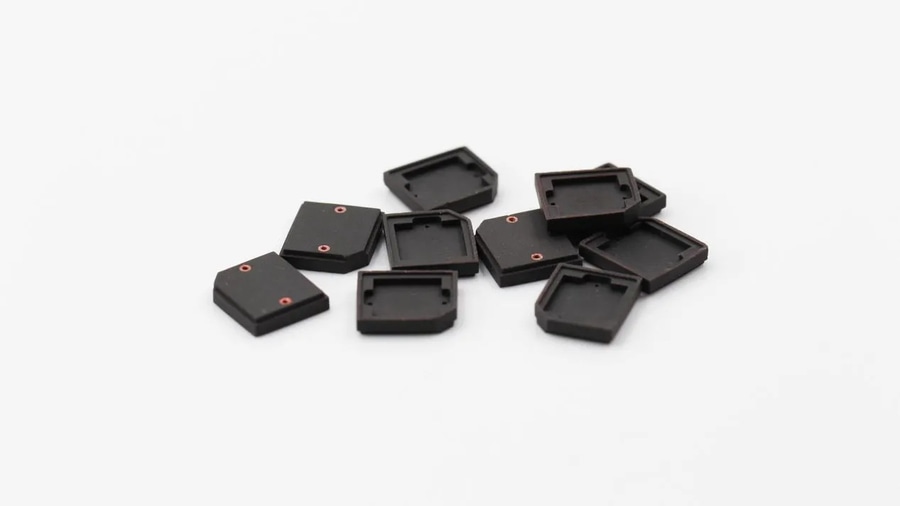
Based on the high mechanical strength, thermal conductivity, and excellent insulation properties of black alumina ceramics, the material achieves a multi-functional integration of optical control, thermal management, and on-chip electrostatic discharge (ESD) protection.
The multi-functional integration characteristics of black alumina ceramics signify the evolution of photonic packaging materials from passive protection to active functional design. It has been optimized through materials science, integrating optical control, thermal management and anti-static functions, providing a system-level reliability solution for high-power and high-integration optoelectronic devices.
For photonic systems that aim for high performance and ultra-high reliability, choosing black alumina ceramics is not just selecting a packaging material—it represents a system-level high-reliability strategy. Innovacera provides customized solutions for ceramic packages using black alumina ceramics—contact [email protected]
to learn more.