#Product Trends
Vacuum Electrical Power Feedthroughs for High-Performance Vacuum Applications
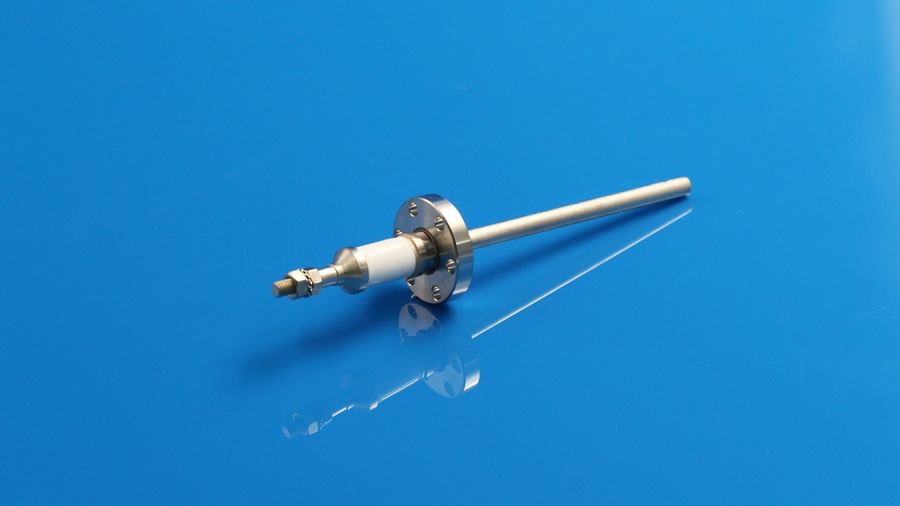
Ceramic Metal Brazed Feedthrough
In a vacuum environment, the pivotal conduit for secure energy transmission.
Vacuum electrical power feedthrough is a key through component specially designed for vacuum systems. Its core function is to safely and reliably transfer electrical energy from the atmospheric environment to the vacuum interior while absolutely maintaining the vacuum seal of the cavity. It is the indispensable “energy link” that connects the external power source with the internal load of the cavity.
This component has solved the core problem of stable power supply under high vacuum conditions, and is the foundation for the reliable operation of various heating, high-voltage, and particle beam processes.
Design core: Sealing, insulation and current carrying capacity
The design of vacuum electrical power feedthrough is centered around three core aspects: sealing, insulation, and current-carrying capacity.
(1) Based on the mature ceramic-metal brazing technology, an atomic-level airtight connection is achieved, meeting the requirements of high vacuum and ultra-high vacuum applications. It also exhibits long-term stability under high-temperature baking and harsh working conditions.
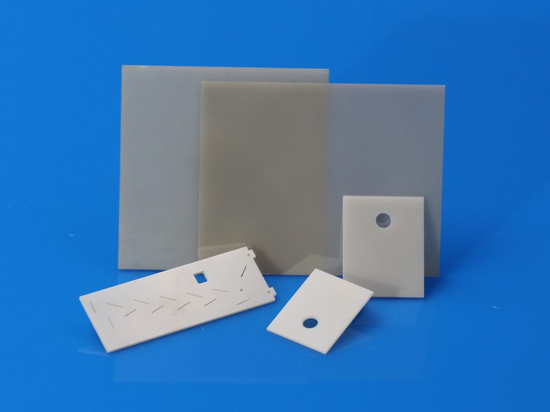
(2) Robust mechanical and electrical structure: 304/316L stainless steel flanges, compatible with CF, KF, and ISO standard interfaces; conductors made of oxygen-free copper, copper-nickel alloy, or Kovar alloy, optionally gold or nickel plated to reduce contact resistance. High-purity aluminum oxide ceramic provides reliable insulation and thermal stability.
(3) Flexible electrical performance configuration: It supports configurations ranging from single conductors and dual conductors to multi-conductor arrays, meeting the requirements for single-channel or multi-channel independent power transmission. Depending on the application, it can be classified as high current type, high voltage type or composite power type. It can not only transmit hundreds of amperes of high current, but also withstand tens of thousands of volts of high voltage, providing reliable power support for complex vacuum processes.