#Product Trends
Non-Conductive Coolants: Why Ultrasonic Flowmeters Are the Inevitable Choice
Flow sensor for liquid cooling
1. Introduction: A Critical Fork in the Evolution of Liquid Cooling
When the power consumption of a single AI training chip exceeds 1000 W and the heat density of a GPU server rack surpasses 100 kW, traditional air cooling — with a heat transfer coefficient only 1/25 that of liquid — is no longer an option but a bottleneck. Liquid cooling has rapidly shifted from an “optional solution” to a “mandatory solution.”
However, liquid cooling is not a single technology. A fundamental choice lies at the root of every liquid cooling architecture: Must the coolant be conductive? The answer determines system architecture, safety boundaries, and maintenance logic — and ultimately decides which flow measurement technology should be used.
This report analyzes the topic from three perspectives:
1.Why non-conductive coolants are adopted — technical drivers and irreplaceability
2.Which liquid cooling scenarios require non-conductive coolants — from data centers to power battery thermal management
3.Why ultrasonic flowmeters hold a fundamental advantage in these scenarios — necessity at the measurement principle level
2. Why Use Non-Conductive Coolants?
2.1 Core Conflict: Heat Transfer Efficiency vs. Electrical Safety
The fundamental advantage of liquid cooling lies in the high specific heat capacity and thermal conductivity of liquids. However, the objects being cooled are live electronic components. If the coolant is conductive:
1.Any leakage onto a PCB can cause immediate short circuits and burn chips or motherboards.
2.Micro-leakage inside cold plates can lead to creepage on circuit boards, resulting in catastrophic failure.
3.Multiple layers of physical isolation must be maintained between the fluid loop and electronic components, increasing thermal resistance.
The adoption of non-conductive coolants (dielectric fluids) fundamentally upgrades “leakage tolerance” from “zero tolerance” to “acceptable risk.” This is not an incremental improvement but an architectural paradigm shift — it enables direct liquid contact with electronic components.
3. Why Ultrasonic Flowmeters Hold a Structural Advantage in Non-Conductive Coolant Applications
3.1 The Critical Need for Flow Measurement
In liquid cooling systems, flow rate is not just reference data — it is a control variable. Accurate flow monitoring enables dynamic regulation, early detection of leaks or blockages, and balanced flow distribution across multiple branches.
3.2 Limitations of Mainstream Flow Measurement Technologies with Non-Conductive Fluids
Electromagnetic Flowmeters: Technical Failure
Electromagnetic flowmeters require a minimum fluid conductivity of 5–20 μS/cm. Non-conductive coolants (typically <0.01 μS/cm) fall far below this threshold, making electromagnetic flowmeters physically incompatible.
Coriolis Flowmeters: Usable but Expensive
Coriolis flowmeters can measure non-conductive fluids but introduce significant pressure drop, are vibration-sensitive, and are 3–5 times more expensive than ultrasonic solutions.
Turbine / Rotameter Flowmeters: Wear and Reliability Risks
These contain moving parts that are prone to wear and blockage, especially in 7×24-hour data center environments.
3.3 Ultrasonic Flowmeters: The Future-Proof Choice
XY-TEK ultrasonic flowmeters operate on the ultrasonic transit-time principle, which is completely independent of fluid conductivity. This is the root of their technical advantage.
Five Core Advantages:
Native Compatibility with dielectric fluids (synthetic hydrocarbons, fluorinated liquids, mineral oils).
Non-Intrusive Measurement (Clamp-on type) — zero leakage risk and no pipe cutting.
Zero Pressure Loss — no impact on system pumping efficiency.
No Moving Parts — virtually maintenance-free in continuous operation.
Wide Pipe Size Coverage — from DN6 to DN50, meeting flow ranges from 1–2 L/min (single GPU) to 100–300 L/min (high-density racks).
4.Related Product ---TPD series Ultrasonic Flow Sensor / Flow Meters
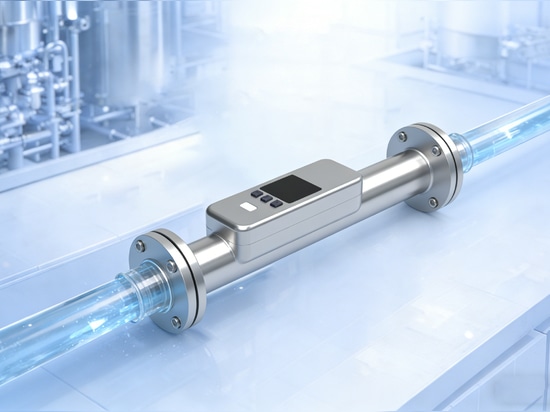
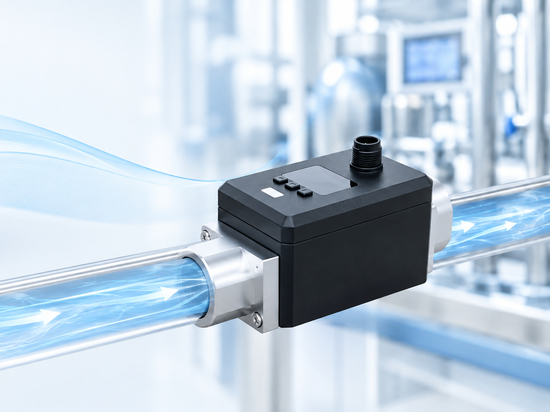
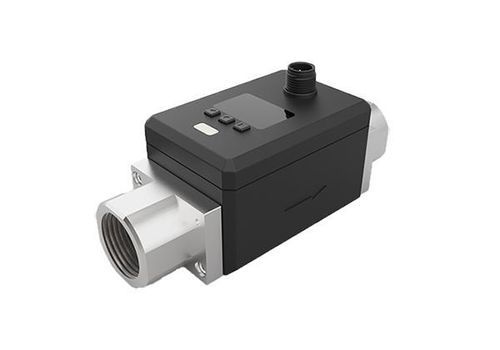
The TPD series inline ultrasonic flow sensors/flow meters feature an integrated design with a built-in circuitry, support direct flow rate measurement and intuitive flow data monitoring, ideal for industrial automation, battery manufacturing equipment, water treatment, and liquid cooling flow rate measurement.
Tubing Range DN15-DN50, support OEM and tubing size customization.
The TPD series inline ultrasonic flow sensors/flow meters can be integrated into the existing fluid systems through internationally standardized tubing fittings, with an accuracy of up to ±2%.
TPD series inline ultrasonic flow sensors/flow meters consist of straight tubing with no moving parts and dead spots, making it resistant to wear and scaliness, easy to clean, and with minimal pressure loss.
Compared to clamp-on ultrasonic flow sensors/flow meters, the TPD series flow sensor/flow meters calibration does not depend on the tubing material and diameter, enabling immediate measurement upon integration into the system.
The TPD flow sensor/flow meters are widely used in filling and spraying applications, battery manufacturing devices, liquid cooling, industrial automation systems, and more.
Applications
Industrial Automation: Filling equipment, spraying equipment, liquid cooling systems, lubrication systems, cleaning systems, etc
Battery Manufacturing: Lithium battery slurry transfer, water cooling systems, etc
Water Treatment: Wastewater Treatment Systems