#Product Trends
Safeguarding the Flow of Life:The Crucial Application of Ultrasonic Flow Sensors in ECMO and Extracorporeal Circulation Systems
Precise Monitoring for Safe and Efficient Life Support Operation
1. Extracorporeal Circulation / ECMO Systems: The "External Engine" of Life
Extracorporeal Membrane Oxygenation (ECMO), often referred to as an artificial heart-lung machine, is an emergency medical technology used to support or completely replace the function of the heart and/or lungs. In high-risk cardiac procedures like Transcatheter Aortic Valve Replacement (TAVR), as well as in the resuscitation of Intensive Care Unit (ICU) patients suffering from severe respiratory or circulatory failure, ECMO serves as the ultimate line of defense for life.
During this process, blood continuously circulates through the ECMO circuit, completing oxygen and carbon dioxide exchange via an oxygenator (membrane lung). The stability and precise control of the blood flow rate during this extracorporeal circulation are directly tied to patient safety and the overall efficacy of the treatment.
2. The Severe Challenges of Blood Flow Monitoring in ECMO
Flow monitoring within an ECMO blood circuit demands more than just measurement accuracy; it must equally prioritize blood safety, circuit integrity, and long-term operational reliability. Because the blood flow is directly tied to patient survival, flow monitoring devices are typically required to minimize any additional impact on the blood path. Consequently, ECMO flow monitoring faces the following challenges:
→ Non-Interference with the Blood Circuit: The ECMO circuit must operate with continuous stability. Flow monitoring devices should, as much as possible, avoid altering the tubing structure, increasing resistance, or creating additional fluidic disturbances.
→ Avoiding Blood Contact and Contamination Risks: Once a sensor comes into direct contact with blood, it introduces complex issues related to sterility, material compatibility, hemocompatibility, and the use of single-use consumables. For ECMO systems that require prolonged operation, a non-contact measurement approach offers significant advantages.
→ Mitigating Thrombosis and Hemolysis Risks: During extracorporeal circulation, blood is highly sensitive to changes in the flow field and mechanical shear stress. The flow monitoring solution must avoid introducing unnecessary restrictions, structural alterations, or areas of high local shear within the tubing.
→ Stability During Long-Term Operation: As ECMO may run for several days or longer, the flow sensor must maintain stable measurements throughout its extended operational period, while adapting to changes in blood properties, tubing conditions, and the complex clinical environment.
→ Timely Detection of Abnormal Flow: Flow rate is a critical parameter for evaluating the status of the ECMO circuit. Abnormal flow can be linked to factors such as circuit occlusion, pump performance, or other issues. Therefore, continuous and reliable flow monitoring is essential to provide a basis for device control and clinical judgment.
3. Ultrasonic Flow Sensors: The "Safety Guards" of Extracorporeal Systems
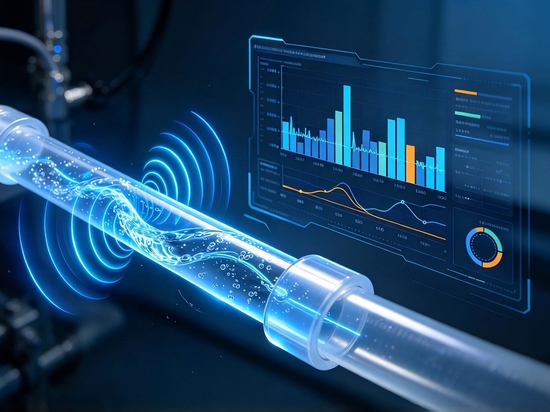
Addressing the aforementioned pain points, ultrasonic flow sensing technology has emerged as the ideal standard for ECMO and extracorporeal devices due to its unique physical advantages. Utilizing the "Transit-Time" principle, these sensors calculate blood velocity with exceptional precision by transmitting and receiving high-frequency ultrasonic signals. Their core value in extracorporeal systems is demonstrated in three critical dimensions:
→ Flow Verification and Circuit Anomaly Diagnosis: In clinical settings, improper tube positioning can inadvertently restrict blood flow. By cross-referencing the real-time actual flow measured by the ultrasonic sensor against the set output of the blood pump, the system can guarantee the accuracy of blockage alarms. This helps medical staff promptly correct issues like pinched or kinked tubing.
→ Early Clot Warning and Over-Perfusion Prevention: The oxygenator is the component most susceptible to thrombosis in an ECMO setup. When micro-clots begin to form within the arteriovenous shunt or the oxygenator, flow resistance changes. An ultrasonic flow sensor installed on the tubing sensitively captures abnormal flow fluctuations, providing vital early warnings. This effectively prevents total oxygenator occlusion or dangerous over-perfusion caused when the pump's total output flows directly to the patient.
→ Real-time Bubble Monitoring and Defense: To counter the fatal risk of air embolisms, advanced ultrasonic flow sensors not only measure flow but also integrate highly sensitive bubble detection capabilities. The moment air enters due to a compromised line, the sensor instantly triggers an alarm, providing precious reaction time for the equipment to automatically halt the pump or physically clamp the line.
4. XY-TEK: Delivering Medical-Grade Precision Flow Sensing Solutions
Deeply rooted in ultrasonic fluid sensing technology, XY-TEK understands the extraordinarily high standards for hygiene, safety, and precision in the medical device sector. We have engineered a portfolio of ultrasonic flow sensors tailored for critical equipment such as ECMO, hemodialysis machines, and artificial hearts.
1. CG & CM Series: The Benchmark for Clamp-On Sensors on Medical Tubing
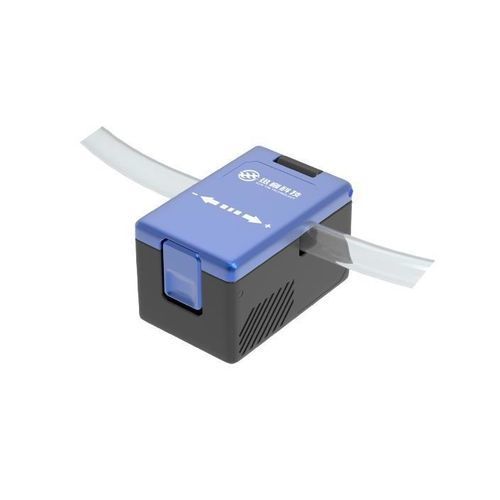
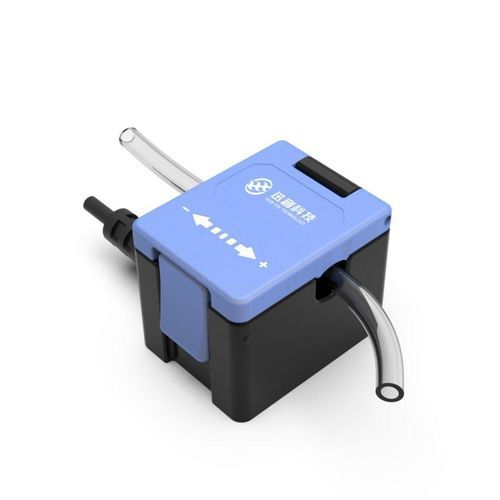
The CG and CM series are XY-TEK’s flagship non-invasive measurement solutions, perfectly aligning with ECMO’s stringent sterile requirements.
→ Absolute Safety via Zero-Contact Measurement: Featuring a clamp-on design, the sensor simply clips onto the outside of medical-grade flexible tubing (like PVC or Silicone). With zero physical contact with the blood, it fundamentally eliminates the risks of contamination, thrombosis, and hemolysis, ensuring absolute hygienic safety.
→ Highly Integrated and Space-Saving: In crowded ICU environments, device footprint is critical. The CG/CM series perfectly integrates complex signal processing circuitry within the sensor body, eliminating the need for bulky external computing units and offering an ultra-compact size.
→ Flow and Bubble Detection: These sensors provide high-accuracy bidirectional flow measurement (±3% R.D.) while simultaneously featuring bubble detection, offering double safety redundancy for extracorporeal systems.
→ Low Pressure Drop, Zero Dead Zones: Blood flows smoothly through the native tubing without encountering any restrictive sensor components, maintaining optimal hemodynamics.
2. TH Series: Precise Monitoring of High-Speed Pulsatile Flow
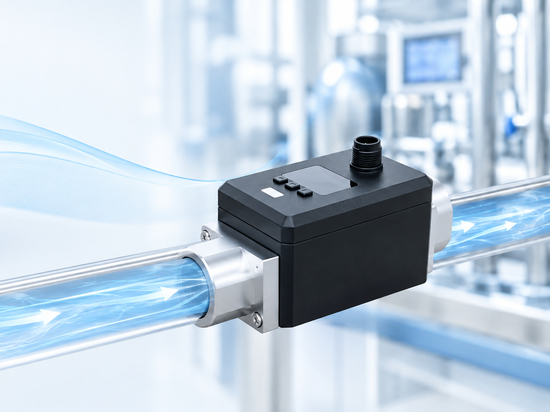
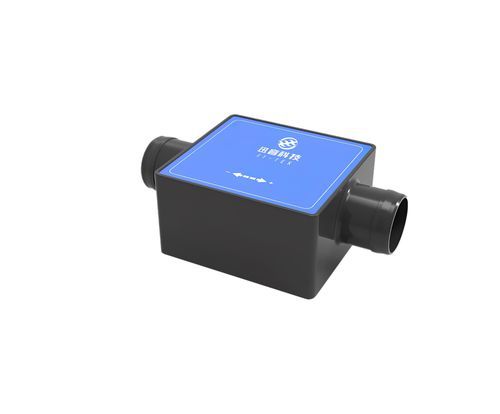
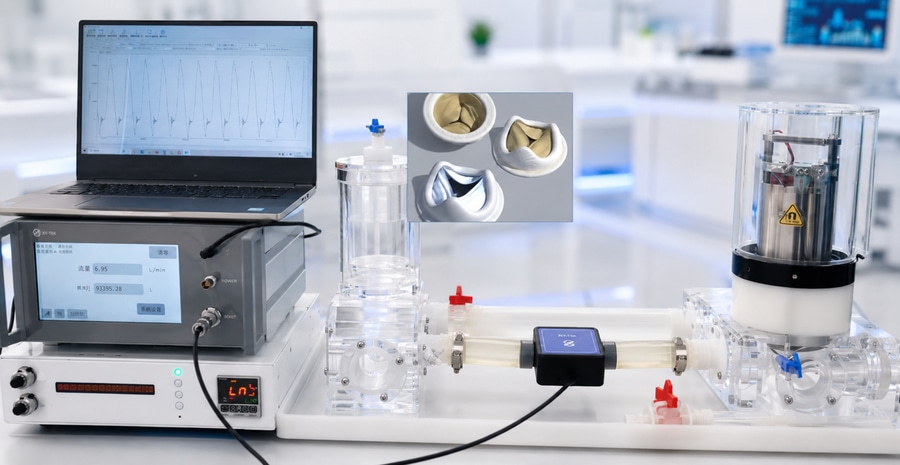
For applications such as ECMO-related test systems and extracorporeal circulation simulation systems, the fluid is typically driven by a pump, and the flow may exhibit rapid changes or even distinct pulsatile characteristics. To address these demands for high-speed dynamic flow measurement, XY-TEK’s TH Series in-line ultrasonic flow sensors can be directly integrated into the circulation loop, enabling rapid response to flow changes and stable monitoring.
→ Rapid Response for Accurate Capture of High-Speed Pulsatile Flow: The TH Series is engineered for high-speed dynamic flow measurement, allowing it to respond swiftly to flow variations. It is highly suitable for monitoring pulsatile flow in pump-driven circulation systems, providing reliable, real-time flow data for system performance evaluation, flow control, and test data acquisition.
→ In-line Installation for Easy Integration into Circulation Test Loops: By connecting directly into the system's flow path via standard fittings, it eliminates the need for measurement matching based on the material or wall thickness of external tubing. This facilitates stable integration into ECMO-related test systems and extracorporeal circulation simulators.
→ Smooth Flow Path Design to Minimize Additional Interference: Featuring a smooth, straight-through internal channel with no moving parts, it reduces additional obstruction and pressure loss during fluid flow. This helps minimize the sensor's impact on the circulation system's flow field, making it better suited for dynamic circulation flow monitoring.
In life-saving missions where every second counts, the slightest data deviation is a matter of life and death. By providing exceptionally reliable clamp-on and in-line ultrasonic flow sensors, XY-TEK serves as the rock-solid technical backbone for global ECMO and life-support equipment manufacturers, ensuring that every drop of the source of life is precisely guarded.