#Product Trends
Building a Safety Defense for ESS Thermal Management
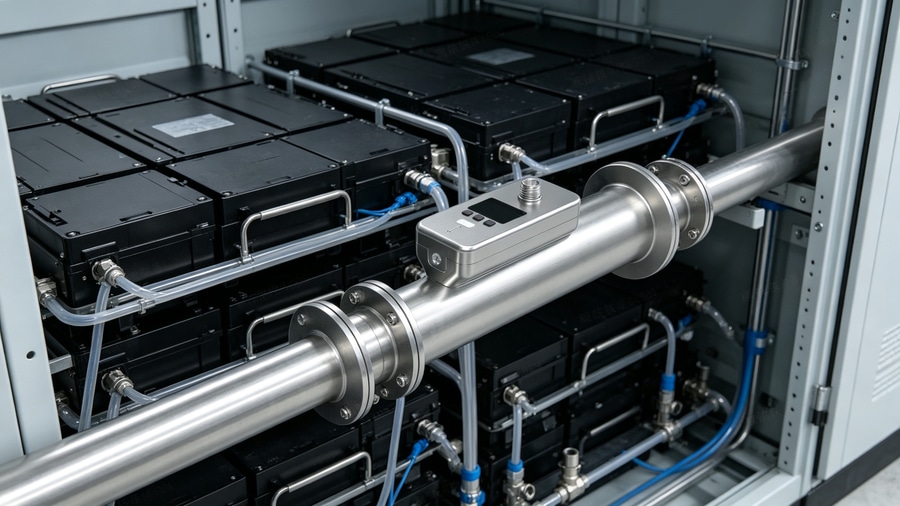
Applications of Ultrasonic Flow Sensors in Liquid Cooling Systems
Against the backdrop of the global energy transition towards clean and low-carbon structures, electrochemical Energy Storage Systems (ESS) are experiencing large-scale deployment. As the energy density of individual battery cells and overall systems continues to rise, thermal management during charge and discharge cycles has become a core factor impacting system lifespan and safety.
Compared to traditional air-cooling solutions, liquid cooling technology, with its higher heat exchange efficiency and superior temperature control consistency, has become the mainstream thermal management approach for ESS. However, the introduction of liquid cooling loops also imposes higher requirements on the reliability of system design and long-term maintenance. Within the cooling circulation loop, accurate and stable flow monitoring is a critical component for evaluating heat dissipation performance, detecting anomalies promptly, and ensuring safe system operation.
1.Flow Monitoring Challenges in Liquid Cooling ESS
Energy storage equipment typically requires a long service life. During prolonged operation, traditional flow measurement technologies face the following engineering bottlenecks within liquid cooling loops:
→ Leakage Risks: Liquid cooling pipelines are located in close proximity to battery modules and electrical components. Traditional flow meters require pipe cutting for installation, which increases the number of joint sealing surfaces and consequently heightens the safety hazards of short circuits or corrosion caused by coolant leaks. Therefore, high-sealing or non-invasive measurement solutions hold significant engineering value.
→ Increased Flow Resistance and Parasitic Power Consumption: Impellers or flow-restricting components inside mechanical flow meters alter fluid states, generating a non-negligible pressure drop. This forces the water pumps of the Coolant Distribution Unit (CDU) to operate under high loads continuously, increasing the auxiliary power consumption of the system.
→ Mechanical Wear and Measurement Drift: Coolant may generate micro-impurities or scaling during long-term circulation, leading to the wear or even seizing of mechanical rotors. This not only causes measurement accuracy drift and triggers false alarms but can also lead to misjudgments in thermal management strategies.
→ Coolant Compatibility: To meet anti-freezing and electrical insulation requirements, the media used in liquid cooling systems has gradually expanded from conventional ethylene glycol-water solutions to specialized antifreezes or non-conductive fluorinated fluids. Electromagnetic flow meters, which rely on conductivity, are unsuitable when dealing with highly insulating fluids.
2.Adaptability and Advantages of Ultrasonic Sensing Technology
Addressing the spatial, energy, and long-term reliability requirements of ESS liquid cooling systems, ultrasonic flow measurement technology demonstrates excellent application adaptability:
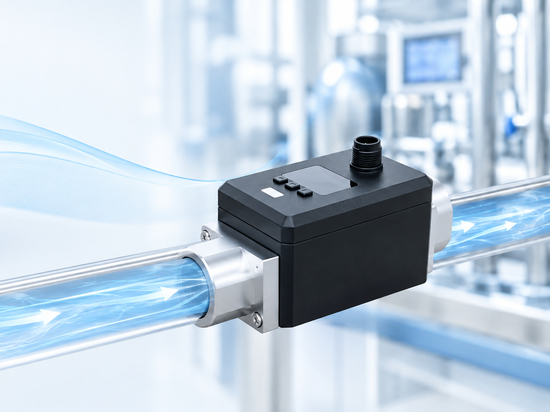
→ Non-Invasive Measurement Ensuring Pipeline Integrity: Clamp-on ultrasonic sensors can be installed directly on the outer wall of the pipe without cutting it. While eliminating the risk of leakage, this significantly reduces the complexity of manufacturing assembly and subsequent maintenance.
→ No Flow-Restricting Components for Reduced Pumping Energy: Regardless of whether an in-line or clamp-on structure is used, there are no mechanical flow restrictors within the measurement channel. The fluid resistance is extremely low, which is conducive to optimizing pump energy consumption and improving the overall Coefficient of Performance (COP) of the system.
→ No Mechanical Wear for Long-Term Stability: The absence of moving internal parts allows the sensor to maintain measurement stability during long-term continuous operation, substantially lowering operation and maintenance costs caused by flow meter failures.
→ Media Versatility: Based on the Transit-Time Method, the measurement is not limited by fluid conductivity, making it widely compatible with water-based coolants and various new, highly insulating cooling media.
3.XY-TEK Product Selection Matrix
Addressing the installation and process requirements at different nodes within the ESS, XY-TEK offers two major categories of solutions: In-line and Clamp-on.
3.1 Highly Integrated In-Line Monitoring: TAD / TPD / TPK Series
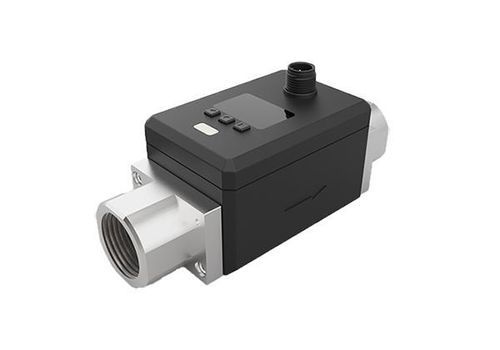
In-line sensors are typically integrated during the equipment assembly phase as part of the liquid cooling unit or piping system. Compared to clamp-on types, in-line sensors connect directly to the pipeline via fittings. This design is unaffected by external pipe materials, providing extremely high measurement accuracy and long-term consistency, and features a smooth, dead-zone-free flow channel:
→ TPK Series: Features a compact structure, designed specifically for space-constrained internal cabinet flow paths, minimizing fluid pressure drop to an extremely low level while maintaining high flow measurement accuracy.
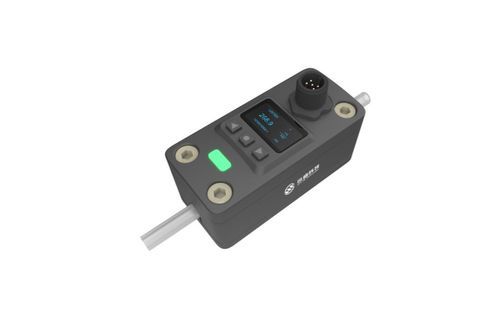
→ TPD Series: Utilizes a high-strength plastic housing, balancing lightweight design with cost-effectiveness, and comes with a built-in display screen to facilitate on-site commissioning.
→ TAD Series: Features a built-in display and adopts a full stainless-steel structural design. It possesses excellent pressure resistance and structural strength, making it suitable for complex operating conditions with high structural demands.
3.2 Flexible and Safe Non-Invasive Monitoring: CS / CPD Series
For application scenarios that pursue the highest leak-proof standards or require adding monitoring points to existing systems, the clamp-on series offers a flexible solution:
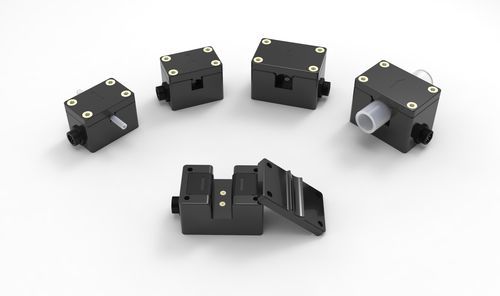
→ CS Series: Designed specifically for dense piping inside cabinets and modules. The sensor clamps directly onto the outer wall of the pipe (e.g., PTFE, PFA, metal pipes), structurally eliminating the possibility of leakage at joints. Its extremely small footprint makes it easy to embed into tight spaces between battery clusters.
→ CPD Series: Building upon the clamp-on installation, the CPD provides a display screen and operating interface. On-site personnel can intuitively obtain flow data, greatly facilitating the field commissioning and maintenance of the equipment.
Driven by the trend of ESS developing towards high safety and high efficiency, reliable thermal management serves as the foundation for robust system operation. By providing reliable clamp-on and in-line ultrasonic flow sensors, XY-TEK effectively resolves the issues of leakage risks, pressure drop energy consumption, and media compatibility in liquid cooling systems. With objective and precise fluid data, we empower energy storage systems to achieve the operational goals of high safety and extended lifespan.