#Industry News
Four New Growth Tracks For Future Industries
Four New Growth Tracks For Future Industries
Four new growth tracks-Low Altitude Economy & Satellite Internet, Ocean Economy, New Energy Storage &Thermal Management, and AI Computing Power Centers-are rapidly emerging, leading the leap in future industries and bringing trillion-dollar markets. Industry chain enterprises are gearing up and entering the competition. Facing the tremendous development opportunities embedded in these new tracks, the company has clarified its strategic goals and is proactively laying out three growth curves: the first curve is optical fiber sensing, the second is optical fiber power transmission, and the third is thermal management and next-generation optical communication. By choosing the right track, laying the groundwork early, and entering the market ahead of time, we aim to stand out in this market transformation and achieve high-quality, leap-forward development.
1.Low Altitude Economy &Satellite Internet
Currently, China's low altitude economy is still in the early stages of rapid industry development. The aircraft manufacturing and infrastructure sectors are expected to see rapid development. Meanwhile, with the orderly opening of airspace and the landing of more demonstration scenarios, the low altitude economy is increasingly becoming a part of daily life, bringing new momentum for economic development. According to the data from the China Industrial Newspaper, as of November this year,22 provinces and cities across the country have released action plans for the low altitude economy, and regional industry funds have been established, totaling nearly 100 billion yuan.
The low altitude economy refers to a comprehensive economic model driven by civil manned and unmanned aerial vehicles flying at low altitudes. It promotes the integrated development of related fields, relying on the widespread use of drones and general aviation to penetrate areas such as logistics, emergency rescue, agricultural protection, and air tourism. With technological advances, the application scenarios for the low altitude economy will continue to expand. According to the data from the China Academy of Information and Communications Technology, the scale of China's low altitude economy reached 506 billion yuan in 2023,a year-on-year increase of 33.8%.It is optimistically estimated that by 2026,the scale of China's low altitude economy will exceed 1 trillion yuan, reaching 1,064.5 billion yuan.
At the same time, satellite internet, as a key infrastructure for the low altitude economy, is ushering in unprecedented development opportunities. China's “Hengyang Constellation "and "Hong Yun Project "low-orbit satellite internet plans aim to build a global low-orbit satellite communication network, providing stable and reliable communication services for drones and other low altitude aerial vehicles.
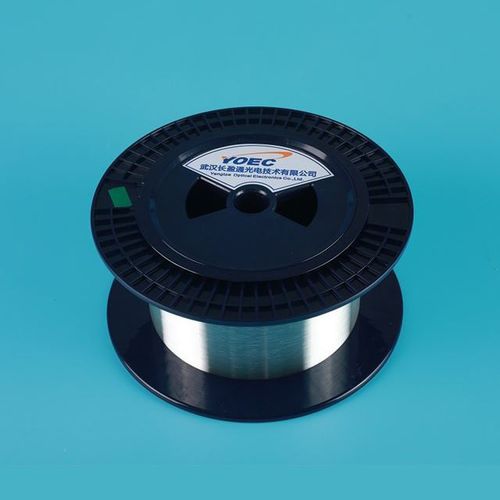
For the company itself, with years of accumulation in aerospace, precision manufacturing, and communication technologies, our core product, optical fiber coils, currently offers more than ten categories and over 200 models, providing users with a wide range of products and solutions. In the future, the company will consolidate its first growth curve, optical fiber sensing, fully leverage its technological advantages, drive innovation, adapt to market demand, and actively engage in the construction and development of the low altitude economy and satellite internet, embracing this blue ocean with an open mindset.
2.Ocean Economy
The global surface is 71%covered by the ocean, which not only serves as a treasure trove of resources and a space passage for future economic development but is also an important area for international strategic competition. According to data from the Ministry of Natural Resources, in 2023,China's marine industry gross output value was 9.9097 trillion yuan, a year-on-year increase of 6.0%.In the first half of 2024,the marine industry output reached 4.9 trillion yuan, a year-on-year increase of 5.6%,which is 0.6 percent- age points higher than the national GDP growth rate, showing a sustained rapid development trend in the marine economy.
With the deepening implementation of China's“14th Five-Year Plan, "which includes deep space exploration, deep-sea development, and deep earth research, the development prospects of the ocean economy are increasingly broad. Extracting new forms of productivity from the ocean economy has become a key way for coastal regions to drive economic growth and upgrade.
Optical fiber hydrophones are a new generation of hydrophones that use optical fiber as the signal transmission and sensing medium. The main sensing principle involves converting underwater sound pressure signals into changes in parameters such as intensity, phase, wavelength and polarization of light propagating through the optical fiber. By using detection methods and data processing algorithms, the underwater sound signals are measured. As a core component of passive sonar systems, optical fiber hydrophones offer advantages such as high sensitivity, strong electromagnetic interference resistance, long transmission distances, corrosion resistance, and high temperature resistance. They are widely used in marine monitoring, underwater communication, underwater detection, target location, and tracking. With the rapid development of marine informatization technology and the growing demand for application scenarios, the demand for optical fiber hydrophones is rapidly increasing, with vast application prospects.
For the company, relying on its mature and advanced optical fiber ring precision winding technology, it has focused on the first growth curve of optical fiber sensing and entered the optical fiber hydrophone field. The company has developed bend-resistant optical fibers and related coating materials suitable for small bend radii, which have great development potential in marine engineering construction, marine defense, and other sectors. The optical fiber hydrophone sensitive coil ,made from optical fiber winding, is one of the key components of the optical fiber hydrophone system. This year, the company has achieved mass production of hydrophone sensitive rings, delay coils and other related products, demonstrating its capacity for large-scale deliveries and the ability to provide complete optical fiber hydrophone solutions. In the future, the company will focus on technological innovation, closely follow the development trends of the ocean economy, and contribute to the high-quality development of the marine economy.
3.New Energy Storage &Thermal Management
As energy demand continues to grow and the importance of renewable energy use increases, energy storage technology has become increasingly crucial in the energy sector. At the 2024 World Energy Storage Conference on November 7,Su Cochairman of the National Intelligent Manufacturing Expert Committee, predicted that by 2025,the total market value of Chinas new energy storage industry will exceed 1 trillion yuan, and by 2030,it will exceed 3 trillion yuan.
New energy storage systems feature short construction cycles, flexible site selection, and strong adjustment capabilities, making them a key component in building new power systems, promoting the green and low-carbon transformation of energy, and playing a leading role in the future development of the energy storage market. Thermal energy storage technology, with its advantages of wide temperature range, high energy density, and long-term storage capability, is one of the most promising frontier technologies in energy storage. As a large-capacity high-density, and highly efficient energy storage solution with cost-effective applications, it will play an important role in constructing a clean, low-carbon, safe, and efficient energy system, establishing a new power system based on renewable energy, and ensuring the safe and stable operation of the power grid.
In energy storage systems, thermal management is key to ensuring efficient operation and extending the service life of the system. It regulates and controls the temperature or temperature differences of products through heating or cooling methods, preventing the system from overheating and losing control. Other applications of thermal management include: new energy vehicles, mobile phone cooling, data center thermal management, computer chip thermal management, and cold chain logistics.
From the company's perspective, it has independently developed products such as high enthalpy phase change materials, passive phase change heat sinks, high-energy and high-power phase change thermal storage devices, energy storage thermal management systems, and new energy thermal runaway protection materials, which have significant advantages in both military and civilian equipment thermal management, and have already been applied in aerospace and new energy sectors. As application scenarios expand in the future, the company will continue to develop its third growth curve: thermal management and next-generation optical communications. The company's new technologies and products are expected to exhibit tremendous potential and open up new growth opportunities.
4.AI Computing Power Center
According to IDC data, in 2022, China’s intelligent computing power scale reached 259.9 EFLOPS(Exam FLOPS per second),and it is expected to reach 414.1 EFLOPS in 2023.By 2027,it is projected to reach 1117.4 EFLOPS(based on FP16 calculations),with a compound annual growth rate of 33.9%from 2022 to 2027.
With the arrival of the era of intelligence, the demand for computing power is increasing exponentially, with advancements in fields such as scientific research, artificial intelligence, digital twins, and the met-averse driving the rapid expansion of global computing power. Computing power has become the new driving force for the development of the global digital economy and a new focus of strategic competition between countries. On September 4th this year, the Ministry of Industry and Information Technology(MIT)and eleven other departments jointly issued a "Notice on Promoting the Coordinated Development of New Information Infrastructure," proposing key tasks for promoting cross-regional, cross-network, and cross-industry collaboration in the development of new information infrastructure.
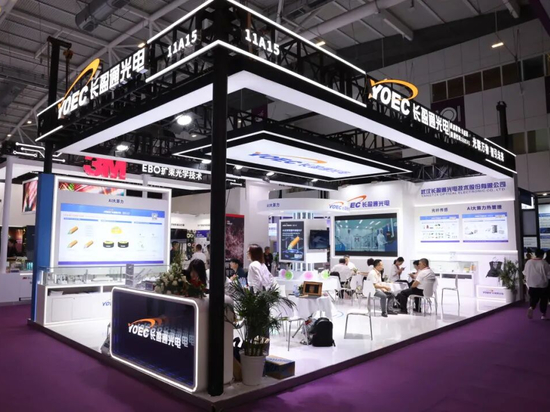
The accelerated iteration of computing power technology has highlighted the need to strengthen the infrastructure for intelligent computing in China. The domestic computing power industry chain has entered a phase of explosive demand, and the construction and operation of Al computing power centers will become a key force in driving the upgrading of related industries. From the company's perspective, through years of research and innovation, it continues to push forward breakthroughs and applications in Al technology, providing more intelligent and autonomous solutions for the industry. At the China International Optoelectronic Expo in September this year, the company showcased high-quality multimode fibers, multi-core fibers, photonic crystal fibers, and other cutting-edge products, as well as a series of cables and connectors designed specifically for high-speed interconnection in computing power centers. The company's products play a bridging role in the field of optical communications, offering robust support solutions for Al computing power. In the future, the company will focus on Al computing power while staying aligned with capital, industry trends, and national policies.
In the vast future ahead, we are like brave navigators, facing the roaring sea. We are neither afraid of the stormy challenges nor will we miss the opportunity brought by the morning glow. Together, we will move forward with courage and write our magnificent chapter. In the new year, as we embrace both challenges and opportunities, we believe by focusing on the three growth curves, our main business will grow steadily, and more new business will accelerate in volume. The future is full of promise!