#Product Trends
Thermal Management And The Development Strategy Of PCM Applications
Thermal Management And The Development Strategy Of PCM Applications
Industry Overview
Thermal management is a core system that ensures the efficient and stable operation of electronic devices, energy systems, and other equipment. It encompasses multiple dimensions, including heat dissipation, thermal insulation, and heat storage. Its essence lies in regulating temperature through active or passive methods to guarantee equipment reliability and operational safety.
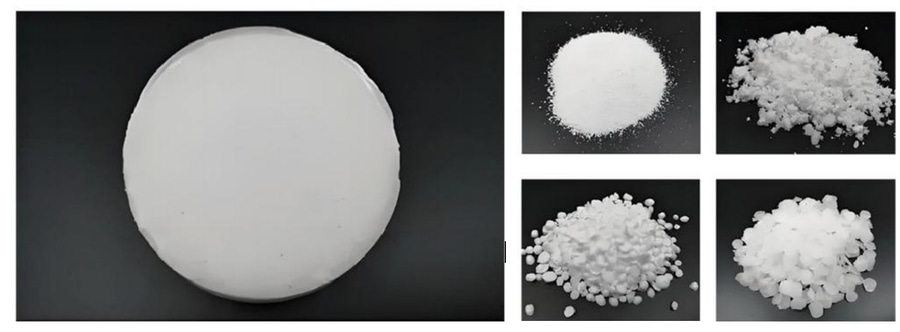
As an innovative passive thermal management technology, Phase Change Materials (PCM) are widely applied in cold chain logistics, energy storage, and battery thermal management. PCM leverages its excellent energy storage capacity, precise temperature control, responsive performance, and environmentally friendly and energy-saving characteristics.
According to market data, the global PCM market size reached RMB 5.439 billion in 2023 and is expected to grow to RMB 10.446 billion by 2029, representing a compound annual growth rate (CAGR) of 12.35% during the forecast period.
Despite promising prospects, the development of PCM still faces several challenges:
High Costs – The complex preparation process of high-performance products and expensive raw materials limit large-scale application.
Technical Limitations – Organic PCM generally has low thermal conductivity, while inorganic PCM is prone to supercooling and phase separation, requiring breakthroughs in material technology.
Immature Applications and Standards – In some fields, application development remains insufficient, and relevant industry standards and specifications urgently need improvement, hindering large-scale commercialization.
01 Deep Engagement in the PCM Sector and Building a Diversified Product Matrix
The thermal management industry is evolving toward a trend where market demand drives technological advancement. Companies that continuously innovate in materials, technology, and integrated solutions will seize the initiative.
Key strategic directions include:
Developing PCMs covering low-, medium-, and high-temperature ranges to adapt to diverse application scenarios
Researching high-thermal-conductivity PCMs to solve the "heat saturation" problem and meet high-density heat dissipation requirements
Launching bio-based PCMs to align with sustainability trends
Developing flexible PCMs with enhanced bending resistance and flame retardancy for space- and weight-sensitive applications such as wearable devices
In emerging industries, heat dissipation has become a core requirement. While PCM can address single-cycle heat absorption needs, continuous heat dissipation requires systematic and integrated solutions.
Going forward, companies should:
Establish rapid-response capabilities for customized end-user requirements
Develop refined thermal control systems and integrated solutions
Transition from non-standard products to standardized offerings
Create universal product modules (e.g., universal cold storage modules, integrated thermal conduction and dissipation system modules)
This approach will help build barriers in cost, efficiency, and branding.
From a business model perspective, YOEC can empower multi-industry applications through modular solutions, then capture the market with branded end products, forming a complete closed-loop ecosystem of:
Material R&D → Product Realization → Market Application
Clarifying Target Markets and Exploring Development Models
Thermal management technology has broad application scenarios, covering multiple billion-yuan markets such as consumer electronics, new energy vehicles, and energy storage systems.
1. Thermal Management for New Energy Power Batteries
1.1 Mainstream Technologies
Currently, liquid cooling technology dominates the battery thermal management sector. Its core components-liquid cooling plates and cooling tubes-account for approximately 30% of the total system value.
It is projected that the global market size of liquid cooling tubes and plates for power batteries will reach RMB 15.3 billion in 2025, of which RMB 11.3 billion will come from the domestic market.
PCM cooling controls temperature through heat absorption. However, it provides only energy storage capability without active heat dissipation and requires periodic replacement, which has hindered large-scale commercialization.
As a result, most companies currently focus on the liquid cooling segment, with liquid cooling plates and pipes as their core products.
1.2 Competitive Landscape
Although liquid cooling plates and tubes account for a relatively small proportion of total vehicle value, sealing failures may cause battery short circuits or even spontaneous combustion, making them critical to overall vehicle safety.
Downstream OEMs face high validation and time costs when cultivating qualified suppliers, and switching suppliers carries significant risks. Therefore, the industry is characterized by a competitive landscape dominated by a few high-quality enterprises.
1.3 Application Expansion
In the future, YOEC could leverage PCM's heat absorption and storage characteristics while building upon conventional liquid cooling components to develop:
Thermal energy recovery solutions
Battery safety protection systems
This strategy could expand into both the power battery and energy storage sectors.
2. Thermal Management for Electronic Products
2.1 Growing Demand
Consumer electronics (mobile phones, laptops, etc.) are currently the primary drivers of heat dissipation demand. Emerging products such as AI wearables and AR/VR devices will further stimulate demand.
In the server sector, AI and cloud computing development are driving rapid expansion of data centers and AI servers. Continuous GPU/CPU performance upgrades are significantly increasing heat dissipation requirements.
According to Mordor Intelligence, the global data center thermal management market was approximately USD 16.56 billion in 2024 and is projected to reach USD 34.51 billion by 2029.
Heat dissipation has become a key bottleneck restricting computing power improvement and AI terminal innovation.
2.2 Application Expansion
YOEC's future development direction could leverage PCM's rapid heat absorption and slow heat release characteristics to:
Reduce device heating rates
Extend service life of electronic equipment
Explore the data center market in combination with integrated thermal management systems
3. Vehicle-Mounted Refrigerator Industry
3.1 Industry Status
Currently, mainstream vehicle-mounted refrigerators include:
Compressor-based refrigerators
Semiconductor-based refrigerators (using TEC cooling modules)
Due to the relatively high cost of independent compressor systems, the industry is exploring solutions that replace independent compressors with PCM cold storage modules, sharing the vehicle's air conditioning system.
The integrated vehicle refrigerator market is expected to grow rapidly, with significant CAGR during 2024–2030, and total output value projected to reach RMB 5–8 billion.
3.2 Development Model of Leading Companies
Leading enterprises have developed integrated vehicle-mounted refrigerators that are incorporated into the vehicle's thermal management system. These systems share the vehicle's compressor and condenser and rely on cold storage materials to achieve:
Rapid cold storage
Long-duration cooling release
3.3 Application Expansion
For future development, YOEC can:
Collaborate with automotive parts suppliers
Leverage their industry resources and manufacturing experience
Jointly develop integrated in-vehicle refrigerator cold storage modules
After successful market entry, this model can be extended to mobile refrigeration units, air conditioning systems, and other related fields.
Conclusion
With the upgrading of thermal management products and the expansion of application scenarios, YOEC is expected to cultivate a third growth curve-thermal management alongside next-generation optical communication.
By strengthening material innovation, modular system integration, and downstream application expansion, YOEC can unlock significant growth potential and new opportunities across emerging industries.