#Industry News
Is Your Packaging Supplier Optimising the Box or Your Total Logistics Cost?
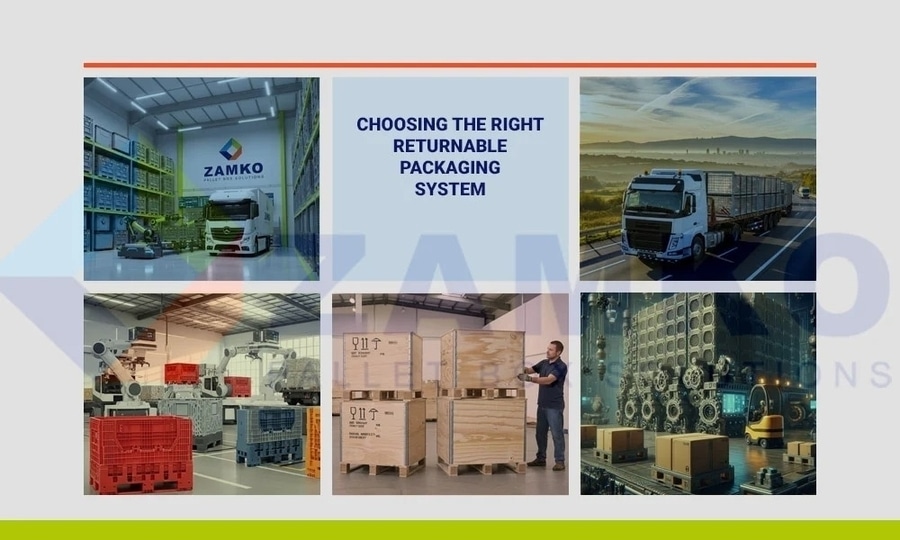
Choosing the right industrial returnable packaging
Choosing industrial returnable packaging takes more than comparing specifications and purchase
prices. Return transport, handling efficiency and packaging pool size can have a major impact on
total operating costs.
Procurement teams usually start with the obvious questions: dimensions, load capacity, durability
and price. These matter, but they only tell part of the story.
A packaging manufacturer will naturally recommend products within its own range. Steel container
producers specialise in steel cages, while plastic packaging manufacturers focus on plastic solutions.
That expertise is valuable, but the most suitable system for a particular logistics operation may use
an entirely different technology.
For a practical comparison of packaging technologies, see ZAMKO’s Returnable Packaging Selection
Guide. To estimate how circulation time and shipment frequency affect investment in returnable
containers, try the Packaging Pool Size Calculator.
For companies running regular transport routes, the purchase price of a container is often less
important than its cost over hundreds of handling and transport cycles.
Empty Return Transport: Design Matters More Than Material
One of the clearest differences between returnable packaging systems appears when the containers
are empty. The table shows approximate collapsed containers per full return truck for the 1200 ×
800 mm footprint.
Packaging system Collapsed containers per return truck
Sleeve pack pallet boxes 384
Mesh wire cages, US/Budget design 384
Mesh wire cages, EU Standard design 224–256
Figures are approximate for a standard 13.6 m tautliner with 32 pallet positions. Sleeve packs and the compact
US/Budget mesh cage reference are stacked 12 high. The EU Standard mesh cage reference allows 7–8 units per
stack, depending on model and collapsed height. Verify trailer clearance, stacking stability and loading conditions for
the chosen products.
The US/Budget designation matters. For 1200 × 800 mm containers, sleeve packs and compact
US/Budget mesh cages both allow 12 collapsed units per stack across 32 pallet positions: 384 units
per tautliner. This is not true of the EU Standard mesh cage models. Typically, these allow 7 to 8
units per stack, or 224 to 256 per truck. Sleeve packs therefore carry approximately 50% to 71%
more empties per truck than these EU Standard designs. Actual loading depends on the specific
model and folded height.
What Does This Mean for a Logistics Budget?
Take a manufacturer returning 10,000 containers a year, each with a 1200 × 800 mm footprint, in
full-truck quantities.
Packaging system Return trucks per year Cost at €800 per truck
Sleeve pack pallet boxes 27 €21,600
Mesh wire cages, US/Budget 27 €21,600
Mesh wire cages, EU Standard 40–45 €32,000–€36,000
Illustrative freight rate of €800 per truck, comparable routes, truck quantities rounded up to complete loads. Actual
costs depend on transport arrangements and how efficiently empty containers can be consolidated.
Sleeve packs and compact US/Budget mesh cages have identical return transport costs in this
example: €21,600 annually. Compared with EU Standard mesh cages, either system saves €10,400 to
€14,400 per year in return freight. That advantage applies to these specific EU Standard
configurations, not every mesh cage model.
Equal empty-return capacity does not mean equal performance in use. Mesh cages provide
ventilation, visibility of contents and potentially higher maximum load capacities, while sleeve packs
offer smooth interior walls, enclosed protection from dust and dirt, and generally lower weight. The
product and handling requirements still determine which system offers better value.
Different Packaging Systems Suit Different Applications
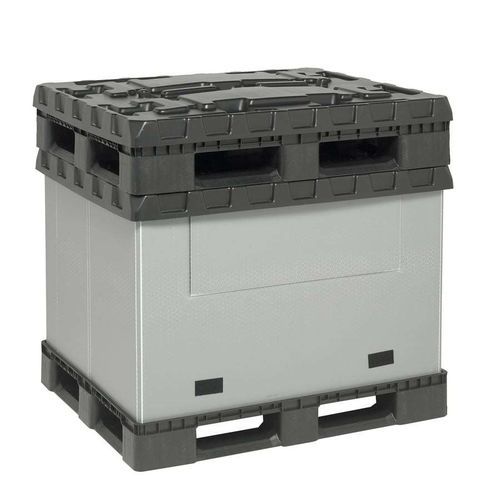
Sleeve packs consist of a pallet base, folding sleeve and lid. Their smooth interior walls reduce direct
contact with steel mesh and can be advantageous for parts with sensitive surfaces. The enclosed
design helps protect against dust and dirt, while relatively low weight and compact returns suit
regular closed-loop transport. For very heavy, sharp or abrasive products, a suitable steel cage may
offer greater durability.
Mesh wire pallet cages are widely used for metal components, castings and industrial materials.
Their open construction gives excellent ventilation and visibility, making stock inspection easier
without opening the cage. Depending on the design, they can offer higher maximum load capacities
than sleeve packs; some models also have access doors. Buyers must distinguish compact US/Budget
designs, which match sleeve packs in the illustrated empty-return capacity, from the taller-folding
EU Standard designs, which typically require considerably more return truck space.
Foldable plastic pallet boxes combine solid walls with a collapsible construction. They suit
applications where cleaning, containment and consistent handling matter, though some models take
more space when collapsed. Where transport distances are short, they may still offer the best
overall value.
Reusable wooden and plywood crates offer flexibility for machinery, sensitive equipment and
irregular components. For high-value goods, preventing one damage incident can matter more than
return density.
Packaging Pool Size: A Cost That Is Easy to Underestimate
Return transport is only part of the calculation. Another factor is how many containers a company
must own to keep deliveries running. If a manufacturer ships small quantities weekly, empty
containers wait at the destination until there are enough for a return shipment, and during that time
more containers are needed. The longer the circulation, the larger the pool, and the more capital
and storage space it ties up.
Returning containers in smaller quantities may raise transport costs but shrink the pool, which can
offset part of the extra freight. Whether this pays off depends on packaging price, shipment
frequency, dwell time and return distance. Full-truck return capacity should never be assessed in
isolation.
What Should Procurement Managers Compare?
1. Protection: Does it protect the products through transport, storage and handling?
2. Handling: Does it work with existing forklifts, production processes and warehouse
equipment?
3. Return transport: How many empty units fit in one truck?
4. Packaging circulation: How many containers are needed for continuous deliveries?
5. Investment: What capital is needed to buy and maintain the pool?
6. Cost per cycle: What does each completed cycle cost over the service life?
The last question brings the others together. A cheaper container can become more expensive once
return transport, repairs and handling are included. Equally, a sophisticated folding design may not
be worth paying for if return journeys are short or infrequent.
Start with the Transport Flow
At ZAMKO we supply sleeve pack pallet boxes, mesh wire pallet cages, foldable plastic pallet boxes
and reusable plywood crates, so we can compare solutions against your actual transport and
handling requirements. A sleeve pack may be the most efficient option for one application and a
steel cage for another.
If you are considering a new returnable packaging system, send us the details of one actual transport
route: packaging dimensions, shipment frequency and return distance. We will help compare the
options and show where transport savings, handling improvements or a smaller packaging pool are
possible.
You can also use our Packaging Pool Size Calculator and our Guide to Choosing the Right Returnable
Packaging System.
ZAMKO B.V. | Industrial Returnable Packaging Solutions Across Europe
https://zamko.eu