

#Product Trends
How to Pack Machinery for Export in a Plywood Crate
The crate arrived intact. The machine inside didn’t.
The plywood crate looks fine when it arrives. Then you open it and find that the machine has shifted on the pallet and hit the inside wall. It doesn’t need to have parts sticking out for that to happen. If several components share a crate, they can also move and knock into each other.
When you’re planning how to pack a machine, start with three questions. Where does it need support? What will keep it in place? Which surfaces need protection?
Start with how the machine sits on the pallet
Two machines can weigh the same and still need different support. One might sit on a broad frame, while the other rests on four small feet. If the underside is uneven, wooden battens can support the machine at the points designed to carry its weight. A photo or drawing of the underside is often the simplest way to show where those points are.
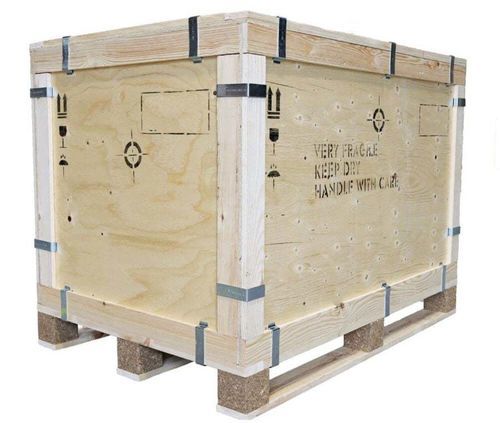
If the machine has an unusual footprint, a plywood crate can be made to size. Allow room for the supports, fixings and padding when working out the internal dimensions.
Keep the load from moving
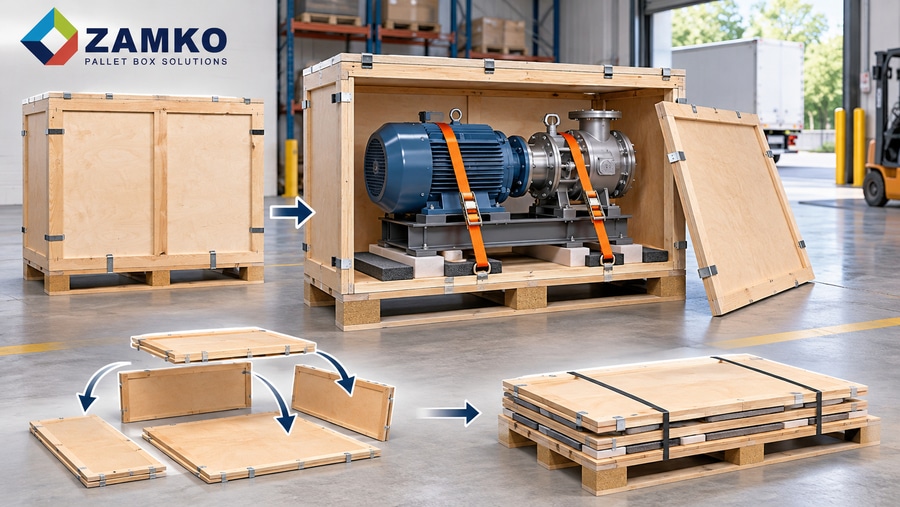
If the machine has suitable mounting points, brackets can secure it to the pallet base. Straps are another option when the base has suitable anchors and the machine can take the pressure where the straps bear on it.
Wooden blocks fitted around the machine’s base can stop it from sliding. If several components travel in the same crate, dividers or separate supports can keep them apart. One heavy part shifting a few centimetres can be enough to damage the part next to it.
A snug fit can help if the product can take pressure where it touches the crate and the crate is designed to withstand those forces. Even then, check whether the load can tip or lift. A tight fit at the sides only tells you how much room it has to move sideways.
Protect surfaces that scratch or dent easily
Fitted foam can cushion painted panels, finished surfaces and other areas that need protection. With a heavy machine, you may need brackets or straps to hold it in place and foam just where it needs cushioning.
If the crate will be reused, think about where the foam goes. Foam attached to the walls can make the stack of panels thicker on the return trip. Removable pads can be more practical if you only need protection at a few points.
Plan how the crate will be unpacked
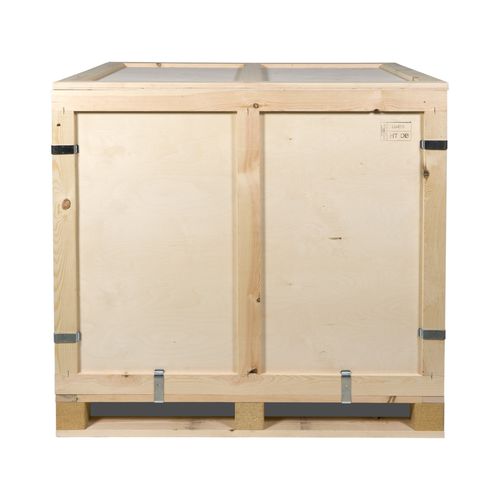
With a ZAMKO Easy-Click Crate, the receiving team can take off the front panel while leaving the lid in place. That gives them access to the load and any fixings at the front.
If they need access from all sides, they can remove all four walls and the lid. The product stays on its original pallet and can move straight to the assembly or installation area. Once the pallet is empty, the team can lay all four walls and the lid flat on it and send the complete crate back for reuse. ZAMKO also offers a plywood crate designed for one-way export.
If you’re ordering a crate, start with its dimensions, the required load capacity and the type or model, if known. Say whether the dimensions are internal or external. If you also want advice on securing or protecting the load, add a drawing or photo of the underside and mark the support and fixing points if available.
Read the ZAMKO guide: https://zamko.eu/how-to-pack-machinery-for-export-plywood-crate/


 鄂公网安备42018502009509号