#Industry News
Scaling Food Flavour Blending from 100 L to 10,000 L
Maintaining Homogeneity, Hygiene and Safety at Industrial Scale
A flavour manufacturer approached us with a formulation that was already fixed. The ingredient list, the addition sequence and the liquid dosing order had been defined by their R&D team and were not open for discussion. What they needed was a process that would behave in the same way at 100 litres and at 10,000 litres, in a plant with the hygiene, allergen and dust-explosion requirements of modern food production.
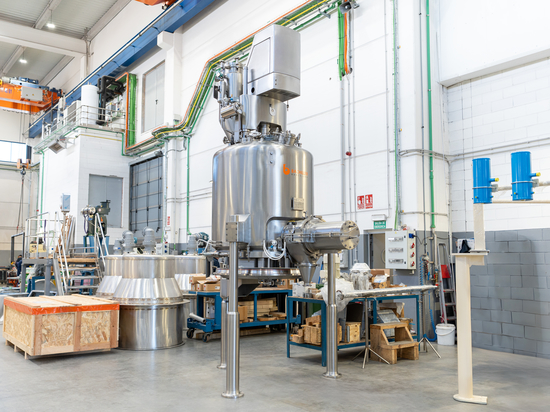
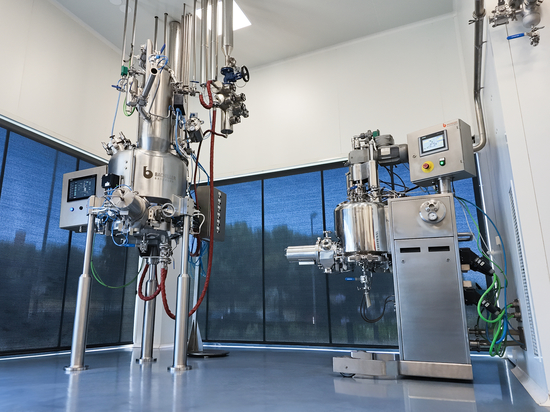
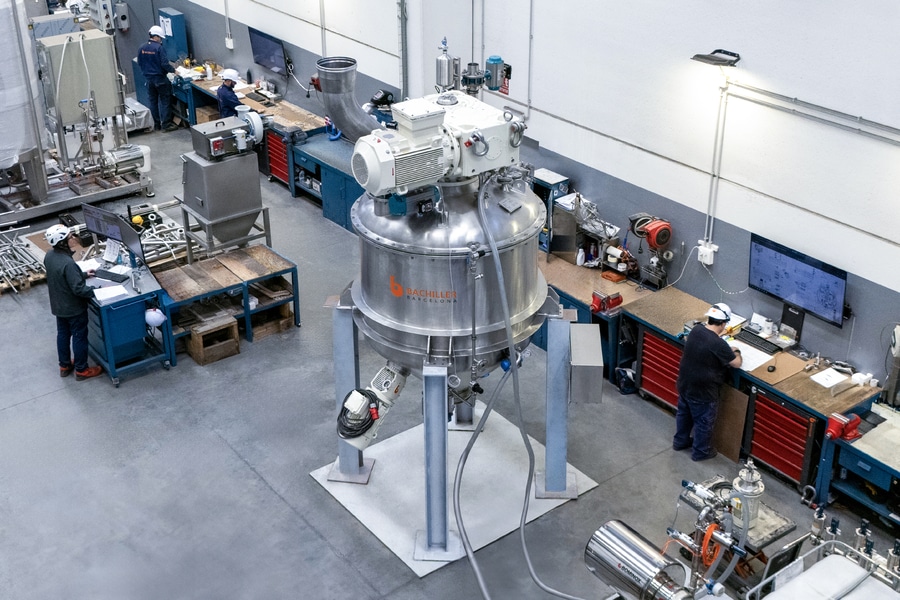
The installation now comprises SUPRAMIX mixers of 1,000, 2,000, 4,000 and 10,000 litres. All of them run on parameters developed on a 100-litre pilot unit, where blend homogeneity of 2.26 to 2.78 % RSD was measured.
The mixing principle
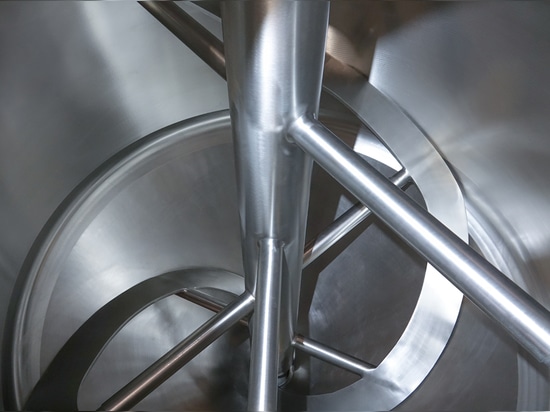
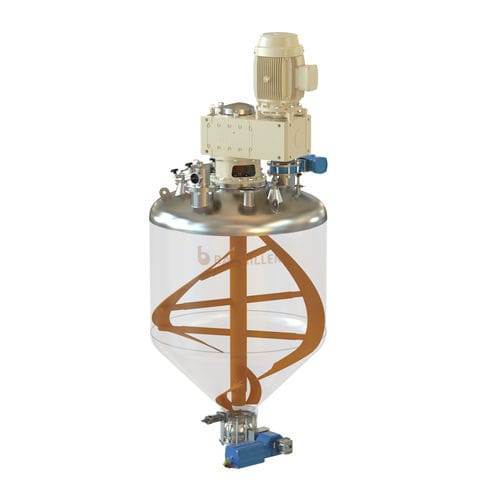
SUPRAMIX is a vertical mixer with two large blades that lift the product along the periphery of the vessel. A high-speed chopper works alongside the main agitator. It breaks up agglomerates and supplies the local shear needed to disperse liquid additions.
Pilot trials with production raw materials
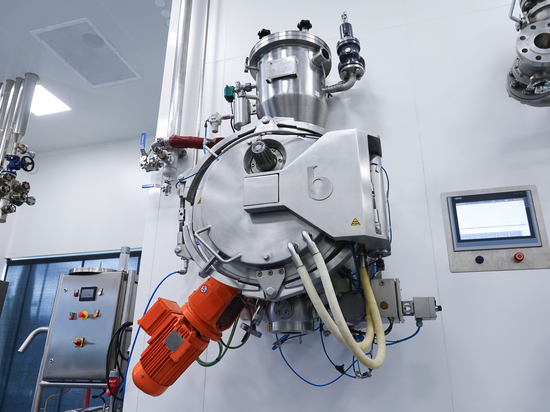
Development was carried out on a 100 L SUPRAMIX pilot unit using the customer's actual raw materials. We avoided model powders on purpose. They seldom behave like production ingredients in terms of flowability, bulk density or tendency to agglomerate once liquid is added, and those are the properties that decide how a flavour blend mixes.
The trials were used to set fill level, mixing time and chopper speed, to define how and where the liquid should be added, and to check repeatability between batches. Cleaning performance was assessed on the same unit.
Adding liquid without forming lumps
In flavour blending, liquid addition is where things usually go wrong. The formulations in this project contain between 3 and 10 % w/w of liquid ingredients.
If liquid falls on a slow-moving part of the powder bed, it over-wets it locally. Those wet spots turn into agglomerates, and the agglomerates end up as concentration peaks in the finished product.
Here the liquid is sprayed through nozzles directly into the zone swept by the chopper. The shear in that zone disperses the droplets into the moving powder before they can bind particles together, and agglomerates that start to form are broken up straight away.
On the pilot unit, blends were homogeneous after 6 to 10 minutes, depending on the recipe and the amount of liquid.
Measuring homogeneity
Homogeneity was evaluated by statistical sampling and analysis of a tracer component. On the pilot unit, the relative standard deviation (RSD) ranged from 2.26 to 2.78 %.
For reference, an RSD below 5 % is generally regarded as a very good result in powder blending. These figures were obtained on recipes with liquid addition, which is normally the harder case.
Scale-up
From 100 L to 10,000 L the volume increases a hundredfold, so the first question was which parameters had to stay the same. Chopper tip speed is set for each product and kept identical at every scale. Fill level, ingredient sequence and the liquid addition method were also carried over unchanged from the pilot unit.
In production, mixing times are usually about two minutes longer than on the pilot mixer, and the difference grows with vessel size. The customer ran its own validation programme on the production units and approved the process for routine manufacturing.
The customer has since bought a SUPRAMIX pilot unit for its own R&D department, so new formulations now go through the same pilot stage before reaching production.
Hygienic design
The mixers are built following EHEDG hygienic design guidelines. Product-contact parts are made of AISI 316L stainless steel with a surface finish of Ra ≤ 0.8 µm, and elastomers and other non-metallic contact materials comply with FDA 21 CFR 177.
We paid particular attention to crevices and retention points, to the design of the shaft seals, and to access for inspection and maintenance. On a line that alternates between allergen-containing and allergen-free products, how much material stays inside the mixer after cleaning largely determines how safe a changeover is.
CIP and cleaning verification
Each industrial mixer has an integrated CIP system that runs automatic cleaning cycles between production campaigns.
During the Factory Acceptance Test, a riboflavin test confirmed full spray coverage of the product-contact surfaces. The check covered the points where coverage is hardest to achieve: the shaft seals, the chopper housing, and the manways and access covers.
Dust explosion protection
Several powders used in flavour production can form combustible dust clouds, so the interior of the mixer is classified as Zone 20. That is an area where an explosive dust atmosphere is present continuously, for long periods or frequently.
The mixer is certified as Category II 1D under Directive 2014/34/EU for the process chamber, and designed as Category 3D for the external area (Zone 22). The Category 1D certification is backed by an EU-type examination certificate issued by a notified body.
As an option, the mixers can operate under nitrogen blanketing, with an O₂ analyser monitoring oxygen concentration continuously. Inerting also helps protect oxidation-sensitive flavour compounds.
Process control
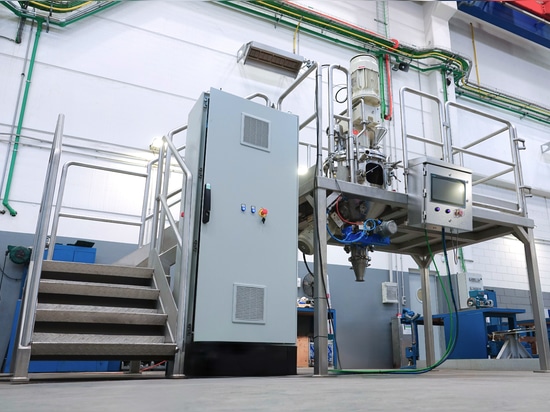
Operators run each batch from an HMI that handles recipes, mixing times, chopper speed, batch sequencing, alarms and CIP programmes. Process data are stored for every batch and feed into the customer's traceability records.
What made the difference
The scale-up did not work because bigger mixers were built. It worked because the process was understood before any production unit was designed. The pilot trials showed how the liquid had to be introduced, how much shear it needed and which parameters had to stay fixed as the batch grew from 100 litres to 10,000 litres. The industrial mixers were designed around a process already defined at pilot scale.