#Product Trends
API Vacuum Drying: New 4,000-Liter BICUUM Rotary Vacuum Dryer
For the Pharmaceutical Industry
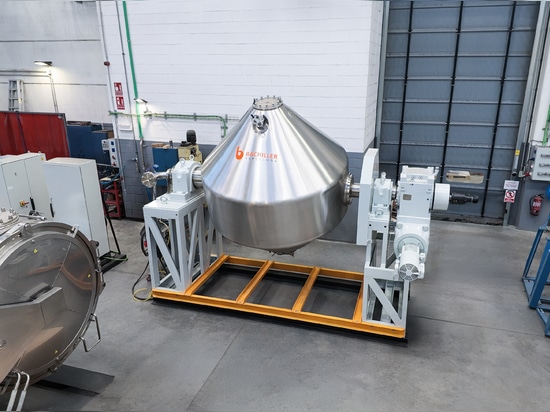
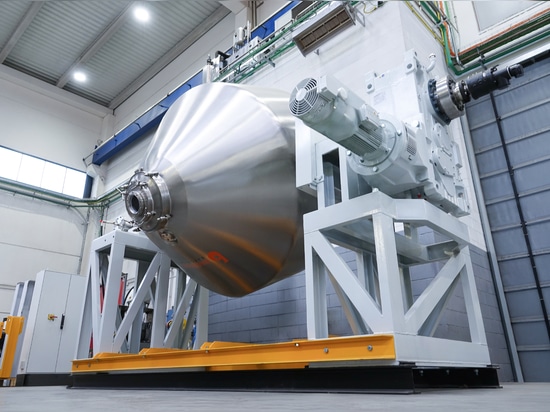
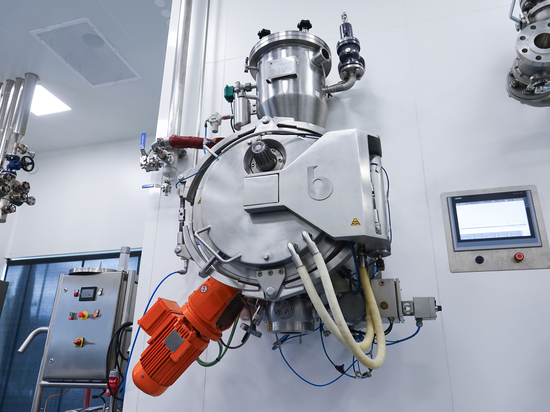
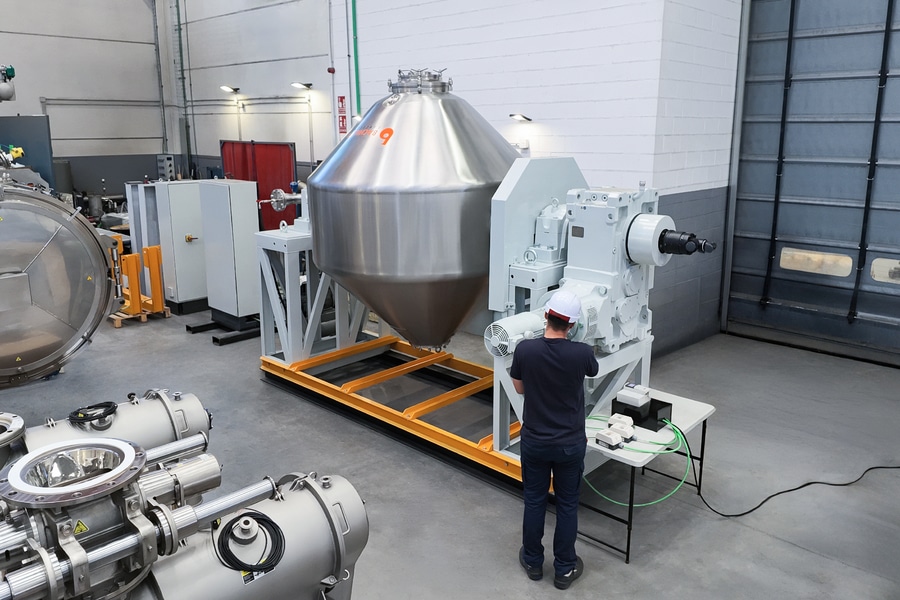
Secador rotativo al vacío BICUUM MBC-4000S de 4.000 litros en Hastelloy C-22 para el secado de principios activos farmacéuticos (APIs).
Bachiller has completed the manufacturing of a new BICUUM MBC-4000S rotary vacuum dryer, built in Hastelloy C-22 and designed for the production of Active Pharmaceutical Ingredients (APIs) and fine chemicals. This is the third BICUUM dryer supplied to the same customer, following their positive experience with the performance, reliability and results of the previous units.
Drying is a critical stage in the manufacturing of Active Pharmaceutical Ingredients (APIs), particularly when processing temperature-sensitive materials, high-value compounds or products requiring controlled removal of moisture and residual solvents.
To meet these requirements, Bachiller has manufactured a new 4,000-liter BICUUM MBC-4000S rotary vacuum dryer, designed for integration into an industrial API manufacturing process.
This project demonstrates the application of vacuum drying technology at an industrial scale and further strengthens a long-standing relationship with a customer who has chosen to incorporate a third BICUUM dryer into their production facilities.
Rotary Vacuum Drying Technology for API Manufacturing
The BICUUM is a double cone rotary vacuum dryer designed for batch drying of solids, powders and wet materials obtained from industrial processes such as filtration, centrifugation and crystallization.
Its operating principle combines three fundamental elements: vacuum application, controlled heating of the vessel surfaces and continuous rotation of the drying chamber.
By reducing the operating pressure, the evaporation temperature of moisture and solvents can be lowered, allowing drying to take place at temperatures below those required under atmospheric conditions.
At the same time, the vessel’s rotation continuously tumbles the product, renewing its contact with the heated surfaces and promoting more uniform heat distribution throughout the batch.
This technology is particularly suitable for vacuum drying of pharmaceutical APIs, pharmaceutical intermediates and fine chemical products requiring carefully controlled processing conditions.
Unlike drying systems equipped with internal mechanical agitators, a double cone rotary vacuum dryer moves the product through the rotation of the vessel itself. This provides gentle product handling while reducing the need for internal moving components in direct contact with the material.
A 4,000-Liter Vacuum Dryer Manufactured in Hastelloy C-22
One of the most significant features of this project is the construction of the dryer in Hastelloy C-22, a nickel-chromium-molybdenum alloy known for its excellent corrosion resistance.
API manufacturing and fine chemical processes may involve solvents, reagents and chemical compounds that create demanding conditions for equipment construction materials.
Hastelloy C-22 offers high resistance to a wide range of corrosive environments, making it a suitable material for selected applications where conventional stainless steels may not provide sufficient chemical resistance.
With a nominal capacity of 4,000 liters, the BICUUM MBC-4000S is designed for industrial batch drying operations where precise control of process parameters is essential.
Material selection, mechanical design and drying system configuration are key factors in ensuring compatibility with the product and its specific operating conditions.
Temperature Control and Solvent Removal in Pharmaceutical Vacuum Drying
One of the main challenges in API drying is removing residual liquids without compromising the physical and chemical properties of the final product.
During pharmaceutical manufacturing, wet solids may contain water or organic solvents remaining from previous synthesis, crystallization, washing or solid-liquid separation stages.
Vacuum drying makes it possible to reduce solvent evaporation temperatures, which can be particularly beneficial when processing thermally sensitive products or compounds susceptible to heat-induced degradation.
In a rotary vacuum dryer such as the BICUUM, drying conditions can be adjusted according to several process parameters:
Heating medium and product temperature.
Vacuum level applied during the drying cycle.
Vessel rotation speed.
Batch size and filling level.
Initial moisture and solvent content.
Physical characteristics and flow behavior of the product.
Required final moisture or residual solvent concentration.
The correct combination of these parameters allows drying cycles to be adapted to the specific characteristics of each product.
Furthermore, when integrated with a suitable vapor condensation and recovery system, vacuum drying can facilitate the collection of evaporated solvents, supporting more efficient solvent management and recovery.
Industrial Scale-Up and Process Reproducibility
Scaling up a drying process from laboratory or pilot scale to industrial production requires careful consideration of heat transfer, evaporation kinetics, product behavior and operating conditions.
With its 4,000-liter capacity, the new BICUUM demonstrates how rotary vacuum drying technology can be applied to industrial API manufacturing and fine chemical production.
The design of these systems supports controlled operating conditions and the development of reproducible drying procedures, provided that the relevant process parameters are properly established and validated for each product.
At Bachiller, our engineering department and Test Center work together to evaluate industrial drying processes, study product behavior and identify the most suitable drying technologies for specific applications.
This approach helps manufacturers assess process requirements and select equipment configurations adapted to their production objectives.
The Third BICUUM Dryer for the Same Customer: A Long-Term Partnership
Beyond its technical specifications, this project represents an important milestone for Bachiller.
It is the third BICUUM rotary vacuum dryer manufactured for the same customer, following their positive experience with the performance, reliability and results achieved with the previously supplied equipment.
Repeat orders of this kind highlight the importance of reliable process equipment, particularly in industries where production continuity, product quality and process control are essential.
With more than 50 years of experience in the engineering and manufacturing of industrial process equipment, Bachiller develops customized vacuum drying solutions for the pharmaceutical, chemical and fine chemical industries.
Bachiller Vacuum Drying Solutions for APIs and Fine Chemicals
Bachiller offers a range of industrial vacuum drying technologies for solids and powders, including double cone rotary vacuum dryers, vertical vacuum dryers and vacuum paddle dryers.
Selecting the most suitable drying technology depends on several factors, including product characteristics, production capacity, thermal sensitivity, moisture and solvent content, and specific process requirements.
The BICUUM MBC-S double cone rotary vacuum dryer is one of Bachiller’s solutions for batch drying applications requiring gentle product movement, indirect heating and vacuum operation.
Looking for a Vacuum Drying Solution for Your API Manufacturing Process?
Are you planning a new API manufacturing facility or looking to optimize an existing pharmaceutical or fine chemical drying process?