#Industry News
Pilot-Scale Filtration Optimization: Validation of the FNB-007S
A Bachiller Test Center case study on the optimization of solid-liquid filtration processes for two products with different characteristics.
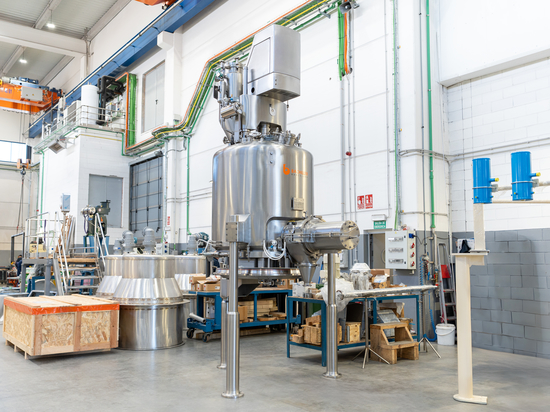
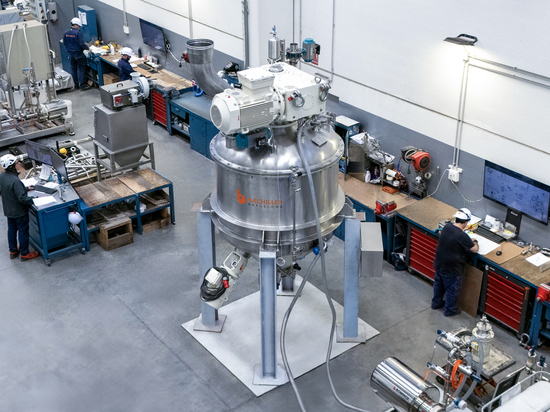
In the competitive field of industrial process engineering and equipment manufacturing, innovation and the ability to adapt to customer needs are key differentiating factors. At Bachiller, our Test Center, located at our facilities in Parets del Vallès, provides a significant advantage: the ability to validate processes, develop new solutions and optimize equipment for our customers.
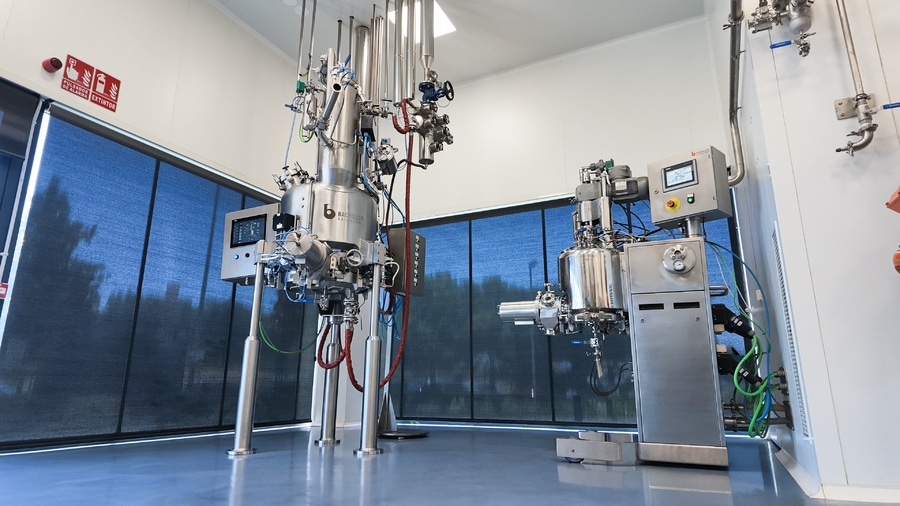
The facility is equipped with a comprehensive range of pilot-scale equipment, enabling process development and scale-up from pilot plants to industrial applications. These trials allow customers to compare the performance of different equipment and select the most efficient solution based on empirical results. In addition, we guarantee the confidentiality of all information and results obtained, supported by a formal confidentiality agreement when required.
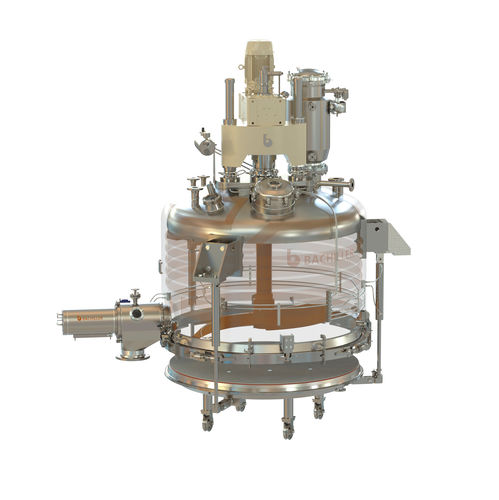
A recent example of these capabilities is the successful filtration project carried out for a North American company. The objective of the project was to validate an FNB-007S Nutsche filter for the filtration of two different products: a catalyst suspended in a mixture containing calcium carbonate and calcium hydroxide, and a salt dissolved in ethanol together with other insoluble salts. In both cases, the retained solids had to be discarded, while the product of interest was recovered in the filtrate.
During the trials, different filter meshes and operating conditions, including pressure and agitation, were evaluated to determine the optimal filtration performance.
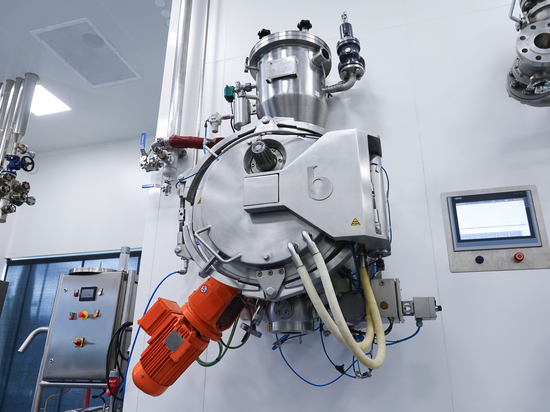
The FNB-007S Nutsche filter used for the trials has a working volume of 24 liters and a filtration area of 0.067 m². The equipment demonstrated its versatility and robustness under demanding test conditions. Moisture content was analyzed using a thermobalance, while turbidity was measured with a portable turbidimeter.
Catalyst filtration
The first product evaluated was the catalyst. The initial test consisted of reconstituting the received suspension by diluting it with 3.75 kg of water per kilogram of the original suspension. The resulting mixture had a moisture content of 92.38% at 105 °C and a density of 1 kg/L.
During the trials using a 10 µm filter mesh, 25 liters of suspension were filtered under different pressure conditions, ranging from 0.5 to 6 bar. The results showed that increasing the pressure improved the filtration rate, reaching 14.05 kg/min/m² at 6 bar.
However, this pressure also caused partial blinding of the filter mesh, indicating that excessive pressure can be counterproductive. Agitation during filtration also resulted in lower performance, probably because it made it more difficult to form a filter cake that would improve filtration efficiency.
For subsequent trials, 20 and 50 µm filter meshes were tested. With the 50 µm mesh, a complete filtration cycle was carried out at 4 bar without leveling the filter cake at the end of the process. This made it possible to maintain filtration performance during subsequent cycles.
It was observed that excessive leveling of the filter cake or excessive reduction of its moisture content could cause the filter mesh to become blocked. Therefore, for industrial applications, this practice should be avoided. Instead, 10 or 50 µm meshes are recommended, as they can be effectively cleaned using CIP (Clean-In-Place) procedures.
Ethanol-based suspension filtration
The second product evaluated was an ethanol-based suspension with a very low solids content. This represented a challenge for solid-liquid separation, as forming an effective filter layer required a prior settling period.
During the trials, a 5 µm filter mesh was used and different filtration pressures, ranging from 0.5 to 6 bar, were tested.
At the optimum pressure of 4 bar, a filtration rate of 45.48 kg/min/m² was achieved, with an average turbidity of less than 1 NTU. These results demonstrate the effectiveness of the equipment in obtaining a high-quality filtrate.
In addition, cleaning the filter mesh with pressurized water proved effective in preventing blockages and extending the service life of the equipment.
From pilot testing to industrial scale-up
This case study highlights the capabilities of Bachiller's Test Center in addressing complex filtration challenges and providing customized solutions to our customers.
The use of pilot-scale equipment makes it possible to reproduce real process conditions, evaluate different configurations and optimize operating parameters before implementing an industrial-scale solution. This methodology not only provides reliable results, but also helps minimize the risks and costs associated with process scale-up.
Beyond the technical advantages, the Test Center demonstrates Bachiller's commitment to adapting solutions to each customer's specific requirements. By providing a controlled environment for testing, customers can experiment with different parameters and operating conditions, enabling them to identify the optimal configuration for their specific process.
For example, the ability to compare different filter meshes and pressure settings allows users to determine the most suitable combination for their application based on actual test results.
Confidentiality and customer collaboration
Confidentiality is also a fundamental pillar of our services. Bachiller ensures that all information, from product formulations to test parameters and results, is handled with the highest level of discretion.
This approach builds trust and allows companies to share their most critical process requirements with confidence, knowing that their information will be handled with the utmost professionalism.
A reliable path to process optimization
The Test Center is a key tool for process validation and the development of innovative filtration solutions. Through technical expertise, pilot-scale testing and close collaboration with our customers, Bachiller continues to provide equipment and services that optimize industrial processes and deliver reliable, high-performance results.