#White Papers
Lean Management Explained: Meaning, Principles and Benefits
How companies simplify and optimize their processes with Lean
What is Lean Management?
Lean Management is an approach that helps companies simplify and improve the efficiency of their processes. The term “lean” means eliminating everything that does not create real value for the customer.
The central question is always: What creates value, and what is unnecessary effort? All non-value-adding activities are gradually reduced.
This approach originates from the Toyota Production System, which introduced methods to make production more stable and efficient. Today, Lean is applied not only in manufacturing, but also in administration, logistics and services.
Lean as a mindset: continuous improvement
A key element of Lean is continuous improvement. Processes are not optimized once, but continuously improved in small steps.
Employees play a crucial role. They identify problems in daily work and actively contribute to solutions. Therefore, Lean is not only a method, but also a company culture.
The 8 types of waste
Lean focuses on identifying and eliminating waste, categorized into eight types:
Overproduction: producing more than required
Waiting: downtime due to missing materials or information
Transport: unnecessary movement of materials or products
Overprocessing: unnecessarily complex processes
Inventory: excess stock
Motion: unnecessary movements or walking distances
Defects: rework or scrap
Unused knowledge: employees’ ideas are not utilized
The goal is to make these visible and reduce them step by step.
Lean Management vs. Lean Production
Lean is often divided into two areas:
Lean Management: the overall philosophy and way of working, including leadership, organization and collaboration
Lean Production: focuses specifically on manufacturing, including process efficiency, material flow and workplace design
The 5 core principles of Lean
Define value: What is important to the customer?
Analyze processes: Which steps add value?
Improve flow: Ensure smooth, uninterrupted processes
Pull principle: Produce only when needed
Continuous improvement: Ongoing optimization without end
Benefits of Lean Management
Reduced waste and lower costs
Improved product and process quality
Shorter lead times
Greater flexibility in responding to customer demands
Stronger employee involvement
Increased competitiveness
Lean not only improves efficiency but also strengthens overall business stability and adaptability.
Challenges in implementation
Implementing Lean is not a one-time project but a long-term process.
Typical challenges include:
Time required for transition and training
Cultural change within the organization
Consistent implementation in daily operations
Success depends on whether Lean is truly practiced, not just understood in theory.
Practical application: Lean in everyday work
Theory alone is not enough. Lean must work in daily operations.
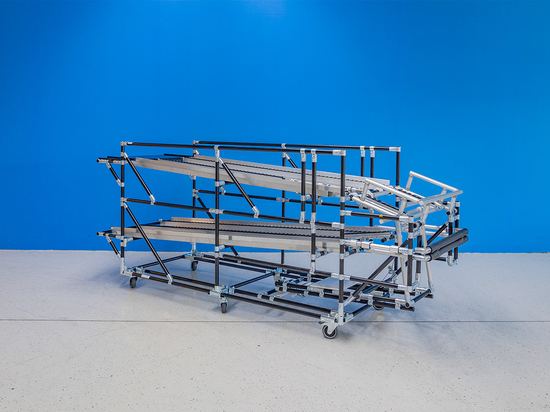
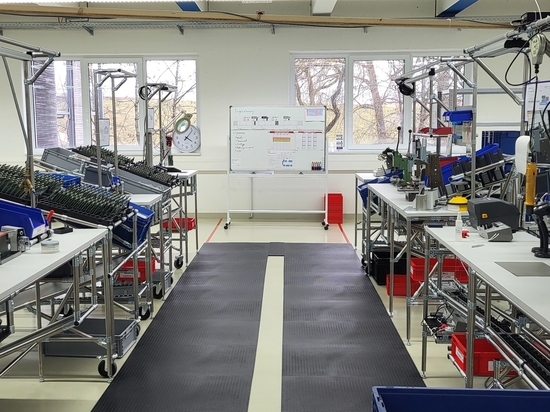
Practical solutions such as flexible workstations or simple material flow systems help improve processes. These can be adapted or expanded quickly without long downtimes.
This makes Lean visible and usable in everyday work.
Conclusion
Lean Management is more than a method. It is a way of thinking and working that continuously improves processes.
Companies that apply Lean effectively work more efficiently, reduce costs and involve employees more actively.
The goal is to make processes simpler and more effective—improving step by step, every day.