#Industry News
Lean Production in Electronics Manufacturing: TELENOT Significantly Reduces Lead Times
How TELENOT restructures processes and achieves measurable results with Lean Production, modular systems and employee involvement
More efficient processes through flexible systems and practical Lean implementation
TELENOT ELECTRONIC GmbH demonstrates how Lean Production can be successfully implemented in practice. By using modular work systems based on tube-and-joint systems, the company has significantly improved its manufacturing processes and achieved measurable results.
For more than five decades, TELENOT has been developing solutions in the field of electronic security technology – ranging from access control and intrusion detection systems to fire alarm technology. At its Aalen site with around 500 employees, production has now been further developed and consistently aligned with Lean principles.
Starting point: rigid structures and long processes
Before the transformation, production was organized in a traditional way. Fixed workstations, limited flexibility and partly complex process steps characterized daily operations.
One example was the training of new employees: for certain products, such as the “cryplock” model, onboarding could take up to nine months.
In addition, long walking distances, inefficient material supply and the increasing shortage of skilled workers created further challenges. The objective was therefore to simplify processes, increase efficiency and reduce space requirements at the same time.
Implementation: step by step towards Lean Production
The transformation started with a hands-on workshop, where basic principles were introduced and initial concepts were developed. Together with BeeWaTec, an internal Lean workshop area was created, allowing new concepts to be tested directly.
A key success factor was the active involvement of employees. New assembly lines were initially built as simple prototypes using cardboard and wood. This enabled fast testing, adjustment and improvement of processes.
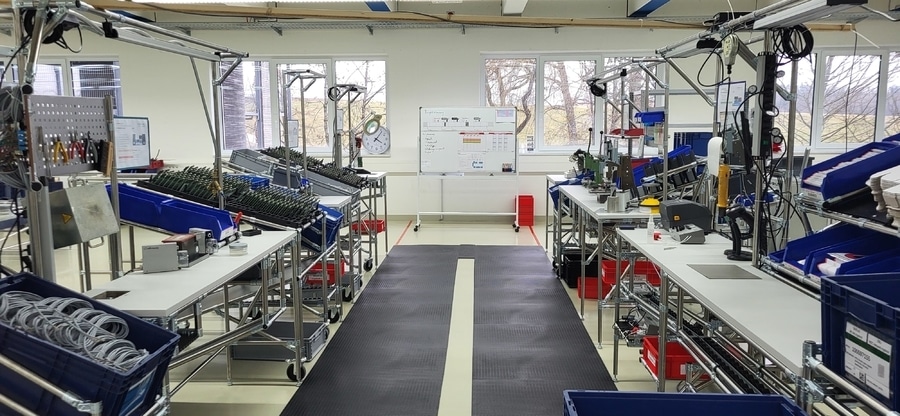
After this testing phase, optimized solutions were digitally planned and then implemented using modular systems. These included:
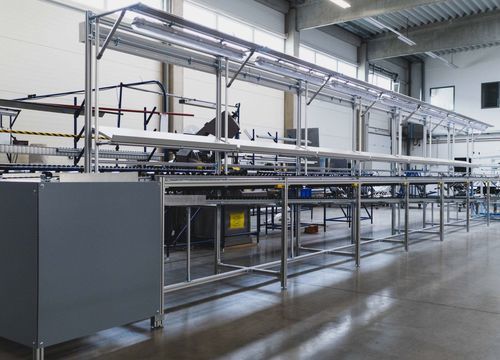
ESD-compliant workstations
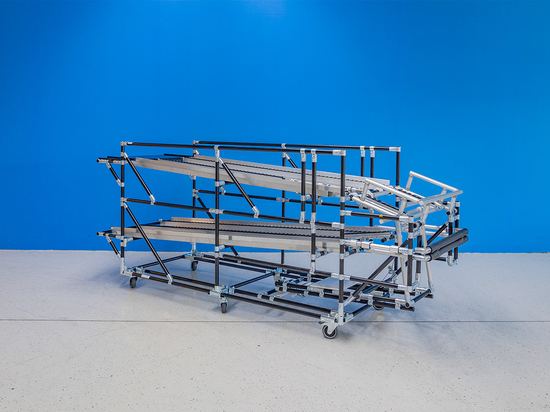
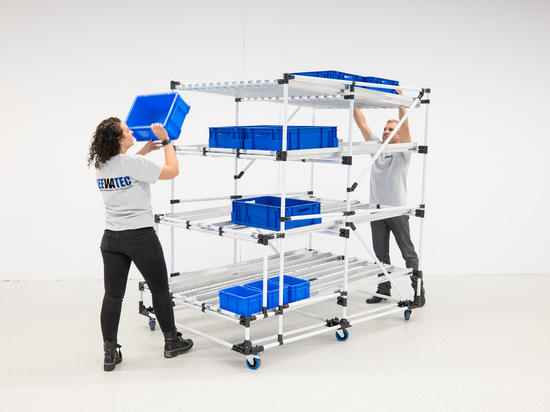
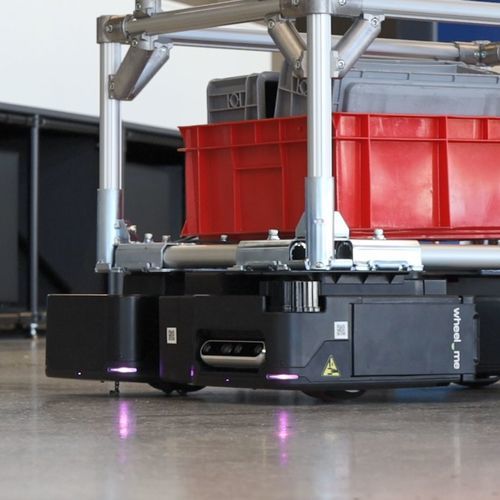
Flexible transport carts
Modular shelving systems
Material supply directly at the workstation based on the FIFO principle
Results: measurable improvements in a short time
The changes led to clearly measurable results:
Lead time reduced by 89% (from 36.7 to 4.5 days)
Processing time reduced by 51%
Space requirements reduced by 36%
Productivity also increased significantly. The new production lines operate with smaller teams and can be flexibly adapted to different requirements.
Another key advantage is the adaptability of the systems: changes can be implemented quickly without major modifications or downtime. This supports the company’s continuous improvement process.
More than technology: a shift in company culture
In addition to optimized processes, collaboration has also evolved. Employees are more involved and actively contribute to designing their workplaces.
This not only leads to better solutions but also increases team motivation.
Simon Uttenlauch, Head of Lean Production at TELENOT, describes the development as follows:
“At the beginning, there was some skepticism. Today, everyone recognizes the benefits. With Lean and modular systems, we have not only improved processes but also sustainably changed the way we work.”
Looking ahead
The results achieved so far are just the beginning. By 2027, TELENOT plans to extend Lean principles to additional areas of production.
The implemented standards and modular solutions provide a solid foundation for this.
This project shows that even complex production processes can be significantly improved – when goals, methods and people are aligned.