#Product Trends
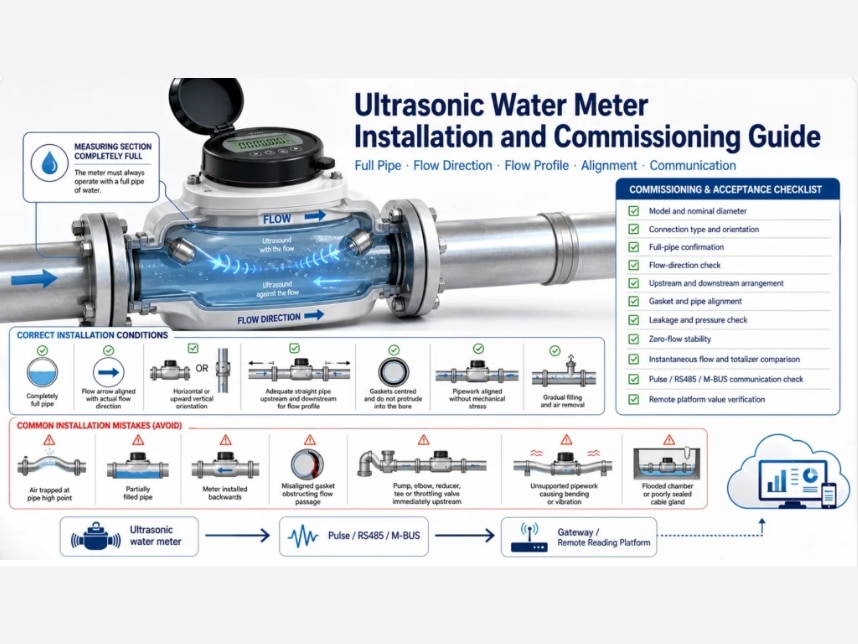
Ultrasonic Water Meter Installation and Commissioning Guide
Ultrasonic Water Meter Installation and Commissioning Guide
Installation affects metering performance
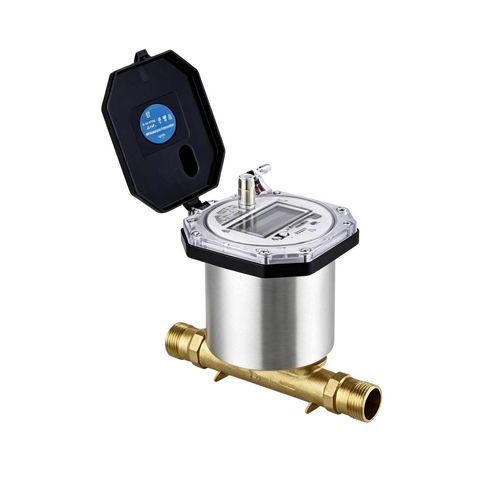
An ultrasonic water meter measures the transit-time difference between signals travelling with and against the water flow. The electronic calculation may be accurate, but the measurement still depends on the hydraulic condition inside the meter body. Air, an incompletely filled pipe, severe flow disturbance, a misaligned gasket, reverse installation, or incorrect scaling can create a poor result even when the meter itself is functional.
This article focuses on field installation and commissioning. For model, diameter, communication, valve, and application selection, see our DN15 to DN500 ultrasonic water meter selection guide.
Confirm the meter and project data before installation
Nominal diameter and connection type
Required flow range and range ratio
Temperature and pressure class
Permitted installation orientation
Upstream and downstream flow-profile sensitivity class
Communication interface, power supply, and cable length
Direction of normal and possible reverse flow
Accessibility for reading, service, valve operation, or battery replacement
Do not choose the installation point only because it is physically convenient. The pipe should remain full, the electronics should be accessible, and the meter should not be exposed to conditions outside its environmental rating.