#Industry News
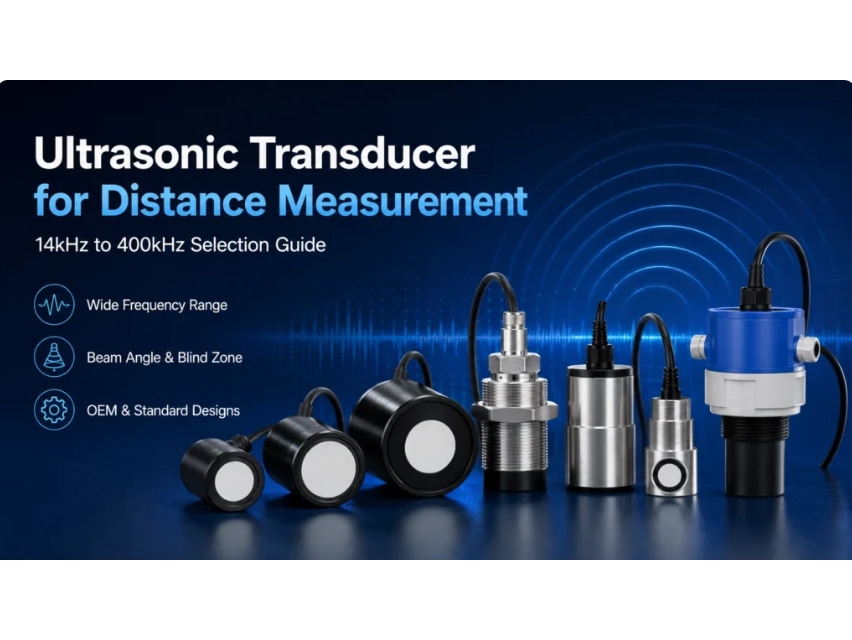
Ultrasonic Transducer for Distance Measurement: 14kHz to 400kHz Selection Guide
Ultrasonic Transducer for Distance Measurement: 14kHz to 400kHz Selection Guide
What Is an Ultrasonic Transducer for Distance Measurement?
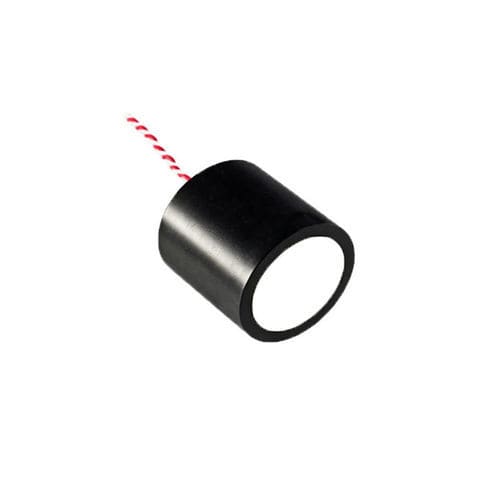
An ultrasonic transducer for distance measurement is the acoustic component that converts electrical energy into ultrasonic sound waves and converts returning echoes back into electrical signals. In a distance sensing system, the transducer transmits sound into the air, receives the reflected echo from a target, and affects whether the final signal is strong and stable enough for measurement.
A transducer is not the same as a complete ultrasonic sensor. The transducer is the acoustic element, while a sensor or module normally includes the driving circuit, receiving circuit, signal processing, housing, output interface and calibration. For OEM projects, the transducer is often selected first, then matched with the final electronics and mechanical structure.
How Ultrasonic Distance Measurement Works
Most systems use the time-of-flight principle. The circuit excites the transducer at or near its resonant frequency, the sound wave travels through air and reflects from the target, and the receiver detects the echo. The processor then calculates distance from the delay between transmission and reception.
In practice, range depends on more than the formula. Target size, target surface, installation angle, temperature, humidity, airflow, acoustic noise, housing design and transducer behavior all affect echo quality.