#Industry News
Ultrasonic Liquid Concentration Measurement: Transducers for Urea and Electrolyte Analyzers
Ultrasonic Liquid Concentration Measurement: Transducers for Urea and Electrolyte Analyzers
The analyzer measures an acoustic property before it reports concentration
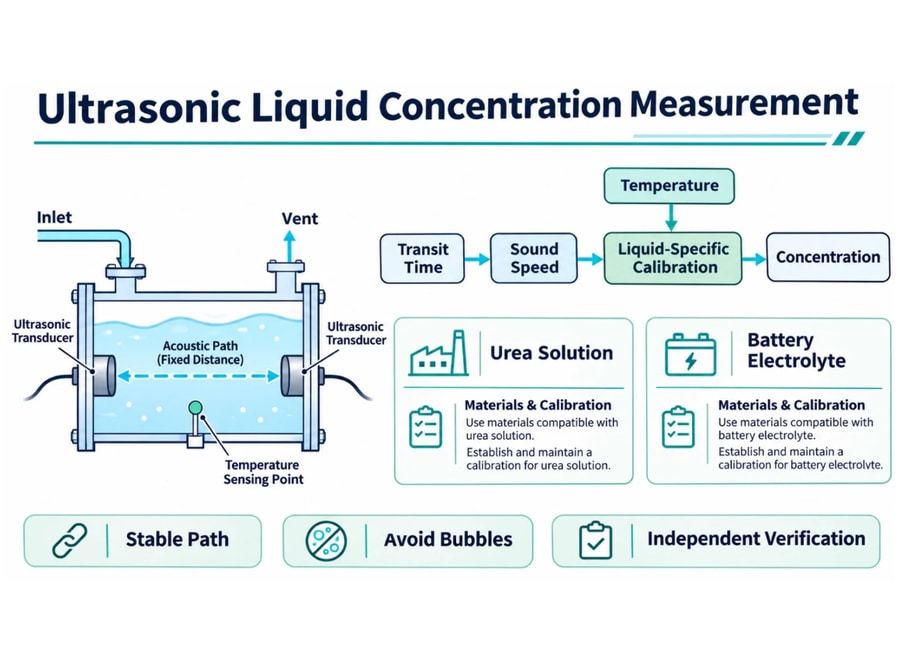
A urea-solution analyzer or battery-electrolyte instrument can use ultrasound to observe a liquid without relying on optical transparency. However, the transducer does not directly recognize a chemical percentage. It launches and receives acoustic energy; the instrument measures propagation behavior and relates that measurement to a defined liquid composition under controlled conditions.
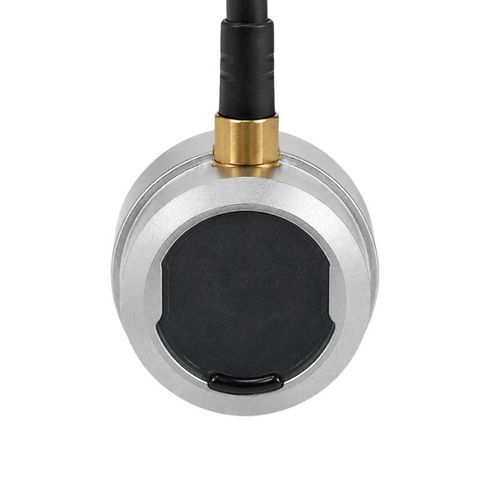
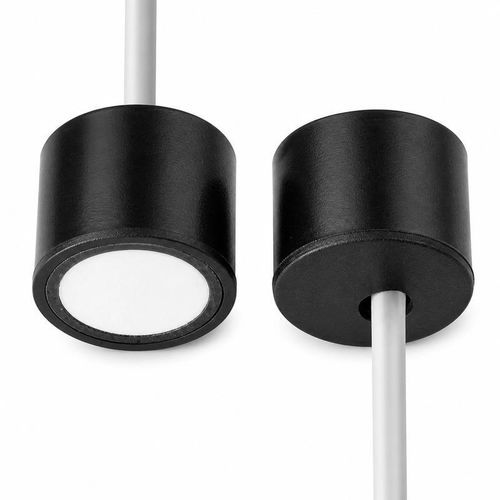
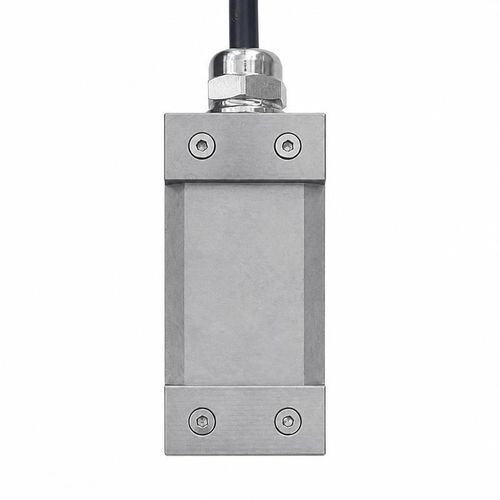
This distinction matters when sourcing components. Deep Minds Ultrasonic offers the BBID-C liquid concentration and composition transducer series for electrolyte, urea-solution and industrial liquid-analysis applications. Selecting an appropriate component starts with the liquid system, acoustic path, temperature and wetted materials. A frequency label alone does not define concentration accuracy, chemical compatibility or the calibration model of the finished analyzer.
Build the concentration relationship around a known liquid
For a known propagation distance, measured transit time can be converted to sound velocity after fixed electronic and mechanical delays are accounted for. In a simple one-way path, velocity is distance divided by corrected transit time. A pulse-echo path needs its actual round-trip distance. Mixing these geometries introduces a systematic error before concentration calculation even begins.
Sound velocity depends on composition and temperature. An analyzer therefore needs a relationship covering the intended concentration and temperature envelope, together with a representative temperature measurement. SensoTech’s description of sound-velocity-based liquid concentration measurement illustrates this established industrial approach. Its complete-instrument performance is not a specification for the BBID-C component.
For a controlled two-component mixture, a usable relationship may identify concentration over a selected operating interval. The same sound velocity can correspond to different compositions in a more complex mixture, or to different points on a non-monotonic curve. An instrument cannot generally determine several unknown chemical constituents from one acoustic measurement. Define what may vary independently and whether an additional measurement is needed.