
#Product Trends
Various Applications of Ultrasonic Sensors
Various Applications of Ultrasonic Sensors
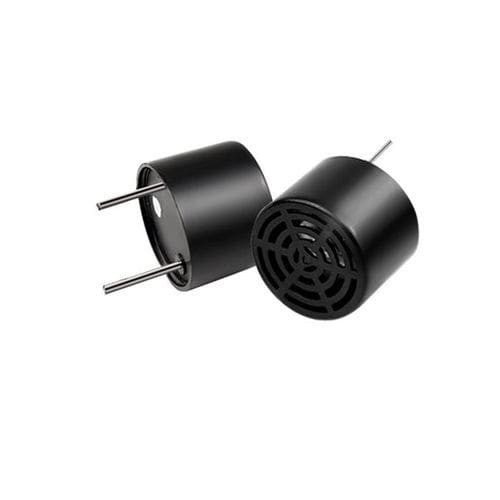
What Is an Ultrasonic Sensor?
An ultrasonic sensor is a non-contact sensing device that emits high-frequency sound waves and measures the time it takes for the reflected echo to return after reaching a target object. This method is commonly known as time-of-flight measurement.
Using this principle, ultrasonic sensors can detect object presence, measure distance, monitor liquid or bulk material levels, and provide position feedback in automation systems. Because the measurement does not require physical contact with the target, ultrasonic sensing helps reduce wear and supports long-term reliability in many industrial and commercial applications.
Why Ultrasonic Sensors Are Widely Used
Ultrasonic sensors are widely used because they offer several practical advantages in real-world environments. Compared with many optical sensing technologies, they are less affected by target color, transparency, gloss, or surface finish. This makes them useful for detecting clear materials, shiny surfaces, liquids, powders, and irregular objects.
Non-contact measurement: suitable for fragile, moving, hot, contaminated, or hard-to-reach targets.
Good performance on challenging surfaces: works with many transparent, reflective, or dark materials.
Suitable for liquids and solids: used for level monitoring, object detection, and distance measurement.
Reliable in automation: provides stable and repeatable feedback for industrial control systems.