
#Product Trends
AAAC Conductor (All Aluminum Alloy Conductor) for transmission line
AAAC Conductor
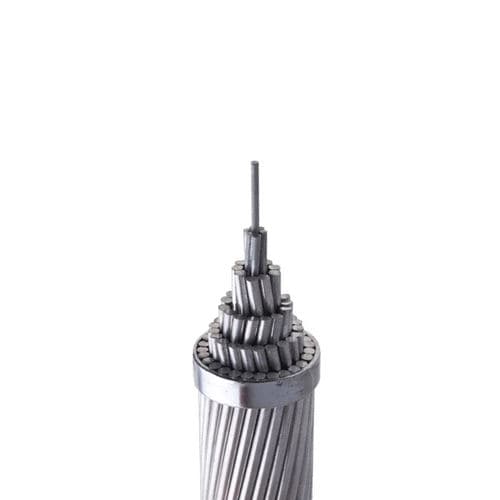
An AAAC (All Aluminum Alloy Conductor) is an overhead electrical conductor made entirely from aluminum alloy strands. It is mainly used for medium-voltage and high-voltage overhead distribution and transmission lines where high strength, corrosion resistance, and reduced weight are required.
AAAC was developed as an alternative to AAC (All Aluminum Conductor) and ACSR (Aluminum Conductor Steel Reinforced), providing a balance between electrical conductivity, mechanical strength, and durability.
1. Construction of AAAC Conductor
An AAAC conductor consists of:
·Aluminum Alloy Strands
·Made from high-strength aluminum alloy (commonly 6201-T81)
·Multiple wires stranded concentrically
·No steel reinforcement
Typical constructions:
·7 strands
·19 strands
·37 strands
·61 strands
·91 strands
2. Working Principle
The conductor carries electrical current through aluminum alloy strands.
The alloy composition improves:
·Tensile strength
·Resistance to corrosion
·Mechanical durability
Compared with pure aluminum conductors, AAAC provides higher strength while maintaining good conductivity.
3. Main Characteristics
·Material: Aluminum alloy
·Core: No steel core
·Shape: Stranded circular conductor
·Conductivity: Approximately 52–53% IACS
·Temperature rating: Typically 75–90°C
·Installation: Overhead lines
·Weight: Lower than ACSR
4. Advantages of AAAC Conductor
A.) Excellent Corrosion Resistance
Because AAAC contains no steel core:
·No galvanic corrosion
·Better performance in coastal areas
·Suitable for polluted environments
Applications:
·Coastal transmission lines
·Industrial zones
B.) High Strength-to-Weight Ratio
Compared with AAC:
·Higher tensile strength
·Longer span capability
Compared with ACSR:
·Lower weight
·Easier installation
C.) Lower Sag
Benefits:
·Better clearance to ground
·Suitable for long spans
D.) Reduced Maintenance
Advantages:
·No steel corrosion issues
·Long service life
·Suitable for harsh environments
5. Typical Specifications
·Voltage application: 11 kV – 400 kV
·Cross-section: 16 mm² – 1000 mm²+
·Conductor diameter: Depends on size
·Tensile strength: Higher than AAC
·Operating temperature: 75°C–90°C
·Standards: IEC 61089, ASTM B399
6. Applications
Medium Voltage Distribution
Used for:
·11 kV systems
·22 kV systems
·33 kV systems
·High Voltage Transmission
Used where:
·Corrosion resistance is important
·Moderate mechanical strength is required
·Special Environments
Suitable for:
·Coastal areas
·High humidity regions
·Industrial pollution zones
·Railway electrification networks
7. Common AAAC Sizes
Examples:
Conductor Size Typical Application
50 mm² AAAC Distribution feeders
95 mm² AAAC Medium voltage lines
150 mm² AAAC Distribution/sub-transmission
240 mm² AAAC High-capacity feeders
400 mm²+ AAAC Transmission applications
8. AAAC vs ACSR Selection
Choose AAAC when:
* Corrosion resistance is important
* Lightweight conductor is preferred
* Moderate mechanical strength is sufficient
* Installation environment is harsh
Choose ACSR when:
* Very long spans are required
* Maximum tensile strength is needed
*Mechanical loading is severe
AAAC Conductor summary:
An AAAC (All Aluminum Alloy Conductor) is a lightweight, corrosion-resistant overhead conductor made entirely of aluminum alloy strands. It provides better mechanical strength than AAC, better corrosion resistance than ACSR, and reliable performance in MV/HV overhead distribution networks, especially in coastal, industrial, and environmentally demanding locations.