
#Product Trends
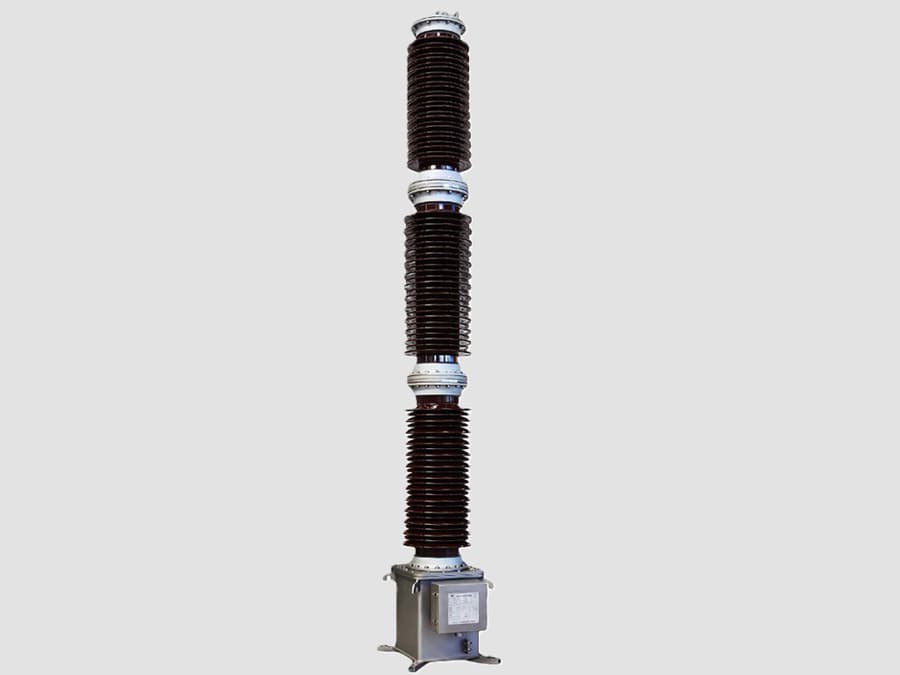
362kV Capacitor Voltage Transformer
362kV CVT
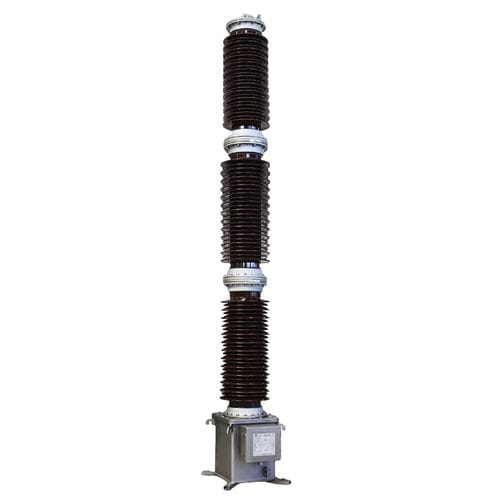
362kV Capacitor Voltage Transformer (CVT), also known as a Capacitive Voltage Transformer or Capacitor Potential Transformer (CPT), is an extra-high-voltage (EHV) instrument transformer designed for 330kV-class transmission systems. It reduces high transmission voltages to standardized low-voltage outputs used for metering, protection, control, synchronization, and power system automation.
A 362kV CVT uses a capacitive voltage divider combined with an intermediate electromagnetic transformer to provide accurate voltage measurement and reliable isolation between the EHV network and secondary devices.
Working Principle
A 362kV CVT operates in two stages:
1. Capacitive Voltage Divider
The high voltage is reduced using a series capacitor divider:
·C1 – High-voltage capacitor section
·C2 – Low-voltage capacitor section
2. Intermediate Transformer
·The intermediate transformer converts the reduced voltage into standard secondary voltages for protection and measurement equipment.
Main Components
·High-voltage capacitor stack
·Capacitive voltage divider assembly
·Intermediate transformer
·Compensation reactor
·Ferroresonance suppression circuit
·Damping resistor circuit
·Oil-paper insulation system
·Porcelain or composite silicone rubber insulator
·High-voltage terminal
·Secondary terminal box
·Grounding terminal
·Oil expansion chamber
·Mounting support structure
Typical Technical Specifications
·Highest System Voltage: 362 kV
·Rated Primary Voltage: 330 kV or 345 kV
·Rated Secondary Voltage: 100 V, 110 V, 100/√3 V, 110/√3 V
·Frequency: 50 Hz / 60 Hz
·Accuracy Class: 0.2, 0.5, 1.0, 3P, 6P
·Rated Burden: 25–500 VA
·Voltage Factor: 1.2 continuous, 1.5 short time
·Insulation Level: 630/1425 kV (Typical)
·Installation: Outdoor
·Insulation Type: Oil-paper / composite insulation
Applications
A 362kV CVT is widely used in:
·330kV transmission substations
·Extra-high-voltage switchyards
·Utility transmission networks
·Large power generation plants
·Renewable energy transmission stations
·Industrial EHV substations
·Grid interconnection facilities
Main Functions
Voltage Measurement
Provides accurate voltage signals for:
·Revenue metering
·Energy management systems
·Digital meters
·Power quality monitoring
Protection Applications
Provides voltage inputs for:
·Distance protection
·Overvoltage protection
·Undervoltage protection
·Synchronizing protection
·Auto-reclosing systems
·Fault recording systems
Communication Applications
Many EHV CVTs can support:
·Power line carrier (PLC) coupling
·Teleprotection communication
·Transmission line communication systems
Advantages
·Compact structure compared with high-voltage inductive VT
·Suitable for EHV transmission networks
·High insulation strength
·Reliable outdoor performance
·Good transient response characteristics
·Supports protection and metering functions
·Long service life
·Low maintenance requirements
Typical Secondary Outputs
Standard secondary voltages:
·100 V
·110 V
·100/√3 V
·110/√3 V
Connected equipment:
·Protection relays
·Energy meters
·Synchronizing devices
·SCADA systems
·Digital fault recorders
·Substation automation systems
Common Standards
A 362kV capacitor voltage transformer is designed and tested according to:
·IEC 61869-5 – Additional Requirements for Capacitor Voltage Transformers
·IEC 61869-1 – General Requirements for Instrument Transformers
·IEEE C57.13 – Instrument Transformer Standards
Typical Applications in a 362kV Substation
·Busbar voltage measurement
·Transmission line monitoring
·Protection relay voltage input
·Grid synchronization
·SCADA voltage acquisition
·Energy metering
·Power system automation
·Fault and disturbance recording
·Power line carrier communication
Key Features
·Designed for 330kV-class EHV transmission systems
·High dielectric and mechanical strength
·Multiple secondary winding configurations
·Suitable for severe outdoor environments
·High measurement stability
·Compatible with modern digital substations
A 362kV Capacitor Voltage Transformer (CVT) is a critical component in 330kV transmission networks, providing accurate voltage transformation, electrical isolation, and reliable signals for protection, metering, and automation systems. Its compact design and ability to support both measurement and communication functions make it widely used in modern extra-high-voltage substations.