
#Product Trends
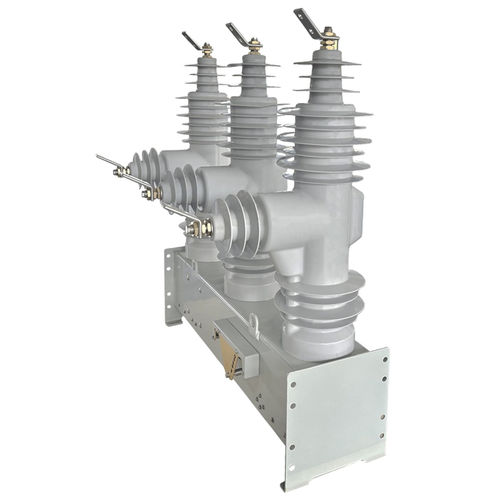
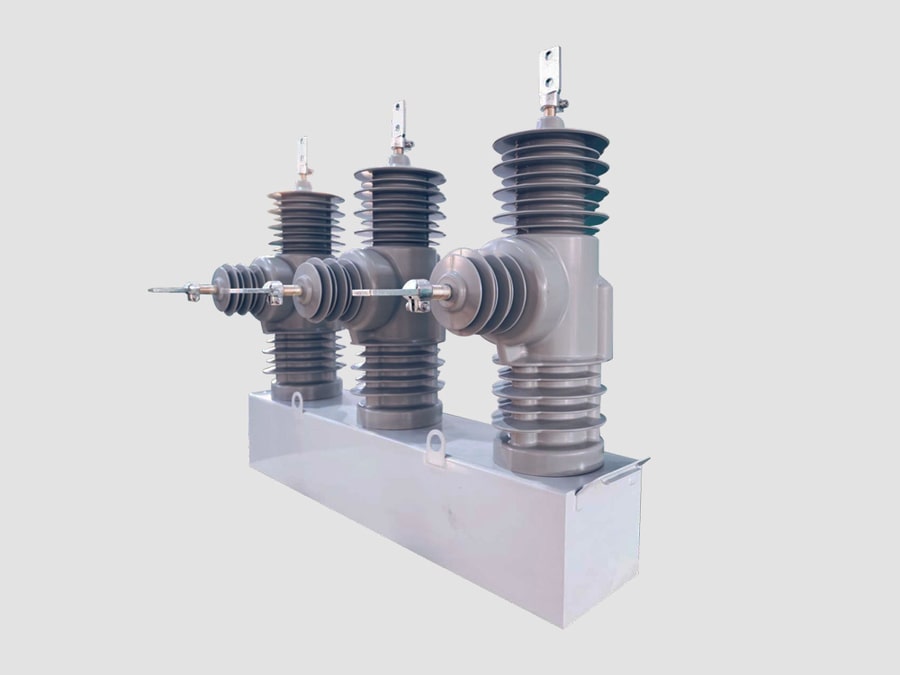
Automatic Circuit Breaker (Recloser) used on overhead distribution systems
Automatic Circuit Breaker (Recloser)
Automatic Circuit Breaker (Recloser), commonly known as a Recloser or Automatic Circuit Recloser (ACR), is an intelligent medium-voltage switching device that automatically interrupts fault current and then attempts to restore power by reclosing after a preset time delay. It is designed to clear temporary (transient) faults—such as those caused by lightning, tree branches, or animals—without requiring manual intervention.
Reclosers are widely used on overhead distribution systems operating typically from 11 kV to 38 kV to improve power system reliability and reduce outage duration.
Construction
The main components include:
·Vacuum interrupters – Sealed interrupters that interrupt load and fault currents.
·Insulated tank – Filled with solid insulation or dielectric gas, depending on the design.
·Operating mechanism – Spring-operated or magnetic actuator that opens and closes the interrupters.
·Electronic controller – Microprocessor-based controller providing protection, reclosing logic, monitoring, and communications.
·Current transformers (CTs) – Measure line current for protection functions.
·Voltage sensors (optional) – Enable voltage-based protection and synchronization.
·Control cabinet – Houses batteries, charger, communication equipment, and control electronics.
·Pole or substation mounting structure – Supports the recloser outdoors.
Working Principle
1.Under normal conditions, the recloser remains closed and supplies power to the feeder.
2.A fault causes the current to rise above the protection setting.
3.The controller trips the vacuum interrupters to interrupt the fault current.
4.After a programmed dead time (for example, 0.3–5 seconds), the recloser automatically closes.
5.If the fault has cleared (temporary fault), service is restored.
6.If the fault persists, the recloser trips again.
7.The process repeats according to a programmed sequence (commonly 2–4 reclose attempts).
8.If the fault remains after the final attempt, the recloser locks out, leaving the circuit open until it is reset locally or remotely.
Typical Reclosing Sequence
·First trip: Interrupt fault
·First reclose: Automatic closing after short delay
·Second trip: Fault still present
·Second reclose: Automatic closing after longer delay
·Third trip: Persistent fault detected
·Lockout: Circuit remains open until reset
Key Features
·Installation: Outdoor, pole-mounted or substation-mounted
·Voltage range: Typically 11–38 kV
·Interrupting medium: Vacuum (most modern designs)
·Automatic reclosing: Yes
·Intelligent controller: Microprocessor-based
·Remote operation: Supported via SCADA and communication networks
·Protection: Programmable overcurrent, earth fault, directional, and other functions
Advantages
·Restores power automatically after temporary faults.
·Reduces outage duration and improves service continuity.
·Minimizes the need for field crews to restore service.
·Supports remote monitoring and operation through SCADA.
·Low maintenance due to vacuum interrupters.
·Improves distribution system reliability indices (such as SAIDI and SAIFI).
·Enables advanced feeder automation and self-healing distribution networks.
Disadvantages
·Higher cost than a standard circuit breaker.
·Requires careful coordination with downstream fuses and protective devices.
·Not intended to repeatedly clear permanent faults without lockout.
·Electronic controller requires auxiliary power and periodic maintenance.
Typical Applications
·Utility overhead distribution feeders
·Rural electrical distribution systems
·Industrial distribution networks
·Renewable energy interconnections
·Mining operations
·Oil and gas facilities
·Smart grid and automated distribution systems
·Feeder sectionalizing
Typical Ratings
·Rated voltage: 11–38 kV
·Rated frequency: 50/60 Hz
·Rated continuous current: 630–1,250 A
·Short-circuit breaking current: 12.5–25 kA
·Reclosing attempts: 2–4 (programmable)
·Operating mechanism: Spring or magnetic actuator
·Communication: SCADA, DNP3, IEC 61850, Modbus (model dependent)
Common Voltage Classes
·11 kV
·12 kV
·15 kV
·22 kV
·24 kV
·27 kV
·33 kV
·38 kV
Relevant Standards
·IEC 62271-111 – Specifies requirements, ratings, testing, and performance for automatic circuit reclosers.
·IEEE C37.60 – Covers design and performance requirements for automatic circuit reclosers.
·IEEE C37.61 – Provides guidance on applying and coordinating reclosers in distribution systems.
Typical Installation Locations
·On utility poles along overhead feeders.
·At feeder exits from distribution substations.
·At branch points to isolate faulted sections.
·Near distributed energy resources such as solar or wind plants.
·In rural networks where automatic restoration significantly reduces outage times.
Summary
An Automatic Circuit Breaker (Recloser) is an intelligent medium-voltage protective device that combines vacuum interruption, microprocessor-based protection, and automatic reclosing. By restoring power automatically after temporary faults and isolating only permanent faults, reclosers significantly improve the reliability, efficiency, and resilience of modern electrical distribution networks.