#Industry News
Quality testing of sintered materials
Acoustic quality control of sintered materials
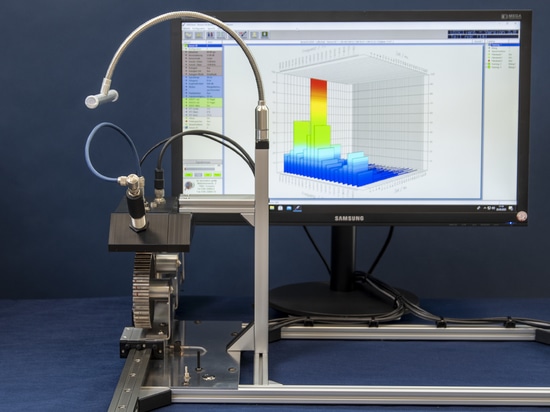
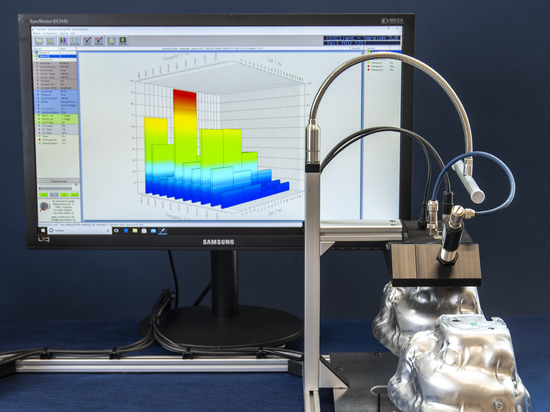
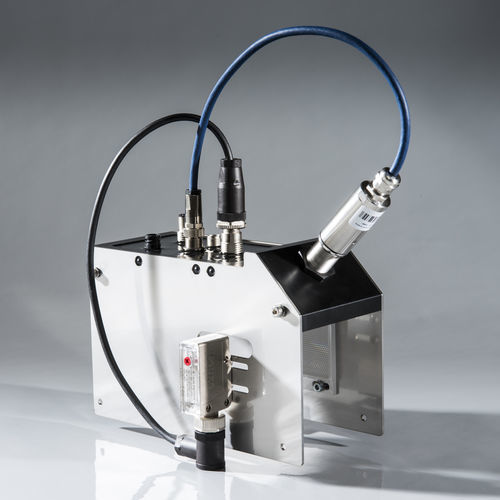
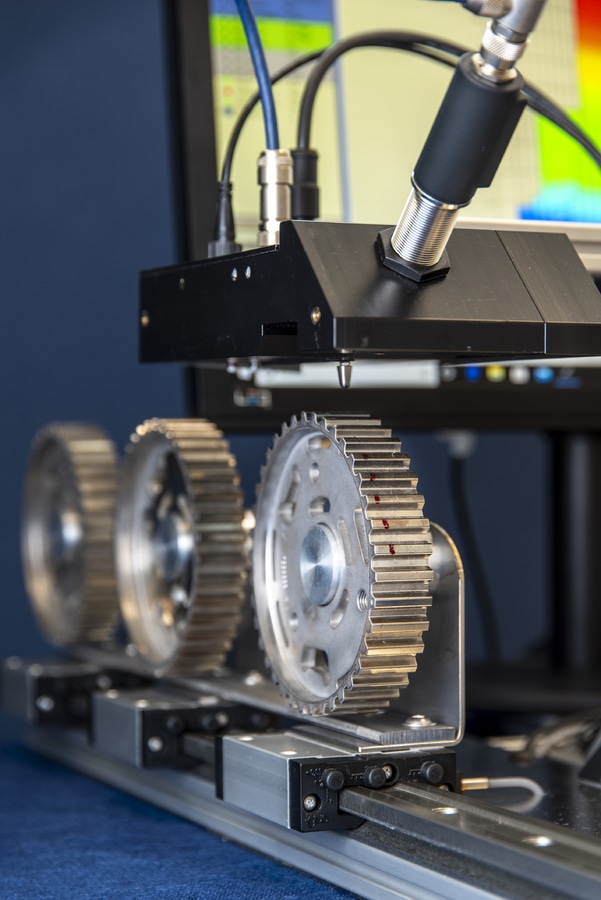
Acoustic quality control is used to inspect sintered materials for quality defects. This approach takes advantage of the property of a test specimen whereby the component under inspection can be set into vibration by external excitation, and the resulting resonance frequencies are analyzed using an air-borne sound sensor. The excitation of the test specimen is carried out via mechanical stimulation using the dsound® USE01 Exciter, while the recording and evaluation of the sound are performed by the dsound® USS4-LS air-borne sound sensor.
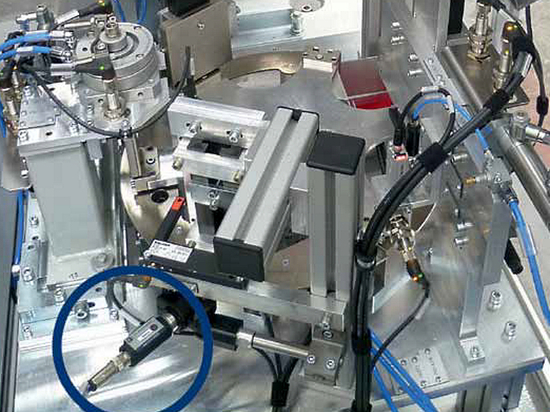
The timing pulleys are subjected to quality inspection and mechanically excited by the dsound® USE01 Exciter. This causes the test specimen to vibrate and generate resonance frequencies, which are analyzed by the connected dsound® USS4-LS air-borne sound sensor. The dsound® USS4-LS air-borne sound sensor is synchronized with the dsound® USE01 Exciter and can perform the sound analysis simultaneously with the excitation. The result of the sound recognition can be output via a digital output for further processing.
The entire sound analysis is performed directly on the sound sensor itself, meaning no additional equipment is required for quality inspection. This method of quality control makes it possible to detect material defects, geometric defects, and cracks in the material.